Senator Franklin Harper Elmore
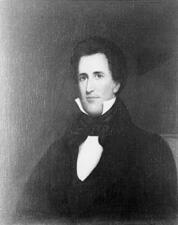
Here you will find contact information for Senator Franklin Harper Elmore, including email address, phone number, and mailing address.
| Name | Franklin Harper Elmore |
| Position | Senator |
| State | South Carolina |
| Party | Democratic |
| Status | Former Representative |
| Term Start | December 7, 1835 |
| Term End | March 3, 1851 |
| Terms Served | 3 |
| Born | October 15, 1799 |
| Gender | Male |
| Bioguide ID | E000158 |
About Senator Franklin Harper Elmore
Franklin Harper Elmore (October 15, 1799 – May 29, 1850) was a United States representative and senator from South Carolina and a prominent Democratic politician during a significant period in American history. Born in Laurens District, South Carolina, he was the son of John Archer Elmore, a figure of some local prominence. Growing up in the early national period, he came of age in a state that would become central to the nation’s political and sectional controversies, and his later career reflected South Carolina’s strong advocacy of states’ rights and its increasingly assertive role in national affairs.
Elmore pursued higher education at South Carolina College in Columbia, an institution that trained many of the state’s political leaders. He graduated in 1819 and subsequently studied law, preparing for a professional and public career in a state where legal training was a common pathway into politics. In 1821 he was admitted to the bar and commenced the practice of law in Walterboro, South Carolina. His early legal work and connections within the state’s political and legal communities helped establish his reputation and opened the way to public office.
Elmore’s formal public career began in state legal and military-administrative roles. He served as solicitor for the southern circuit of South Carolina from 1822 to 1836, a position that gave him substantial responsibility in the prosecution of cases and oversight of legal affairs in that region of the state. From 1824 to 1826 he also served as a colonel on the staff of the governor of South Carolina, reflecting both his standing in state circles and the close intertwining of legal, political, and militia roles in the early nineteenth century. These posts strengthened his public profile and prepared him for service at the national level.
Elmore entered the United States Congress as a member of the House of Representatives during a time of intense national debate over economic policy, states’ rights, and the expansion of slavery. A member of the Democratic Party and identified as a State Rights Democrat, he was elected to the Twenty-fourth Congress to fill the vacancy caused by the resignation of Representative James H. Hammond. He was subsequently reelected to the Twenty-fifth Congress and served in the House from December 10, 1836, to March 4, 1839. During these two terms, he participated in the legislative process and represented the interests of his South Carolina constituents, aligning with the Democratic Party’s emphasis on limited federal power and strong state sovereignty.
After leaving the House of Representatives in 1839, Elmore moved into a key financial role within his home state. From 1839 to 1850, he served as president of the Bank of the State of South Carolina, an influential institution in the state’s economic life. In this capacity he oversaw banking operations during a period marked by recurring financial instability and debates over banking and currency policy. His prominence was such that President James K. Polk offered him appointment as Minister to Great Britain, one of the most important diplomatic posts in the U.S. government. Elmore declined this appointment, choosing instead to remain in South Carolina and continue his work in banking and state affairs.
Elmore returned to federal legislative service in 1850, this time in the United States Senate. A member of the Democratic Party, he was appointed to the Senate to fill the vacancy caused by the death of John C. Calhoun, South Carolina’s leading states’ rights theorist and one of the most influential national politicians of the era. Elmore took his seat on April 11, 1850, representing South Carolina in the upper chamber during a critical moment in the nation’s history, as Congress grappled with the sectional crisis that would produce the Compromise of 1850. His service in the Senate, however, was brief; he served from April 11, 1850, until his death on May 29, 1850.
Franklin Harper Elmore died in office in Washington, D.C., on May 29, 1850, becoming one of the members of the United States Congress who died while serving between 1790 and 1899. His death ended a public career that had included service as a solicitor, a colonel on the governor’s staff, a two-term United States representative, president of the Bank of the State of South Carolina, and a United States senator. He was interred in the First Presbyterian Churchyard in Columbia, South Carolina, where his grave marks the resting place of a figure closely associated with South Carolina’s political and financial leadership in the antebellum period.