Representative Franklin Wills Hancock
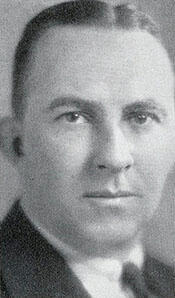
Here you will find contact information for Representative Franklin Wills Hancock, including email address, phone number, and mailing address.
| Name | Franklin Wills Hancock |
| Position | Representative |
| State | North Carolina |
| District | 5 |
| Party | Democratic |
| Status | Former Representative |
| Term Start | April 15, 1929 |
| Term End | January 3, 1939 |
| Terms Served | 5 |
| Born | November 1, 1894 |
| Gender | Male |
| Bioguide ID | H000147 |
About Representative Franklin Wills Hancock
Frank Willis Hancock Jr. (also recorded as Franklin Wills Hancock Jr.; November 1, 1894 – January 23, 1969) was a Democratic U.S. Representative from North Carolina who served in the United States Congress from 1929/1930 to 1939, encompassing five terms in the House of Representatives. His decade in Congress coincided with the Great Depression and the New Deal era, during which he contributed to the legislative process and represented the interests of his North Carolina constituents.
Hancock was born in Oxford, Granville County, North Carolina, on November 1, 1894, the only son and one of four children of Franklin Wills Hancock and Lizzie Hobgood Hancock. His father was a descendant of William Hancock, linking the family to a longstanding regional lineage. He attended local public schools in Oxford and then Horner Military Academy, also in Oxford, where he received a disciplined preparatory education. He subsequently matriculated at the University of North Carolina at Chapel Hill, studying law and earning his law degree. In 1916 he was admitted to the bar and commenced the practice of law in his hometown of Oxford. In addition to his legal work, Hancock maintained business interests in insurance and real estate, which broadened his engagement with the economic life of his community.
During the First World War, Hancock attended officers’ training camp at Fort Oglethorpe, Georgia. Although he did not achieve national prominence through military service, his training reflected the mobilization of his generation during the war years and added to his leadership experience as he began his professional and political career in North Carolina.
Hancock’s formal political career began in local and state Democratic Party activities. He served as chairman of the Granville County Democratic Executive Committee in 1924, a position that placed him at the center of party organization and candidate support in his home county. He was elected to the North Carolina State Senate and served from 1926 to 1928, then moved to the North Carolina House of Representatives, where he served from 1928 to 1930. Alongside his legislative duties, he was a trustee of the Colored Orphanage of North Carolina at Oxford from 1920 to 1937, reflecting his involvement in social welfare and charitable work. His growing stature in the party was further recognized when he served as a delegate to the Democratic National Convention in 1940.
Hancock entered national office when he was elected as a Democrat to the Seventy-first Congress to fill the vacancy caused by the death of Representative Charles M. Stedman. In a separate election held the same day, he was also elected to the Seventy-second Congress. He was subsequently reelected to the three succeeding Congresses, serving continuously from November 4, 1930, to January 3, 1939. Across these five terms in the House of Representatives, he participated actively in the democratic process during one of the most consequential periods in American history, as the federal government responded to the economic crisis of the Great Depression. A supporter of New Deal agricultural policy, Hancock backed the Bankhead-Jones Farm Tenant Act, which provided low-interest loans to sharecroppers and tenant farmers. The rural relief programs created under this act were administered by the Farm Security Administration, an agency he would later be appointed to lead. He did not seek renomination to the House in 1938, instead becoming a candidate for the Democratic nomination for U.S. Senator from North Carolina. At the urging of President Franklin D. Roosevelt, Hancock challenged incumbent Senator Robert R. Reynolds in the 1938 Democratic primary, but he was unsuccessful, losing by a wide margin.
After leaving Congress, Hancock continued his public service in several important posts within the Roosevelt administration. He was a member of the Federal Home Loan Bank Board from January 4, 1939, to April 24, 1942, participating in federal efforts to stabilize and expand home financing during and after the Depression. He then served as special representative of the Reconstruction Finance Corporation until June 1943, working with one of the government’s principal agencies for economic recovery and wartime finance. In November 1943 he was appointed administrator of the Farm Security Administration, the very agency charged with implementing the rural relief and farm tenancy programs he had supported in Congress, and he held that position until November 1945. Concurrently, he served as president of the Commodity Credit Corporation from December 1944 to August 1945, overseeing federal programs that supported agricultural prices and farm income during the closing years of World War II. After completing these assignments, Hancock returned to Oxford, North Carolina, where he resumed the general practice of law. He remained active in local public life and was elected judge of the Granville County Recorder’s Court in 1950 and again in 1952.
In his personal life, Hancock was married to Lucy Landis Hancock. The couple had seven children, among them Franklin W. Hancock III, who became a longtime member of the North Carolina legislature, extending the family’s tradition of public service. That tradition continued into later generations: Hancock’s granddaughter through F.W. Hancock III, Mary Wills Bode, was elected to the North Carolina Senate in 2022, and his grandson, Richard Hancock Moore, served two terms as North Carolina State Treasurer from 2001 to 2009 and was a candidate for governor in 2008, though he lost the Democratic primary to Bev Perdue.
Frank W. Hancock Jr. died in Oxford, North Carolina, on January 23, 1969. He was interred in Elmwood Cemetery in Oxford, closing a life marked by sustained service to his county, state, and nation in legislative, administrative, and judicial roles across more than four decades.