Representative Franklin Frederick Korell
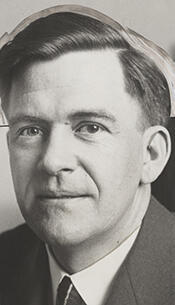
Here you will find contact information for Representative Franklin Frederick Korell, including email address, phone number, and mailing address.
| Name | Franklin Frederick Korell |
| Position | Representative |
| State | Oregon |
| District | 3 |
| Party | Republican |
| Status | Former Representative |
| Term Start | December 5, 1927 |
| Term End | March 3, 1931 |
| Terms Served | 2 |
| Born | July 23, 1889 |
| Gender | Male |
| Bioguide ID | K000317 |
About Representative Franklin Frederick Korell
Franklin Frederick Korell (July 23, 1889 – June 7, 1965) was an attorney, state legislator, and United States Congressman who represented the U.S. state of Oregon in the House of Representatives for two terms. A member of the Republican Party, he served in Congress from 1927 to 1931, contributing to the legislative process during a significant period in American history and representing the interests of his constituents in Oregon.
Korell was born in Portland, Oregon, on July 23, 1889, the son of Charles H. Korell, a Danish immigrant, and Frances Barrol Korell. He was educated in Portland’s public schools and at Bishop Scott Academy, a military and preparatory school in the city. Demonstrating an early interest in the law, he enrolled at the University of Oregon, where he earned a Bachelor of Laws degree in 1910. That same year he was admitted to the Oregon State Bar, marking the formal beginning of his legal career.
After his admission to the bar, Korell pursued further legal studies on the East Coast. From 1911 to 1912, he attended Yale Law School, gaining additional training and exposure to national legal thought. He then returned to Portland, where he opened a law practice and established himself as a young attorney. His early professional years were spent building a legal career in his home city before his service was interrupted by the First World War.
During World War I, Korell served in the United States Army, where he rose to the ranks of first lieutenant and captain. He was assigned to the 12th Infantry Regiment of the 8th Infantry Division and later to the 16th Infantry Division, serving from August 1917 to March 1919. His wartime service provided him with leadership experience and a national perspective that would later inform his public life. Following his discharge, he returned to Portland and resumed his law practice, reestablishing himself in the legal community.
Korell’s political career began at the state level. In 1921, he was elected to the Oregon House of Representatives, where he served one two-year term. His work in the state legislature helped build his reputation within the Republican Party and among Oregon voters. In 1927, he successfully sought national office. That year, Korell, a Republican, won election to the United States House of Representatives in a special election, defeating Democrat Elton Watkins. The election was held to fill the vacancy caused by the suicide of Representative Maurice E. Crumpacker. Korell took his seat representing Oregon in the U.S. Congress and was subsequently easily re-elected to a full term in 1928, defeating William C. Culbertson.
Franklin Frederick Korell’s service in Congress from 1927 to 1931 coincided with a pivotal era in American history, including the onset of the Great Depression following the Wall Street crash of 1929. As a member of the House of Representatives, he participated in the democratic process and contributed to the legislative work of the chamber, representing the interests of his Oregon constituents during a time of growing economic uncertainty. In 1930, he ran for re-election but faced a difficult political environment. The economic crisis created challenges for incumbents, particularly Republicans, and the Republican Party in Oregon was in disarray. In the gubernatorial race, George W. Joseph had won the Republican primary on a populist platform advocating public development of hydroelectric power along the Columbia River, but his death before the general election led party leaders to select Phil Metschan Jr., who opposed public power utilities. Joseph’s friend and business partner Julius Meier then mounted a successful independent campaign on Joseph’s platform, splitting the Republican vote. Amid this turmoil, Korell lost his bid for another term to Democrat Charles H. Martin by a margin of 55 percent to 40 percent.
After leaving Congress, Korell remained in Washington, D.C., and continued his public service in the federal government. From 1931 to 1943, he served as special assistant to the general counsel of the United States Treasury Department, working within the legal framework of federal fiscal policy during the New Deal and World War II era. In 1943, he moved to the chief counsel’s office of the Bureau of Internal Revenue (later the Internal Revenue Service), where he served from 1943 to 1959. In these roles, he applied his legal expertise to complex issues of taxation and federal finance, extending his public career well beyond his years in elective office.
In his personal life, Korell married Caroline Stoddard in 1932. She was the former wife of Brigadier General Billy Mitchell, a prominent and controversial advocate of air power in the U.S. military. Korell and his wife made their home in the Washington, D.C. area, residing in Alexandria, Virginia, during his long tenure in federal service and into his retirement. Franklin Frederick Korell died in Alexandria on June 7, 1965. In recognition of his military service and federal career, he was interred in Arlington National Cemetery.