Representative Fred George Aandahl
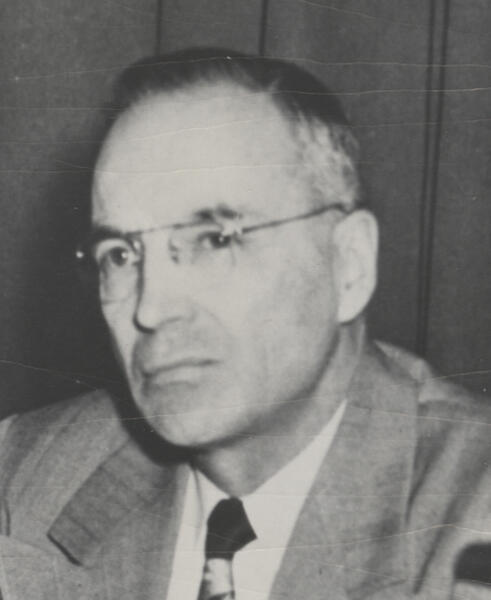
Here you will find contact information for Representative Fred George Aandahl, including email address, phone number, and mailing address.
| Name | Fred George Aandahl |
| Position | Representative |
| State | North Dakota |
| District | At-Large |
| Party | Republican |
| Status | Former Representative |
| Term Start | January 3, 1951 |
| Term End | January 3, 1953 |
| Terms Served | 1 |
| Born | April 9, 1897 |
| Gender | Male |
| Bioguide ID | A000001 |
About Representative Fred George Aandahl
Fred George Aandahl (April 9, 1897 – April 7, 1966) was an American Republican politician from North Dakota who served as the twenty-third governor of North Dakota from 1945 to 1951 and as a U.S. Representative from 1951 to 1953. Over the course of a long public career, he held offices at the local, state, and federal levels and contributed to the legislative and administrative processes during a significant period in mid-twentieth-century American history.
Aandahl was born on April 9, 1897, in Svea Township, Barnes County, North Dakota, the son of Norwegian emigrant Soren “Sam” J. Aandahl and his American-born wife, Mamie C. (Lawry) Aandahl. Raised in a rural farming community, he attended local schools and graduated from Litchville High School. He went on to study at the University of North Dakota, from which he graduated in 1921. After completing his university education, he returned to agricultural life and became a farmer, a vocation that would inform his later public service, particularly in matters related to land use, conservation, and rural development.
In addition to farming, Aandahl pursued a career in education in his home community. From 1922 to 1927 he served successively as a schoolteacher, principal, and then superintendent of schools in Litchville, North Dakota. His experience in the classroom and school administration gave him firsthand insight into the needs of rural education and local governance. On June 28, 1926, he married Luella Brekke; the couple had three daughters. His early professional life as both educator and farmer helped establish his reputation as a civic-minded leader rooted in the concerns of small-town and agricultural North Dakota.
Aandahl entered state politics in the early 1930s. He was elected to the North Dakota State Senate, serving terms in 1931, 1939, and 1941. In the legislature he represented the interests of his rural constituents and gained experience in state-level policymaking. Building on this legislative background, he successfully ran for governor and served as the twenty-third governor of North Dakota from 1945 to 1951. His gubernatorial tenure coincided with the post–World War II era, and his administration emphasized the protection of natural resources and the promotion of conservation programs. Under his leadership, the state advanced policies aimed at soil conservation, responsible land management, and the long-term stewardship of North Dakota’s agricultural and mineral resources.
After three terms as governor, Aandahl was elected as a Republican to the Eighty-second United States Congress, serving as a Representative from North Dakota from January 3, 1951, to January 3, 1953. During his single term in the U.S. House of Representatives, he participated in the democratic process at the national level and represented the interests of his North Dakota constituents during a period marked by the early Cold War and domestic debates over economic and agricultural policy. A member of the Republican Party, he contributed to the legislative process in committees and on the House floor, bringing to bear his experience as a farmer, educator, and former governor. He chose not to be a candidate for reelection to the Eighty-third Congress in 1952.
Instead of seeking another House term, Aandahl entered the 1952 Republican primary for the United States Senate from North Dakota. He challenged incumbent Senator William Langer and lost the primary by a margin of 58 percent to 42 percent. Undeterred, he continued his Senate bid in the general election as an independent Republican candidate against Langer and Democratic nominee Harold A. Morrison. In the three-way race he finished in third place, receiving approximately 10 percent of the vote. Although unsuccessful, this campaign underscored his continued prominence in state politics and his desire to influence national policy.
Following his congressional service and Senate campaign, Aandahl was appointed Assistant Secretary of the Interior in the administration of President Dwight D. Eisenhower. He held this post from 1953 to 1961, serving throughout both of Eisenhower’s terms. In this capacity, he was involved in federal oversight of public lands, natural resources, and related conservation and development programs—areas that reflected his long-standing interests as a farmer, governor, and public official. His work at the Department of the Interior extended his influence beyond North Dakota to national policy on land and resource management during a period of significant growth and infrastructure development in the United States.
Fred George Aandahl died on April 7, 1966, in Fargo, North Dakota, two days short of his sixty-ninth birthday. He was interred in Hillside Cemetery in Valley City, North Dakota. His papers are preserved at the University of North Dakota, and his career is documented in the records of the United States Congress and the State Historical Society of North Dakota, reflecting a life devoted to public service at multiple levels of government.