Senator Fred Herbert Brown
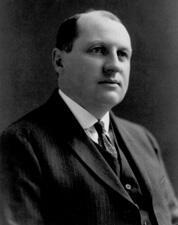
Here you will find contact information for Senator Fred Herbert Brown, including email address, phone number, and mailing address.
| Name | Fred Herbert Brown |
| Position | Senator |
| State | New Hampshire |
| Party | Democratic |
| Status | Former Representative |
| Term Start | March 9, 1933 |
| Term End | January 3, 1939 |
| Terms Served | 1 |
| Born | April 12, 1879 |
| Gender | Male |
| Bioguide ID | B000916 |
About Senator Fred Herbert Brown
Fred Herbert Brown (April 12, 1879 – February 3, 1955) was an American lawyer, professional baseball player, and Democratic politician from New Hampshire who served as the fifty‑ninth governor of New Hampshire and as a United States senator. Over the course of a varied public career, he held local, state, and federal offices, including mayor of Somersworth, United States Attorney for the District of New Hampshire, governor, U.S. senator from 1933 to 1939, and Comptroller General of the United States.
Brown was born on April 12, 1879, in New Hampshire, and was educated in the state before attending Dartmouth College. At Dartmouth he distinguished himself as a baseball player, a talent that led directly to a brief career in Major League Baseball. His collegiate experience at Dartmouth helped prepare him both for his later professional sports career and for the legal and political work that would follow.
Frank Selee of the Boston Beaneaters of the National League signed Brown before the 1901 season. Brown made his major league debut on May 4, 1901, as a right fielder. He appeared in seven games for the Beaneaters in 1901 before being sent to the Providence Grays of the Class A Eastern League. In 1902 he played in two additional games for the Beaneaters and spent most of that season with Providence. Over the 1901 and 1902 seasons he played in nine major league games, seven of them in the outfield, batting .200 (4-for-20) and handling 10 chances in the field without an error. In 1903 Brown coached the Dartmouth Big Green baseball team and also played for Providence and the Jersey City Skeeters of the Eastern League. He joined the Haverhill Hustlers of the Class B New England League in 1904 and returned to Haverhill in 1905 and 1906. Early in 1906 he suffered from pneumonia and never fully regained his strength; Haverhill released him during that season. By 1907 he had left organized professional baseball and was playing semi-professionally in Somersworth, New Hampshire.
While phasing out his baseball career, Brown pursued legal studies. He earned a law degree from Boston University and, after retiring from professional baseball, entered the practice of law. Establishing himself as an attorney in New Hampshire, he became active in local civic affairs and Democratic Party politics. His legal training and growing public profile in Somersworth provided the foundation for his entry into elective office and subsequent federal appointments.
Brown’s political career began at the municipal level when he was elected mayor of Somersworth, New Hampshire. His performance in local government led to his appointment as United States Attorney for the District of New Hampshire, where he represented the federal government in civil and criminal matters in the state. Building on this experience, Brown sought higher office and, as a Democrat in a predominantly Republican state, was elected governor of New Hampshire in 1922. Serving as the state’s fifty‑ninth governor, he held office during a period of post–World War I adjustment and early 1920s economic and political change. He was defeated for reelection in 1924, after which he continued his public service at the state level as a member of the Public Service Commission, dealing with the regulation of utilities and related matters.
In 1932 Brown was elected to the United States Senate as a Democrat from New Hampshire, taking office on March 4, 1933, and serving one full term until January 3, 1939. His tenure in the Senate coincided with the Great Depression and the administration of President Franklin D. Roosevelt. As a member of the Senate during this significant period in American history, Brown participated in the legislative process surrounding the New Deal and represented the interests of his New Hampshire constituents. A member of the Democratic Party, he contributed to the work of the Senate during his single term in office, engaging in the democratic process at a time of major federal economic and social legislation. He sought reelection in 1938 but was defeated, ending his Senate service after six years.
Following his departure from the Senate, Brown was appointed Comptroller General of the United States in 1939, becoming the head of the General Accounting Office (now the Government Accountability Office). In this role he oversaw federal auditing and fiscal oversight at the outset of the nation’s recovery from the Depression and on the eve of World War II. His tenure as Comptroller General was brief; he served from 1939 to 1940, resigning the position due to poor health.
In his later years, Brown lived in New Hampshire, where he remained a figure identified with both the state’s political history and its early twentieth‑century connection to professional baseball. He died on February 3, 1955. His career, spanning athletics, law, and public office at multiple levels of government, reflected an uncommon combination of professional sports experience and high federal service, including his term as governor, his service as United States senator from 1933 to 1939, and his leadership of the federal government’s chief auditing agency.