Representative Fred Nelson Cummings
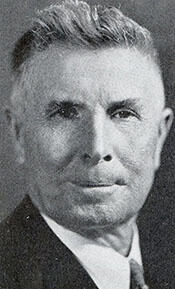
Here you will find contact information for Representative Fred Nelson Cummings, including email address, phone number, and mailing address.
| Name | Fred Nelson Cummings |
| Position | Representative |
| State | Colorado |
| District | 2 |
| Party | Democratic |
| Status | Former Representative |
| Term Start | March 9, 1933 |
| Term End | January 3, 1941 |
| Terms Served | 4 |
| Born | September 18, 1864 |
| Gender | Male |
| Bioguide ID | C000985 |
About Representative Fred Nelson Cummings
Fred Nelson Cummings (September 18, 1864 – November 10, 1952) was an American farmer, rancher, and attorney who served as a Democratic U.S. Representative from Colorado for four terms from 1933 to 1941. Over the course of his congressional career, he represented Colorado during a significant period in American history, contributing to the legislative process in the era of the New Deal and serving the interests of his constituents in the House of Representatives.
Frederick Nelson Cummings was born on a farm near Groveton, New Hampshire, on September 18, 1864, the son of George and Angeline Cummings. His father was a native of Canada and his mother was born in Vermont. In 1865, when he was still an infant, the family moved west to Clinton, Iowa. In 1879 they moved again, settling on a farm near West Union, Nebraska. Cummings attended local schools in both Clinton and West Union, receiving a basic rural education while working on the family farm. These early experiences in agriculture shaped his lifelong identification with farming and ranching and later informed his leadership in agricultural organizations and his legislative interests.
As a young man in Nebraska, Cummings became a farmer and rancher but also decided to pursue a legal career. He studied law under the supervision of an attorney in Nebraska, following the common practice of “reading law” rather than attending a formal law school. He was admitted to the bar in 1891 and began the practice of law in Custer County, Nebraska, while continuing his involvement in agriculture. In 1899 he ran as a Populist Party candidate for Custer County Judge, an effort that proved unsuccessful. During this campaign he faced accusations that he had falsely claimed to have studied law and been admitted to the bar, charges that became a point of controversy in local politics. After the Populist Party declined and ultimately became defunct, Cummings maintained his interest in reform-oriented politics and aligned himself with the Socialist Party of America, reflecting his continuing engagement with agrarian and labor issues.
In 1906, Cummings moved further west to Fort Collins, Colorado, where he resumed his primary vocation as a farmer and rancher and discontinued the active practice of law. He quickly became involved in local civic affairs and, from 1909 to 1913, served as a member of the Fort Collins city council. His leadership extended beyond municipal government into agricultural advocacy. Before his election to Congress, Cummings served as president of the Mountain States Beet Growers Association, a regional lobbying and issues advocacy organization representing sugar beet farmers. He later became president of the National Beet Growers Association, giving him a national profile in agricultural circles and positioning him as a prominent spokesman for the interests of beet growers and western farmers. In 1922 he sought county office as a Democrat, running unsuccessfully for Larimer County Commissioner, an early indication of his eventual shift into the Democratic Party.
Cummings’s national political career began with his election as a Democrat to the 73rd Congress in 1932, at the height of the Great Depression. He took office on March 4, 1933, and was reelected three times, serving four consecutive terms in the U.S. House of Representatives until January 3, 1941. As a member of the Democratic Party and the House of Representatives, Fred Nelson Cummings participated actively in the democratic process during a transformative period in American history, supporting legislation associated with President Franklin D. Roosevelt’s New Deal and representing the agricultural and rural interests of his Colorado constituents. His tenure in Congress coincided with major federal efforts to address economic hardship, stabilize agricultural markets, and reform financial and social institutions. In 1940 he was an unsuccessful candidate for reelection, bringing his congressional service to a close after eight years.
Following his departure from Congress, Cummings returned to Fort Collins and resumed the farming and ranching activities that had long defined his professional life. He remained a respected figure in the local community and in agricultural circles, drawing on decades of experience as a producer and advocate. His post-congressional years were spent largely in private life, although his earlier work with beet growers and his service in Congress left a lasting imprint on agricultural policy and representation in Colorado.
In his personal life, Cummings married Nancy Jane Sutton in 1889. The couple had five children: George, Ralph, Harry, Edna, and Hugh. Two of his sons, Harry and Hugh, predeceased him. Nancy Jane Sutton Cummings died in 1944. In 1947, Cummings married Ina Graham, who remained his wife until her death in 1951. These family relationships paralleled his long public career and anchored him in the communities where he lived and worked.
Fred Nelson Cummings died in Fort Collins, Colorado, on November 10, 1952. He was buried at Grandview Cemetery in Fort Collins. Remembered as a farmer, rancher, local official, agricultural leader, and four-term Democratic Representative from Colorado, his life traced the broader movement of many Americans westward and reflected the political and economic transformations of the late nineteenth and early twentieth centuries.