Representative Fred James Douglas
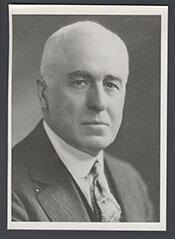
Here you will find contact information for Representative Fred James Douglas, including email address, phone number, and mailing address.
| Name | Fred James Douglas |
| Position | Representative |
| State | New York |
| District | 33 |
| Party | Republican |
| Status | Former Representative |
| Term Start | January 5, 1937 |
| Term End | January 3, 1945 |
| Terms Served | 4 |
| Born | September 14, 1869 |
| Gender | Male |
| Bioguide ID | D000453 |
About Representative Fred James Douglas
Fred James Douglas (September 14, 1869 – January 1, 1949) was a United States Representative from New York and a physician who combined a long medical career with extensive service in local and national government. Born in Clinton, Worcester County, Massachusetts, he moved with his parents in 1874 to Little Falls, New York, where he was raised. He attended the public schools in New York, laying the foundation for a professional life that would span medicine, municipal administration, and federal legislative service.
Douglas pursued higher education in medicine and was graduated from the medical department of Dartmouth College in 1895. Immediately after completing his medical degree, he moved to Utica, New York, in 1895 and commenced the practice of medicine. Establishing himself as a physician and later as a surgeon, he became a recognized member of the local professional community. His medical practice in Utica would remain a central element of his career, to which he would return after his service in public office.
In addition to his medical work, Douglas became active in civic affairs in Utica in the early twentieth century. He served as a member of the Utica board of education from 1910 to 1920, participating in the oversight and development of the city’s public school system during a decade of growth and reform in American education. His involvement in local governance expanded when he was elected Mayor of Utica, serving from 1922 to 1924. In this executive municipal role, he was responsible for the administration of city services and local policy at a time when Utica was experiencing industrial and demographic change. Later, he continued his engagement in city administration as commissioner of public safety of Utica in 1928 and 1929, overseeing public safety functions such as police and fire protection. Seeking higher statewide office, he ran in 1934 as a candidate for Lieutenant Governor of New York, but was unsuccessful in that bid.
Douglas’s experience in local and state politics helped propel him to national office. A member of the Republican Party, he was elected to the United States House of Representatives as a Republican to the Seventy-fifth Congress and was reelected to the three succeeding Congresses, serving four consecutive terms. His tenure in Congress extended from January 3, 1937, to January 3, 1945. During these years, he represented his New York district through the latter part of the Great Depression and the early years of World War II, participating in the legislative process at a time of major federal expansion and global conflict. As a member of the House of Representatives, Fred James Douglas contributed to the legislative process and represented the interests of his constituents, engaging in the democratic governance of the nation during a significant period in American history.
After eight years in Congress, Douglas sought to continue his service but was an unsuccessful candidate for renomination in 1944. Following his departure from the House of Representatives in January 1945, he returned to Utica and resumed his former profession as a surgeon, reentering the medical practice that had anchored his career before and between his public offices. He remained in Utica for the remainder of his life.
Fred James Douglas died in Utica, New York, on January 1, 1949. He was interred in Mount Olivet Cemetery in Whitesboro, New York. His life reflected a combination of medical service, local educational and municipal leadership, and federal legislative work, spanning from the late nineteenth century into the mid-twentieth century.