Senator Fred Thomas Dubois
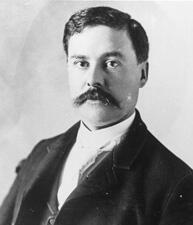
Here you will find contact information for Senator Fred Thomas Dubois, including email address, phone number, and mailing address.
| Name | Fred Thomas Dubois |
| Position | Senator |
| State | Idaho |
| Party | Democratic |
| Status | Former Representative |
| Term Start | December 5, 1887 |
| Term End | March 3, 1907 |
| Terms Served | 4 |
| Born | May 29, 1851 |
| Gender | Male |
| Bioguide ID | D000509 |
About Senator Fred Thomas Dubois
Fred Thomas Dubois (May 29, 1851 – February 14, 1930) was an American politician from Idaho who served in the United States Senate during a significant period in American history. Over the course of his national career he served two full terms in the Senate, from 1891 to 1897 and from 1901 to 1907, and was associated at different times with the Republican, Silver Republican, and Democratic parties. A member of the Democratic Party during his later years in office, he contributed to the legislative process during four terms in Congress and became best known for his opposition to the gold standard, his advocacy of bimetallism, and his efforts to disenfranchise Mormon voters.
Dubois was born in Palestine, Crawford County, Illinois, on May 29, 1851, into a politically active family of part French‑Canadian descent. His paternal grandfather, Toussaint Dubois, was an immigrant who distinguished himself at the Battle of Tippecanoe. His father, Jesse Kilgore Dubois, was an official at the U.S. Land Office in Palestine, a former judge and state legislator, an early supporter of the Republican Party, and a close friend of Abraham Lincoln. In 1856 Jesse Dubois was elected Illinois state auditor and moved the family to Springfield, the state capital, where Fred Dubois grew up in an environment closely connected to the emerging Republican leadership of the era.
Dubois attended Yale College from 1870 to 1872, where he was elected to the secret society Scroll and Key. Leaving Yale before graduation, he entered business pursuits in Illinois. In 1875 he was appointed to the Illinois Board of Railroad and Warehouse Commissioners, a position he held for about a year. He resigned shortly before the death of his father, after which he continued to seek opportunities in public affairs. In 1880 he moved west to the Idaho Territory with his brother, Dr. Jesse Dubois Jr., a physician, marking the beginning of his long association with Idaho’s political development.
In 1882 Dubois was appointed United States Marshal for the Idaho Territory. In that office he launched a vigorous and controversial campaign to disenfranchise Mormon voters in the territory on the grounds that they violated federal law by practicing polygamy. His success in mobilizing anti‑Mormon sentiment and enforcing anti‑polygamy statutes elevated his political profile. Running as a Republican in 1886, he defeated Democratic incumbent John Hailey to become Idaho Territory’s delegate to the United States Congress, a position he held until Idaho achieved statehood in 1890. As delegate, he strongly supported Idaho’s application for statehood and opposed proposals to partition the territory among neighboring states. He reputedly lobbied President Benjamin Harrison for statehood by invoking the shared Battle of Tippecanoe legacy of his grandfather and Harrison’s grandfather, President William Henry Harrison. On July 3, 1890, Dubois urged Harrison to sign the Idaho statehood act on July 4, but when the President explained that doing so would delay Idaho’s star on the flag for a year, Dubois requested immediate signature, which Harrison granted, and Idaho became a state in July 1890.
Following statehood, Dubois played a central role in organizing Idaho’s initial representation in the United States Senate. In November 1890 he helped engineer a plan under which the Idaho Legislature effectively chose three men for the Senate: Governor George Shoup to the Class 2 seat with a term expiring in 1895; William J. McConnell to fill the remainder of the 51st Congress until March 1891; and Dubois himself to succeed McConnell in the Class 3 seat for a full six‑year term beginning March 4, 1891. During this first term in the Senate, Dubois concentrated on domestic issues affecting his state. He supported high protective tariffs, particularly on wool and lead, important Idaho products, and assisted in negotiating a treaty with the Nez Perce in 1894. His views on Native Americans were often harsh and racially charged; in 1895, commenting on the exemption of the Bannock people from hunting limits, he stated that “the extermination [driven over the boundary] of the whole lazy, shiftless non‑supporting tribe of Bannocks would not be any great loss.”
Dubois’ most prominent national stance in the 1890s was his opposition to the gold standard and his advocacy of bimetallism. Aligning with western silver interests, he became a leading supporter of free silver. In 1896 he joined others in leaving the Republican Party to form the Silver Republican faction. He considered fusing Idaho Republicans with Democrats and Populists, but internal party conflict led to his allies being ousted from the state Republican organization. The resulting disarray helped deliver control of the Idaho Legislature to Democrats and Populists, and in 1896 the legislature chose Populist Henry Heitfeld to succeed him. Dubois left the Senate in March 1897 and returned to his ranch near Blackfoot, Idaho, where he raised alfalfa and remained a figure in state politics.
As the Silver Republican movement waned, many observers believed Dubois’ political career had ended. However, in 1900, still refusing to rejoin the Republican Party, he secured election to the United States Senate once more, this time by a Democratic‑controlled Idaho Legislature that chose him over his former ally, Senator George Shoup. When he returned to the Senate in 1901 he formally affiliated with the Democratic Party, becoming one of the few politicians of his era to serve in Congress as both a Republican and a Democrat. During this second term, which lasted until March 3, 1907, he continued to oppose the gold standard and to advocate for silver, but he devoted much of his energy to opposing both American imperial expansion and the political influence of the Church of Jesus Christ of Latter‑day Saints. He led a group of senators in an extended effort to prevent Reed Smoot of Utah, the first Mormon elected to the Senate, from taking or retaining his seat.
Dubois’ views on foreign policy and race were central to his work in the early twentieth century. He opposed making the Philippines, acquired from Spain after the Spanish–American War, a permanent American territory and initially supported independence for the islands. After visiting the Philippines in 1905, however, he reversed his position, declaring that Filipinos could not govern themselves and proposing that the United States sell the islands to Japan. His arguments were rooted in overtly racist assumptions; he disparaged Filipinos and other ethnic groups, asserting that “It is difficult to get the Filipino to labor at all,” and comparing Hawaiians to “our American negro” in claiming they would not work. He feared economic competition from the new territories, particularly if Japanese laborers migrated there, and favored trade barriers to restrict Philippine sugar and tobacco in American markets. He also supported stringent limits on Chinese immigration. At the same time, he broke with many Democrats by backing President Theodore Roosevelt’s conservation agenda and supported William Randolph Hearst for the Democratic presidential nomination in 1904. His intense focus on anti‑Mormon politics contributed to heavy electoral losses for Idaho Democrats, and in January 1907 a Republican legislature elected Boise attorney William E. Borah to succeed him; Borah would go on to serve more than three decades in the Senate.
After leaving the Senate in 1907, Dubois settled in Washington, D.C., where he lived for the remainder of his life. He engaged in various business ventures and writing projects, though these efforts met with limited success. He remained active in Democratic politics, supporting Champ Clark for the party’s presidential nomination in 1912 and, after Clark’s defeat, working for Woodrow Wilson’s presidential campaigns in 1912 and 1916. During World War I he served on the Board of Ordnance from 1918 to 1920. Later, from 1924 until his death, he was a member of a commission dealing with United States boundary disputes with Canada. His last major political activity came in 1918, when he supported candidates of both parties in Idaho, including Senator Borah, in an effort to advance Wilson’s progressive program.
Fred Thomas Dubois died in Washington, D.C., on February 14, 1930. He was buried in Grove City Cemetery in Blackfoot, Idaho, reflecting his long association with the state he had helped bring into the Union and represented in Congress. His name endures in several western communities: the county seat of Clark County, Idaho, is named Dubois, as is the town of Dubois in Fremont County, Wyoming, and Dubois Avenue in Twin Falls, Idaho. His 1891 mansion at 320 Southeast Main Street in Blackfoot still stands as a reminder of his prominent, if often controversial, role in Idaho and national politics.