Representative Fred Christian Gartner
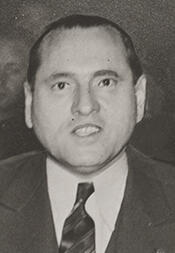
Here you will find contact information for Representative Fred Christian Gartner, including email address, phone number, and mailing address.
| Name | Fred Christian Gartner |
| Position | Representative |
| State | Pennsylvania |
| District | 5 |
| Party | Republican |
| Status | Former Representative |
| Term Start | January 3, 1939 |
| Term End | January 3, 1941 |
| Terms Served | 1 |
| Born | March 14, 1896 |
| Gender | Male |
| Bioguide ID | G000087 |
About Representative Fred Christian Gartner
Fred Christian Gartner (March 14, 1896 – September 1, 1972) was a Republican member of the U.S. House of Representatives from Pennsylvania who served one term in Congress from 1939 to 1941. Over the course of his public life, he participated in the federal legislative process during a pivotal era in American history, representing the interests of his Pennsylvania constituents in the national government.
Born on March 14, 1896, Gartner came of age in the late nineteenth and early twentieth centuries, a period marked by rapid industrialization and social change in the United States and particularly in Pennsylvania, a center of manufacturing and resource extraction. The economic and political environment of his youth, shaped by labor issues, urban growth, and the expanding role of the federal government, provided the broader context for his later political career. Details of his early family life and upbringing are not extensively documented in the public record, but his subsequent professional and political activities reflect an engagement with the concerns of his region and era.
Information about Gartner’s formal education is limited in surviving accounts, and the specific institutions he attended are not clearly recorded in standard biographical references. Nonetheless, his eventual election to Congress suggests that he attained the level of education and professional experience typical of mid‑twentieth‑century legislators, enabling him to navigate the legal, economic, and political questions that came before the House of Representatives. His educational and early professional background would have prepared him to address the needs of his constituents and to participate effectively in legislative deliberations.
Before entering Congress, Gartner aligned himself with the Republican Party, which in Pennsylvania during the first half of the twentieth century was a dominant political force, particularly in many industrial and rural areas. Within this partisan framework, he developed the political connections and public profile necessary to seek federal office. His affiliation with the Republican Party placed him within a tradition that emphasized business interests, fiscal conservatism, and, in the pre–World War II period, a range of views on foreign policy and the appropriate scope of federal intervention in the economy.
Gartner was elected as a Republican to the U.S. House of Representatives from Pennsylvania and served in the Seventy‑sixth Congress, which convened from January 3, 1939, to January 3, 1941. His tenure in Congress thus spanned a significant period in American history, as the nation was emerging from the Great Depression and confronting the growing threat of global conflict in Europe and Asia. As a member of the House of Representatives, Fred Christian Gartner contributed to the legislative process during this one term in office, participating in debates and votes on domestic and foreign policy measures that shaped the late New Deal era and the country’s initial responses to the unfolding international crisis.
During his time in Congress, Gartner took part in the democratic process at the federal level, representing the interests of his Pennsylvania constituents in the House. While detailed records of his specific committee assignments and sponsored legislation are not extensively preserved in commonly cited summaries, his service coincided with major legislative considerations involving economic recovery, national defense preparedness, and adjustments to federal programs initiated earlier in the decade. In this context, he joined his colleagues in weighing the balance between national priorities and the particular needs of his district and state.
After leaving Congress at the conclusion of his term in 1941, Gartner did not return to the House of Representatives. The public record provides limited information about his subsequent professional activities, but like many one‑term members of Congress of his era, he likely resumed private pursuits or other forms of public or civic engagement in Pennsylvania. His later years unfolded against the backdrop of World War II, the postwar economic expansion, and the evolving political landscape of the mid‑twentieth century, developments that continued to shape the state and nation he had briefly served in Congress.
Fred Christian Gartner died on September 1, 1972. His career in the U.S. House of Representatives, though limited to a single term from 1939 to 1941, placed him among the Pennsylvanians who have taken part in the work of the national legislature. His service as a Republican representative during a transformative period in American history ensured that his name would be recorded in the annals of congressional history and in the broader narrative of Pennsylvania’s political life.