Senator Fred Harris
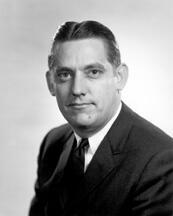
Here you will find contact information for Senator Fred Harris, including email address, phone number, and mailing address.
| Name | Fred Harris |
| Position | Senator |
| State | Oklahoma |
| Party | Democratic |
| Status | Former Representative |
| Term Start | January 1, 1964 |
| Term End | January 3, 1973 |
| Terms Served | 5 |
| Born | November 13, 1930 |
| Gender | Male |
| Bioguide ID | H000237 |
About Senator Fred Harris
Fred Roy Harris (November 13, 1930 – November 23, 2024) was an American politician, scholar, and author from Oklahoma who served from 1957 to 1964 as a member of the Oklahoma Senate and from 1964 to 1973 as a United States Senator. A member of the Democratic Party, he was a prominent advocate of Great Society legislation, civil rights, Native American rights, and what he later termed the “New Populism.” He also chaired the Democratic National Committee, was seriously considered for the vice presidency in 1968, and sought the Democratic presidential nomination in 1972 and 1976 before embarking on a long academic and writing career.
Harris was born on November 13, 1930, in Cotton County, Oklahoma, near Walters, the son of Eunice Alene (Pearson) and Fred Byron Harris, a sharecropper. His upbringing in rural poverty during the Great Depression shaped his later political emphasis on economic justice and opportunities for working people and farmers. His parents disagreed over whether his middle name should be “Ray” or “Roy,” and the handwriting on his birth certificate was ambiguous; as an adult he chose to use his mother’s preferred spelling, Roy. He attended the University of Oklahoma on a scholarship, graduating in 1952 with a bachelor’s degree in history and political science. Harris then entered the University of Oklahoma College of Law, where he served as administrative assistant to the dean and successively as book editor and managing editor of the Oklahoma Law Review. His first published article appeared in the August 1956 issue of the Law Review. He received his LL.B. degree with distinction and was admitted to the Oklahoma bar in 1954.
Harris entered elective politics soon after completing law school. In 1956 he was elected to the Oklahoma Senate, in which he served from 1957 to 1964 and for much of that period was one of its youngest members. As a state senator he introduced legislation to prohibit racial discrimination in state employment, reflecting his early commitment to civil rights. In 1962 he made an unsuccessful bid for governor of Oklahoma, a campaign that nonetheless increased his visibility and name recognition statewide. During these years he combined legislative work with the practice of law and began to emerge as a leading young Democrat in a state then dominated by his party.
Harris’s national career began with the 1964 special election to fill the United States Senate seat left vacant by the death of Senator Robert S. Kerr. With the support of Kerr’s family, he challenged former governor J. Howard Edmondson, who had appointed himself to the seat, and defeated him in the Democratic primary. In the general election he faced Republican nominee Bud Wilkinson, the celebrated University of Oklahoma football coach, in a high-profile contest that drew national attention. Republicans brought former Vice President Richard Nixon to Oklahoma to campaign for Wilkinson, while Harris campaigned with President Lyndon B. Johnson and First Lady Lady Bird Johnson. Harris narrowly defeated Wilkinson by 21,390 votes and, at age 33, became one of the youngest members of the U.S. Senate and the youngest senator-elect in Oklahoma history. His Senate service officially began on November 4, 1964. He was reelected in 1966 to a full term, defeating attorney Pat J. Patterson by 47,572 votes, after publicly opposing a proposed constitutional amendment sponsored by Senator Everett Dirksen to allow organized school prayer, stating that he believed in separation of church and state and that prayer and Bible reading should be voluntary. He declined to seek another Senate term in 1972.
During his Senate tenure from 1964 to 1973, Harris strongly supported President Johnson’s Great Society programs, including landmark civil rights and anti-poverty legislation that was often unpopular in increasingly conservative Oklahoma. He voted for the Voting Rights Act of 1965. Although he was absent on official Senate business during the 1967 votes on the confirmation of Thurgood Marshall to the Supreme Court and was ill during the final vote on the Civil Rights Act of 1968, it was announced on the Senate floor that he supported both measures and would have voted in favor had he been present. He did participate in the key cloture vote to end the filibuster against the 1968 Act and voted to end the filibuster so the bill could proceed. Harris became a leading liberal voice on domestic policy while breaking with Johnson and later with Vice President and 1968 Democratic presidential nominee Hubert Humphrey over the Vietnam War. In July 1967 Johnson appointed him to the National Advisory Commission on Civil Disorders, commonly known as the Kerner Commission, where he was one of its most active members and focused particular attention on the conditions of economically deprived Black urban residents. He also championed agricultural programs, the Arkansas River Navigation Program, and Indian health initiatives, all of which were important to his Oklahoma constituents. In 1970 he played a major role in legislation restoring 48,000 acres of mountain land, including the sacred Blue Lake, to the Taos Pueblo in New Mexico. To secure passage, he forged a bipartisan alliance with President Richard Nixon, despite their sharp disagreements on issues such as the Vietnam War, and overcame opposition from influential Democratic Senators Clinton Anderson and Henry M. Jackson. Harris later recalled that when Nixon signed the bill, the president remarked that he could hardly believe he was signing legislation sponsored by Fred Harris. In judicial matters, Harris was the only senator to vote against confirming Lewis F. Powell Jr. to the Supreme Court in 1971, citing concerns about Powell’s elitism and civil rights record, and he joined J. William Fulbright as one of only two Southern senators to oppose the confirmation of William Rehnquist. He also called for the abolition of the Interstate Commerce Commission, reflecting his skepticism toward regulatory bodies he believed had been captured by the interests they regulated.
In addition to his Senate duties, Harris held significant positions within the national Democratic Party. From 1969 to 1970 he served as chair of the Democratic National Committee, succeeding and later being succeeded by Larry O’Brien. During the 1968 presidential campaign, Democratic nominee Hubert Humphrey seriously considered Harris as his vice-presidential running mate. Harris, then 37, was one of the final two contenders for the spot, along with Senator Edmund Muskie of Maine. Humphrey ultimately chose Muskie, in part because of concerns about Harris’s youth, after vacillating between the two until the last moment. Harris’s growing national profile, combined with his outspoken opposition to the Vietnam War and his advocacy of economic and political reform, positioned him as a leading figure in the party’s liberal and populist wing.
Harris chose not to seek reelection to the Senate in 1972 and instead pursued the Democratic presidential nomination. His 1972 campaign, however, failed to gain traction, and he ended it after only 48 days. He ran again in 1976, this time mounting a more sustained effort built around what he called “economic democracy” and a “New Populism” that emphasized the interests of workers, farmers, and consumers against concentrated economic power. His platform included support for abortion rights, desegregation busing, and the disbanding of the Central Intelligence Agency, as well as strong advocacy for Native American rights, an interest connected both to his own ancestry and to that of his first wife, LaDonna Harris, a Comanche activist. To keep costs low and underscore his populist message, Harris traveled the country in a recreational vehicle and stayed in private homes, leaving his hosts a card good for one night’s stay in the White House if he were elected. After a surprising fourth-place finish in the 1976 Iowa caucuses, with more than 10 percent of the vote and ahead of Mo Udall, he coined the phrase “winnowed in” to describe his campaign’s survival of the early contest. Nonetheless, he finished fourth in New Hampshire, then third in Vermont and fifth in Massachusetts, and his best later showing was fourth in Illinois with 8 percent of the vote. He suspended his campaign on April 8, 1976.
After leaving electoral politics in 1976, Harris turned to academia and writing. He became a professor of political science at the University of New Mexico, where he taught and wrote extensively on American politics and public policy. In 1973 he published The New Populism, in which he elaborated a political philosophy centered on economic decentralization and deep skepticism toward concentrated power in both government and large private institutions. The book proposed eliminating subsidies for affluent students and wealthy farmers, adopting a negative income tax and a land value tax, and creating a modern Homestead Act. Harris advocated employee ownership of corporations, closing tax loopholes benefiting high earners, and strengthening antitrust enforcement to break up large companies and promote competition. He also called for public ownership of monopolies in sectors lacking genuine competition and for bringing the Federal Reserve under full public ownership. His later works included Potomac Fever (1977) and Deadlock or Decision: The U.S. Senate and the Rise of National Politics (1993), and he also wrote three novels. In 2003 he was elected to the National Governing Board of Common Cause, reflecting his continued engagement with issues of governmental reform and democratic accountability. He lived for many years in Corrales, New Mexico.
Harris remained publicly engaged well into his nineties. In a 2023 interview he expressed strong support for President Joe Biden, dismissing concerns about Biden’s age as unfounded, and sharply criticized former President Donald Trump for efforts to overturn the 2020 presidential election and for the events leading to the January 6, 2021, attack on the U.S. Capitol. In 2024 he and his wife attended the Democratic National Convention in support of the party’s ticket. His final book, a memoir titled Report from a Last Survivor, was published by the University of New Mexico Press in September 2024, offering reflections on his life in politics and public service.
Harris married LaDonna Crawford (later known as LaDonna Harris), a Comanche activist and future national Native American leader, in 1949; they had three children. The couple divorced in 1981. In 1982 he married Margaret Elliston. Fred Roy Harris died at a hospital in Albuquerque, New Mexico, on November 23, 2024, ten days after his 94th birthday. At the time of his death he was the last living former United States senator whose service ended in the 1970s.