Representative Frederick K. (Fred) Heineman
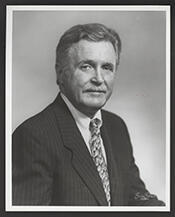
Here you will find contact information for Representative Frederick K. (Fred) Heineman, including email address, phone number, and mailing address.
| Name | Frederick K. (Fred) Heineman |
| Position | Representative |
| State | North Carolina |
| District | 4 |
| Party | Republican |
| Status | Former Representative |
| Term Start | January 4, 1995 |
| Term End | January 3, 1997 |
| Terms Served | 1 |
| Born | December 28, 1929 |
| Gender | Male |
| Bioguide ID | H000452 |
About Representative Frederick K. (Fred) Heineman
Frederick K. Heineman (December 28, 1929 – March 20, 2010) was an American law enforcement officer and politician who served one term as a Republican U.S. Representative from North Carolina in the 104th United States Congress from 1995 to 1997. Over the course of a long career in public service, he rose from New York City police officer to chief of police in Raleigh, North Carolina, and ultimately to membership in the U.S. House of Representatives, where he represented his constituents during a period of significant political change in the mid-1990s.
Heineman was born in New York City, New York, and raised in The Bronx. He attended Mt. St. Michael High School in The Bronx, receiving his early education in the city where he would later begin his law enforcement career. He pursued further studies at several institutions, including Concordia Junior College, Westchester Community College, the University of Bridgeport, St. Francis College, and John Jay College. Although he did not emerge from a single, traditional academic path, his education reflected a sustained engagement with higher learning that accompanied his professional advancement.
From 1951 to 1954, Heineman served in the United States Marine Corps, entering military service during the early years of the Cold War. Following his discharge from the Marines, he joined the New York City Police Department in 1955. Heineman served as a New York City police officer for nearly a quarter century, from 1955 to 1979, working in a department that was confronting the challenges of urban crime, social change, and evolving policing practices. His long tenure with the NYPD provided him with extensive experience in law enforcement and public safety that would shape his later roles.
In 1979, Heineman moved to Raleigh, North Carolina, to become that city’s chief of police. He served as Raleigh’s chief of police for 15 years, a period during which the city began an explosive phase of population and economic growth that continued into the following decades. As chief, he was noted for promoting many women and minorities to senior positions in the department for the first time, broadening the leadership ranks in ways that reflected changing social and professional norms. Heineman became a well-known public figure in Raleigh, cutting a distinct figure with his thick New York accent and his visible role in managing law enforcement in a rapidly growing Southern city.
In 1994, Heineman stepped down as chief of police and entered electoral politics as a Republican candidate for Congress from North Carolina. Running in the context of the national “Republican Revolution” of 1994, he challenged and defeated incumbent Democratic Representative David Price. Heineman took office on January 3, 1995, as a member of the U.S. House of Representatives in the 104th Congress, serving until January 3, 1997. During his single term in Congress, he participated in the legislative process at a time of significant partisan realignment and debate over federal policy, representing the interests of his North Carolina constituents as part of the new Republican majority.
As a member of the House of Representatives, Heineman compiled an unshakably conservative voting record, earning a lifetime rating of 92 from the American Conservative Union. He was an active legislator, introducing bills and co-sponsoring a substantial number of measures. Two bills he introduced were passed by the House of Representatives: H.R. 1499, the Consumer Fraud Prevention Act of 1995, which passed on September 25, 1996, and H.R. 3852, the Comprehensive Methamphetamine Control Act of 1996, which passed on September 26, 1996. Over the course of the 104th Congress, he co-sponsored 174 bills. Heineman cast 1,287 votes, participating in 95.8 percent of roll calls, and did not vote 56 times, or 4.2 percent of the time. His tenure was not without controversy; he came under public criticism when he asserted that, despite earning a combined $183,000 from his New York City Police Department and Raleigh pensions and his congressional salary, he considered himself part of the “lower middle class,” and further argued that individuals making between $300,000 and $750,000 were members of the middle class.
In the 1996 election, after serving one term, Heineman sought re-election but was defeated by the Democrat he had unseated two years earlier, David Price, thus concluding his congressional service at the end of the 104th Congress in January 1997. Following his departure from Congress, Heineman returned to private life in Raleigh, where he remained a notable figure due to his long tenure as police chief and his brief but active service in the U.S. House of Representatives.
Fred Heineman died on March 20, 2010, at his home in Raleigh, North Carolina. His career spanned military service, big-city and municipal policing, and national legislative office, marking him as a prominent law enforcement professional who also played a role in the political transformations of the 1990s.