Representative Fred Herman Hildebrandt
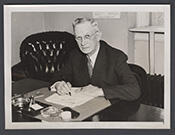
Here you will find contact information for Representative Fred Herman Hildebrandt, including email address, phone number, and mailing address.
| Name | Fred Herman Hildebrandt |
| Position | Representative |
| State | South Dakota |
| District | 1 |
| Party | Democratic |
| Status | Former Representative |
| Term Start | March 9, 1933 |
| Term End | January 3, 1939 |
| Terms Served | 3 |
| Born | August 2, 1874 |
| Gender | Male |
| Bioguide ID | H000584 |
About Representative Fred Herman Hildebrandt
Fred Herman Hildebrandt (August 2, 1874 – January 26, 1956) was a Democratic member of the United States House of Representatives from South Dakota, serving three consecutive terms from 1933 to 1939. Over the course of his public career, he contributed to the legislative process during a significant period in American history, representing the interests of his constituents in northeastern South Dakota during the New Deal era.
Hildebrandt was born on August 2, 1874, in West Bend, Washington County, Wisconsin. In his youth he moved with his parents to Waupun, Wisconsin, where he attended the public schools and completed his studies at the local high school. His early years in Wisconsin provided him with a basic education and exposure to the civic life of a growing Midwestern community at the end of the nineteenth century.
In 1900, Hildebrandt moved west to Watertown, Codington County, South Dakota, which would remain his principal home for much of his adult life. He began working for the Chicago and North Western Railway, entering an industry that was central to the economic development of the Upper Midwest and Great Plains. From 1903 to 1932 he made railroad work his primary career, spending nearly three decades in various capacities with the company. This long association with the railroad connected him closely to the region’s agricultural and commercial interests and helped establish his standing in the community.
Hildebrandt’s formal political career began at the state level. A member of the Democratic Party, he was elected to the South Dakota House of Representatives, serving from 1922 to 1923. He later gained further administrative and conservation experience when he was appointed head of the South Dakota Game and Fish Commission, a position he held from 1927 to 1931. In that role he was responsible for overseeing the state’s wildlife resources and regulatory policies at a time when conservation issues were becoming increasingly important in the rural West and Midwest.
In 1932, amid the economic turmoil of the Great Depression, Hildebrandt was elected as a Democrat to the United States House of Representatives from South Dakota. He took his seat in the Seventy-third Congress on March 4, 1933, and was reelected to the Seventy-fourth and Seventy-fifth Congresses, serving three consecutive terms through January 3, 1939. During these years he participated in the democratic process at the national level, supporting and debating legislation associated with President Franklin D. Roosevelt’s New Deal and representing the concerns of his South Dakota constituents in matters of agriculture, transportation, and economic relief. His tenure in Congress coincided with a transformative period in federal policymaking and in the relationship between the federal government and the states.
In 1938, rather than seeking another term in the House, Hildebrandt became a candidate for the United States Senate. He ran in the Democratic primary but was unsuccessful, losing the nomination to former Governor Tom Berry. This defeat effectively ended his pursuit of higher office. After his congressional service concluded in 1939, he retired from public life and returned to private residence in Watertown, South Dakota, withdrawing from active political engagement.
In his later years, Hildebrandt divided his time between South Dakota and Florida. He died on January 26, 1956, in Bradenton, Manatee County, Florida. His remains were returned to South Dakota, and he was buried at Mount Hope Cemetery in Watertown. His career, spanning railroad service, state office, and three terms in the U.S. House of Representatives, reflected the trajectory of a Midwestern Democrat who rose from local prominence to national service during one of the most challenging eras in American history.