Representative Fred Schuyler Jackson
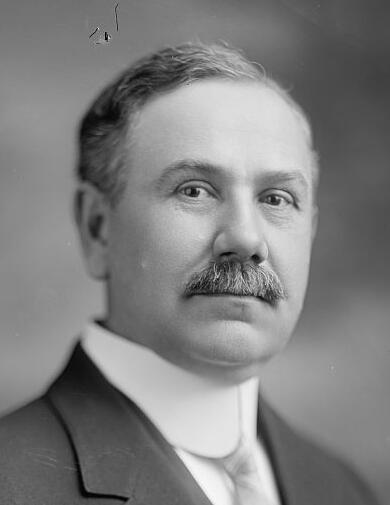
Here you will find contact information for Representative Fred Schuyler Jackson, including email address, phone number, and mailing address.
| Name | Fred Schuyler Jackson |
| Position | Representative |
| State | Kansas |
| District | 4 |
| Party | Republican |
| Status | Former Representative |
| Term Start | April 4, 1911 |
| Term End | March 3, 1913 |
| Terms Served | 1 |
| Born | April 19, 1868 |
| Gender | Male |
| Bioguide ID | J000011 |
About Representative Fred Schuyler Jackson
Fred Schuyler Jackson (April 19, 1868 – November 21, 1931) was an American lawyer and Republican politician who served one term as a U.S. Representative from Kansas from 1911 to 1913. During his service in Congress, he represented the interests of his Kansas constituents and contributed to the legislative process at a significant period in American history.
Jackson was born in Stanton, Kansas, on April 19, 1868. In 1881 he moved with his parents to Greenwood County, Kansas. He attended the public schools of Miami and Greenwood Counties, receiving a basic education in the developing public school systems of rural Kansas. From 1885 to 1890 he taught school in Kansas, an early professional experience that grounded him in the concerns of local communities and the educational needs of the state.
Pursuing a career in law, Jackson enrolled at the University of Kansas at Lawrence, where he studied law and was graduated in 1892. That same year he was admitted to the bar and commenced the practice of law in Eureka, Kansas. Establishing himself as a practicing attorney, he quickly became involved in public legal work at the county level, which provided a foundation for his later statewide and national service.
Jackson’s public career began in earnest when he was elected prosecuting attorney of Greenwood County, serving from 1893 to 1897. In this role he was responsible for representing the county in criminal matters and enforcing state law at the local level. His performance in county office led to higher responsibilities in state government. He served as assistant state attorney general in 1906 and 1907, and subsequently was elected state Attorney General of Kansas, holding that office from 1907 to 1911. As Attorney General, he was a key legal officer of the state during a period marked by progressive-era reforms and increasing regulation of business and public affairs.
Building on his record in state office, Jackson was elected as a Republican to the Sixty-second Congress, serving as a U.S. Representative from Kansas from March 4, 1911, to March 3, 1913. His single term in the House of Representatives coincided with a time of significant national debate over issues such as tariff policy, regulation of corporations, and political reform. As a member of the House, he participated in the democratic process and represented the interests of his Kansas constituents in federal legislative matters. He was an unsuccessful candidate for reelection in 1912 to the Sixty-third Congress, which ended his service in the national legislature after one term.
After leaving Congress, Jackson resumed the practice of law in Eureka and Topeka, Kansas. In 1915 he moved permanently to Topeka, having been appointed attorney for the Public Utilities Commission of Kansas. In that capacity, which he held until 1924, he was involved in the legal oversight and regulation of public utilities at a time when states were increasingly asserting authority over railroads, electricity, and other essential services. Following his tenure with the commission, he again returned to private legal practice in Topeka.
In addition to his legal and political work, Jackson engaged in agricultural pursuits and stock raising in Greenwood, Wabaunsee, and Jefferson Counties, maintaining ties to the agricultural economy that was central to Kansas life. He died in Topeka, Kansas, on November 21, 1931. Jackson was interred in Greenwood Cemetery in Eureka, Kansas, reflecting his long association with Greenwood County and his early professional and public service there.