Representative Fred Sampson Purnell
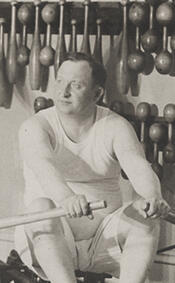
Here you will find contact information for Representative Fred Sampson Purnell, including email address, phone number, and mailing address.
| Name | Fred Sampson Purnell |
| Position | Representative |
| State | Indiana |
| District | 9 |
| Party | Republican |
| Status | Former Representative |
| Term Start | April 2, 1917 |
| Term End | March 3, 1933 |
| Terms Served | 8 |
| Born | October 25, 1882 |
| Gender | Male |
| Bioguide ID | P000573 |
About Representative Fred Sampson Purnell
Fred Sampson Purnell (October 25, 1882 – October 21, 1939) was an American lawyer and Republican politician who served eight consecutive terms as a U.S. Representative from Indiana from 1917 to 1933. Over the course of his long tenure in the House of Representatives, he participated actively in the legislative process and represented the interests of his Indiana constituents during a period marked by World War I, the postwar era, and the onset of the Great Depression.
Purnell was born on a farm near Veedersburg, Fountain County, Indiana, where he attended the local common schools and later the high school in Veedersburg. Raised in a rural environment, he was educated in the public school system of his home community, which provided the foundation for his later professional and political career. His early life in agricultural surroundings helped shape his understanding of the concerns of rural Hoosiers, whom he would later represent in Congress.
After completing his early schooling, Purnell pursued higher education in law. He enrolled in the law department of Indiana University at Bloomington and was graduated in 1904. That same year he was admitted to the bar and commenced the practice of law in Attica, Indiana. Establishing himself as an attorney in this small city, he quickly became involved in local legal affairs and public service. From 1910 to 1914 he served as city attorney of Attica, gaining experience in municipal law and public administration. Following his term as city attorney, he resumed the private practice of law while also beginning to seek higher office.
Purnell’s first bid for national office came in 1914, when he ran unsuccessfully as a candidate for election to the Sixty-fourth Congress. Undeterred by this initial defeat, he remained active in Republican politics and continued his legal work in Attica. In the 1916 election he was elected as a Republican to the Sixty-fifth Congress and subsequently won reelection to the seven succeeding Congresses, serving from March 4, 1917, to March 3, 1933. During these eight terms in the United States Congress, Purnell contributed to the legislative process in a period that encompassed U.S. involvement in World War I, the transition to peacetime, the prosperity of the 1920s, and the economic crisis that began with the stock market crash of 1929. As a member of the House of Representatives, he participated in the democratic process and worked to represent the interests of his Indiana constituents within the broader national debates of his era.
Purnell’s long service in Congress came to an end with the Democratic landslide that accompanied the early years of the Great Depression. He was an unsuccessful candidate for reelection in 1932 to the Seventy-third Congress, and he again failed in a subsequent attempt to return to the House as a candidate for election in 1934 to the Seventy-fourth Congress. After leaving Congress, he returned to Indiana and resumed the practice of law in Attica, continuing the legal career that had preceded his years in national office.
In April 1939, Purnell moved to Washington, D.C., to take up a federal post as an attorney in the General Accounting Office, then the principal auditing agency of the federal government. He served in that capacity until his resignation on October 1, 1939, only a few weeks before his death. Fred Sampson Purnell died in Washington, D.C., on October 21, 1939. His remains were returned to his native Indiana, and he was interred in Rockfield Cemetery near Veedersburg, thus closing a life that had begun on a nearby farm and had carried him to long service in the national legislature and in federal public service.