Representative Frederic René Coudert
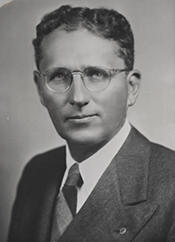
Here you will find contact information for Representative Frederic René Coudert, including email address, phone number, and mailing address.
| Name | Frederic René Coudert |
| Position | Representative |
| State | New York |
| District | 17 |
| Party | Republican |
| Status | Former Representative |
| Term Start | January 3, 1947 |
| Term End | January 3, 1959 |
| Terms Served | 6 |
| Born | May 7, 1898 |
| Gender | Male |
| Bioguide ID | C000804 |
About Representative Frederic René Coudert
Frederic René Coudert Jr. (May 7, 1898 – May 21, 1972) was an American lawyer and Republican politician who served as a member of the New York State Senate from 1939 to 1946 and as a United States Representative from New York from 1947 to 1959. Best known in his early public career for his prominent role in New York’s Rapp-Coudert Committee, which investigated alleged communist influence in the state’s public education system, he later became an outspoken conservative voice in Congress during the early Cold War era. His six terms in the House of Representatives coincided with a significant period in American history, during which he participated in the legislative process and represented the interests of his New York constituents.
Coudert was born in New York City on May 7, 1898, the son of attorney Frederic René Coudert II (1871–1955) and Alice T. (Wilmerding) Coudert. He came from a family with a distinguished public and legal background and was the great-grandson of Benjamin F. Tracy, who served as United States Secretary of the Navy from 1889 to 1893. Raised and educated in New York, he attended the Browning School and the Morristown School before beginning his undergraduate studies at Harvard College in 1916. His education was interrupted by the United States’ entry into World War I, when he left Harvard to enter military service.
During World War I, Coudert served in France as a first lieutenant in the 105th Infantry Regiment, a unit of the 27th Division of the United States Army. In recognition of a wartime program that combined academic study with military service, he received his Bachelor of Arts degree from Columbia College in 1918 while still in uniform. After his discharge from the Army in 1919, he enrolled at Columbia Law School, where he completed his legal studies and received an LL.B. degree in 1922. He was admitted to the bar in 1923 and commenced the practice of law in New York City, continuing a family tradition in the legal profession.
Coudert’s early legal career included service in federal law enforcement. In 1924 and 1925 he was an assistant United States attorney for the Southern District of New York, gaining experience in federal litigation and public service. Politically active as a Republican, he became a member of The New York Young Republican Club and emerged as a figure in local party politics. In 1929 he ran unsuccessfully as the Republican candidate for New York County District Attorney. He remained influential within the party, serving as a delegate to the Republican state conventions every two years from 1930 to 1948 and as a delegate to the Republican National Conventions every four years from 1936 to 1948.
Coudert entered elective office in 1939 as a member of the New York State Senate, where he served through 1946. He sat in the 162nd, 163rd, 164th, and 165th New York State Legislatures. During this period he became widely known for his work with the Rapp-Coudert Committee, a joint legislative committee that investigated the extent of communist influence in New York’s public education system, particularly in the City College of New York. The committee’s inquiries led to the dismissal of more than 40 instructors and staff members at City College, actions that supporters defended as necessary to counter subversive activity but that critics denounced as a political “witch-hunt.” His role in these investigations established him as a staunch anti-communist and shaped his public reputation as he moved onto the national stage.
In 1946, Coudert was elected as a Republican to the United States House of Representatives and took his seat in the 80th Congress on January 3, 1947. He was subsequently re-elected to the 81st, 82nd, 83rd, 84th, and 85th Congresses, serving continuously from January 3, 1947, to January 3, 1959. During his six terms in office, he contributed to the legislative process at a time marked by the early Cold War, postwar economic adjustment, and the beginnings of the modern civil rights movement. Although known as an outspoken conservative, he voted in favor of the Civil Rights Act of 1957, a landmark measure that created the Civil Rights Division in the Department of Justice and the Civil Rights Commission. Throughout his tenure, he participated in the democratic process and represented the interests of his New York constituents in the House of Representatives.
After leaving Congress in 1959, Coudert resumed the practice of law in New York City and continued to be active in public affairs. From 1959 to 1961 he served as a member of the State Commission on Governmental Operations of New York City, contributing his legal and legislative experience to the study and improvement of municipal governance. He remained a prominent conservative voice and, in 1965, endorsed William F. Buckley Jr.’s Conservative Party campaign for mayor of New York City over liberal Republican Congressman John Lindsay, underscoring his alignment with the emerging conservative movement within and alongside the Republican Party.
Coudert’s public service and international connections were recognized by several honors. In 1941 he received the Columbia University Medal for Distinguished Public Service. He was also a recipient of the French Legion of Honor (Chevalier), awarded in recognition of his efforts on behalf of the French people, which included his service as president of the federation of French Alliances in the United States. His prominence in public life was further reflected in contemporary media; he appeared on the television program “Longines Chronoscope,” with film clips of interviews from February 8, 1952, and August 15, 1952, preserved at the Internet Archive.
In his personal life, Coudert married sculptor Mary Callery in June 1923. The couple had one daughter, Caroline, before their marriage ended in divorce in May 1931. In October 1931 he married Paula Murray, with whom he had two children, son Frederic R. “Fritz” Coudert and daughter Paula. Despite periods of ill health later in life, he remained engaged in legal and political circles until his retirement. Frederic René Coudert Jr. died in New York City on May 21, 1972, after retiring due to ill health, and was buried at Memorial Cemetery in Cold Spring Harbor, New York.