Senator Frederic Mosley Sackett
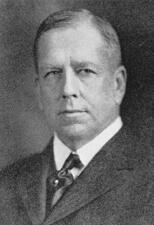
Here you will find contact information for Senator Frederic Mosley Sackett, including email address, phone number, and mailing address.
| Name | Frederic Mosley Sackett |
| Position | Senator |
| State | Kentucky |
| Party | Republican |
| Status | Former Representative |
| Term Start | December 7, 1925 |
| Term End | March 3, 1931 |
| Terms Served | 1 |
| Born | December 17, 1868 |
| Gender | Male |
| Bioguide ID | S000006 |
About Senator Frederic Mosley Sackett
Frederic Mosley Sackett (December 17, 1868 – May 18, 1941) was a United States senator from Kentucky and ambassador to Germany during the Hoover Administration. He was born in Providence, Rhode Island, where he attended the public schools. His father, also named Frederic Moseley, was a Civil War veteran and a wealthy wool manufacturer, a background that afforded Sackett early exposure to both public service and commercial enterprise.
Sackett pursued higher education at Brown University in Providence, graduating in 1890. He then studied law at Harvard Law School, from which he graduated in 1893. That same year he was admitted to the bar and began the practice of law in Columbus, Ohio. Shortly thereafter he moved first to Cincinnati, Ohio, and then to Louisville, Kentucky, continuing his legal practice. In 1898 he married Olive Speed, daughter of James Breckenridge Speed, a member of a prominent and wealthy Kentucky family, a union that would later draw him into major business interests in the region.
Although Sackett began his professional life as an attorney, he gradually shifted from law into business, particularly through involvement in his wife’s family enterprises in coal mining and cement manufacturing. He practiced law until 1907, then increasingly devoted himself to corporate management. He served as president of the Louisville Gas Company and the Louisville Lighting Company from 1907 to 1912, roles that placed him at the center of Louisville’s growing utility and industrial sectors. Active in civic and commercial affairs, he became a leading figure in the Board of Trade of Louisville, serving as its president in 1917, 1922, and 1923. From 1917 to 1924 he was also a director of the Louisville Branch of the Federal Reserve Bank, further cementing his influence in regional finance and economic policy.
During the First World War, Sackett entered public service in a more formal capacity. From 1917 to 1919 he served as federal food administrator for Kentucky, overseeing wartime food conservation and distribution programs in the state. In this role he developed a working relationship and friendship with Herbert Hoover, then the national food administrator, a connection that would later prove significant in his diplomatic career. After the war, Sackett continued his involvement in public affairs as a member of the Kentucky State Board of Charities and Corrections from 1919 to 1924, contributing to oversight of social welfare and correctional institutions in the state.
Sackett’s growing prominence in business and public administration led to his election as a Republican to the United States Senate from Kentucky in 1924. A member of the Republican Party, he was elected to a single term and served from March 4, 1925, to January 9, 1930. During this period, which encompassed the latter part of the Roaring Twenties and the onset of the Great Depression, he contributed to the legislative process and participated in the democratic governance of the nation, representing the interests of his Kentucky constituents in the Senate. His tenure in Congress occurred during a significant period in American history, and he took part in deliberations on economic, agricultural, and foreign policy issues characteristic of the era. He resigned his Senate seat on January 9, 1930, after being appointed ambassador to Germany by President Herbert Hoover.
As United States ambassador to Germany, Sackett served from February 12, 1930, to March 24, 1933, a critical period spanning the final years of the Weimar Republic and the rise of Adolf Hitler. Stationed in Berlin, he reported on Germany’s severe economic distress, political instability, and the growing strength of extremist movements. On March 23, 1933, the German Reichstag passed the Ermächtigungsgesetz (“empowering law”), which granted Chancellor Hitler’s cabinet the authority to enact laws without parliamentary approval, effectively allowing Hitler to rule by decree. The following day, Sackett sent a telegram to the U.S. State Department warning, “On the basis of this law the Hitler Cabinet can reconstruct the entire system of government as it eliminates practically all constitutional restraints.” Shortly thereafter he resigned his post and returned to the United States, where he resumed his former business activities.
In his later years, Sackett remained associated with business and civic affairs in Louisville and maintained his ties to veterans’ and patriotic organizations. By right of his father’s service in the Union Army during the American Civil War, he was a companion of the Ohio Commandery of the Military Order of the Loyal Legion of the United States. He died of a heart attack on May 18, 1941, while visiting Baltimore, Maryland. Frederic Mosley Sackett was buried in Cave Hill Cemetery in Louisville, Kentucky, closing a career that had spanned law, industry, state and national public service, and high-level diplomacy during one of the most turbulent periods in modern European history.