Senator Frederic Collin Walcott
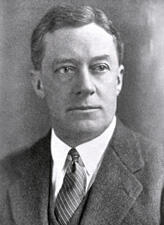
Here you will find contact information for Senator Frederic Collin Walcott, including email address, phone number, and mailing address.
| Name | Frederic Collin Walcott |
| Position | Senator |
| State | Connecticut |
| Party | Republican |
| Status | Former Representative |
| Term Start | April 15, 1929 |
| Term End | January 3, 1935 |
| Terms Served | 1 |
| Born | February 19, 1869 |
| Gender | Male |
| Bioguide ID | W000032 |
About Senator Frederic Collin Walcott
Frederic Collin Walcott (February 19, 1869 – April 27, 1949) was a United States senator from Connecticut and a prominent Republican public servant whose career spanned business, wartime administration, state government, and national office. His service in the United States Senate, from 1929 to 1935, coincided with a significant period in American history marked by the onset of the Great Depression, during which he participated in the legislative process and represented the interests of his Connecticut constituents.
Walcott was born on February 19, 1869, in New York Mills, Oneida County, New York, the son of William Stuart Walcott and Emeline Alice Welch Walcott. He was part of a family with notable public and professional connections; he was a nephew of William H. Welch, a pioneering physician and one of the founders of the Johns Hopkins Hospital and Medical School. Walcott attended the public schools of Utica, New York, before pursuing preparatory education that would lead to his later prominence in business and public life.
Walcott’s formal education was extensive and rooted in some of the leading institutions of his day. He graduated from the Lawrenceville School in Lawrenceville, New Jersey, in 1886, and from Phillips Academy in Andover, Massachusetts, in 1887. He then attended Yale University, graduating in 1891. While at Yale, he was a member of the influential senior society Skull and Bones, an affiliation that placed him within a network of future leaders in politics, business, and the professions. His ties to Yale would remain strong throughout his life, reflected in his later advisory work with the university.
In his personal life, Walcott married Frances Dana Archbold on February 14, 1899; she died later that same year. On April 3, 1907, he married Mary Hussey Guthrie in Pittsburgh, Allegheny County, Pennsylvania. That same year, 1907, marked a turning point in his professional trajectory: Walcott moved to New York City and engaged in the manufacture of cotton cloth and in banking. He built a successful career in these fields, establishing business connections that he would maintain even after shifting his primary residence.
Walcott moved to Norfolk, Connecticut, in 1910, while continuing his business activities in New York City until 1921, when he retired from active business pursuits. During the First World War, he entered national service as an assistant to Herbert Hoover in the United States Food Administration, which was responsible for managing food production and conservation to support the Allied war effort. For his contributions, he was decorated by the government of France with the Legion of Honor and by Poland with the Officer’s Cross, reflecting international recognition of his administrative and humanitarian work.
Following the war, Walcott increasingly devoted himself to public service in Connecticut. He served as president of the Connecticut Board of Fisheries and Game from 1923 to 1928, where he was involved in conservation and resource management, and as chairman of the Connecticut Water Commission from 1925 to 1928, overseeing issues related to water resources and public infrastructure. He was active in Republican Party politics, serving as a delegate from Connecticut to the Republican National Conventions of 1924, 1928, and 1932. Within state government, he was elected to the Connecticut State Senate, serving from 1925 to 1929, and he held the leadership position of president pro tempore from 1927 to 1929.
Walcott’s state-level experience and party involvement led to his election as a Republican to the United States Senate from Connecticut. He served one term, from March 4, 1929, to January 3, 1935. His tenure in the Senate encompassed the stock market crash of 1929 and the early years of the Great Depression, a period of intense legislative activity as Congress grappled with economic crisis and social distress. As a member of the Senate, Walcott participated in the democratic process and contributed to the legislative work of the chamber while representing the interests of his Connecticut constituents. He was an unsuccessful candidate for reelection in 1934, concluding his Senate service at the start of 1935.
After leaving the Senate, Walcott continued to play a significant role in public affairs. From 1935 to 1939, he served as commissioner of welfare of Connecticut, directing state efforts related to social services and public assistance during the later years of the Depression. He maintained close ties to higher education and philanthropy, serving as a member of the advisory committee of the Human Welfare Group of Yale University from 1920 to 1948 and as a member of the advisory committee of Bethune-Cookman College in Daytona, Florida, from 1922 to 1948, reflecting his long-standing interest in social welfare and education. In addition, he served as a regent of the Smithsonian Institution from 1941 to 1948, contributing to the governance of one of the nation’s leading cultural and scientific institutions.
Frederic Collin Walcott died in Stamford, Connecticut, on April 27, 1949, at the age of 80. He was interred at New Milford Center Cemetery in New Milford, Connecticut. His papers, documenting his business career, wartime service, political life, and civic activities, are preserved as the Frederic Collin Walcott Papers (MS 529) in the Manuscripts and Archives of the Yale University Library, providing a record of his multifaceted contributions to state, national, and international affairs.