Representative Frederick George Barry
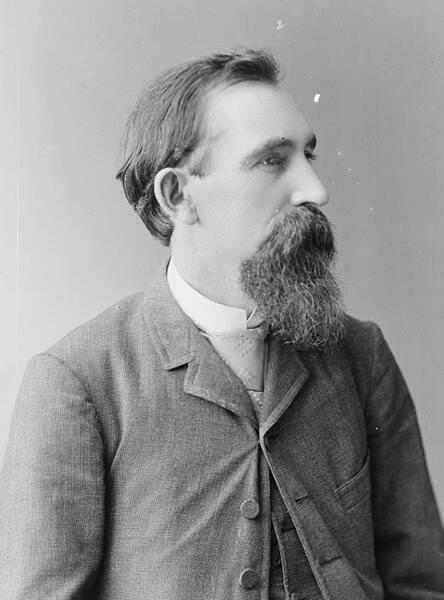
Here you will find contact information for Representative Frederick George Barry, including email address, phone number, and mailing address.
| Name | Frederick George Barry |
| Position | Representative |
| State | Mississippi |
| District | 4 |
| Party | Democratic |
| Status | Former Representative |
| Term Start | December 7, 1885 |
| Term End | March 3, 1889 |
| Terms Served | 2 |
| Born | January 12, 1845 |
| Gender | Male |
| Bioguide ID | B000188 |
About Representative Frederick George Barry
Frederick George Barry (January 12, 1845 – May 7, 1909) was an American Civil War veteran, lawyer, and Democratic politician who served two terms as a U.S. Representative from Mississippi from 1885 to 1889. His congressional service took place during a significant period in American history, as the nation continued to grapple with the political, economic, and social consequences of the Civil War and Reconstruction. As a member of the House of Representatives, Barry participated in the legislative process and represented the interests of his Mississippi constituents within the Democratic Party.
Barry was born on January 12, 1845, in Woodbury, Cannon County, Tennessee. He received a limited formal education in his youth, a common circumstance in the rural South in the mid-nineteenth century. His early life was shaped by the sectional tensions that culminated in the Civil War, and as a young man he entered military service for the Confederacy.
During the Civil War, Barry served as a private in Company E of the Eighth Confederate Cavalry, a regiment commanded by Colonel William B. Wade. His service in this mounted unit placed him among the many young Southerners who took part in the conflict as enlisted men rather than officers. The experience of war and its aftermath would frame much of his later professional and political life in Mississippi during the postwar and Reconstruction eras.
After the war, Barry returned to civilian life and turned to the study of law. He read law in the customary manner of the period and was admitted to the bar, commencing the practice of law in Aberdeen, Mississippi. Seeking broader professional opportunities, he moved in 1873 to West Point, Mississippi, where he continued his legal practice. His growing prominence in local affairs led to his election to the Mississippi State Senate, in which he served from 1875 to 1879. In that capacity he participated in state-level governance during a time when Mississippi and other Southern states were reestablishing Democratic control and reshaping their political institutions in the post-Reconstruction period.
Barry’s state legislative experience and legal background helped propel him to national office. A member of the Democratic Party, he was elected as a Democrat to the Forty-ninth and Fiftieth Congresses, serving as a U.S. Representative from Mississippi from March 4, 1885, to March 3, 1889. Over the course of his two terms in the House of Representatives, he contributed to the legislative process and took part in the debates and decisions of the era, representing the interests and concerns of his Mississippi district in the national legislature. He chose not to be a candidate for renomination in 1888, thus concluding his congressional career after two consecutive terms.
Following his service in Congress, Barry returned to West Point, Mississippi, where he resumed the practice of law. He remained engaged in his profession and community until his death. Barry died in West Point on May 7, 1909, at the age of 64. He was interred in Odd Fellows Rest Cemetery in Aberdeen, Mississippi, returning in death to the city where he had first established his legal career.