Representative Rick Boucher
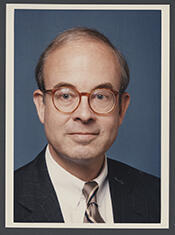
Here you will find contact information for Representative Rick Boucher, including email address, phone number, and mailing address.
| Name | Rick Boucher |
| Position | Representative |
| State | Virginia |
| District | 9 |
| Party | Democratic |
| Status | Former Representative |
| Term Start | January 3, 1983 |
| Term End | January 3, 2011 |
| Terms Served | 14 |
| Born | August 1, 1946 |
| Gender | Male |
| Bioguide ID | B000657 |
About Representative Rick Boucher
Frederick Carlyle Boucher (born August 1, 1946) is an American politician and attorney who served as the U.S. representative for Virginia’s 9th congressional district from January 3, 1983, to January 3, 2011. A member of the Democratic Party, he represented a largely rural district encompassing most of southwest Virginia for 14 consecutive terms in the United States House of Representatives and became a prominent figure in telecommunications, technology, and energy policy during a significant period in late twentieth- and early twenty-first-century American political history.
Boucher is a native of Abingdon, Washington County, Virginia, where he was born and where he has continued to reside throughout his public life. He attended local schools before enrolling at Roanoke College in Salem, Virginia, where he earned a Bachelor of Arts degree and was a member of the Kappa Alpha Order fraternity. He subsequently studied law at the University of Virginia School of Law, receiving his Juris Doctor degree. After law school, Boucher began his legal career in New York City, practicing on Wall Street as an associate at the firm of Milbank, Tweed, Hadley & McCloy. He later returned to Virginia, where he continued to practice law and became increasingly active in civic and political affairs.
Boucher’s early public service was rooted in Virginia state politics. In 1975 he was elected to the Senate of Virginia, defeating conservative incumbent George M. Warren Jr. for the Democratic nomination and then winning the general election. He served in the state senate for seven years, from 1975 until his election to Congress. During his tenure in Richmond, he was involved in legislative work on law and justice issues and became a member of the Law and Justice Committee of the National Conference of State Legislatures. He also served on the Board of Directors of the First Virginia Bank of Damascus, Virginia, and on the Board of Directors of Client Centered Legal Services of Southwest Virginia, and he was a member of the Advisory Board of Virginia Cares Inc., reflecting a broader engagement with legal services, community development, and criminal justice reform in the region.
Boucher was first elected to the U.S. House of Representatives in 1982, narrowly defeating 16-year Republican incumbent William C. “Bill” Wampler by approximately 1,100 votes. He took office on January 3, 1983, as the representative of Virginia’s 9th congressional district. In 1984 he was narrowly reelected, defeating Delegate Jefferson Stafford by about four percentage points even as President Ronald Reagan carried the district by a wide margin. By 1986, Boucher’s standing in the district had solidified to the point that he ran unopposed for a third term, and he was reelected 11 more times without serious difficulty. He remained personally popular even as the 9th District’s socially conservative and increasingly Republican tilt became more pronounced; by 2001, the Republican Party had captured most of the region’s seats in the Virginia General Assembly and has largely held them since. Between 2002 and 2006, Boucher defeated a series of well-funded Republican challengers with relative ease, winning 66 percent of the vote against state delegate Jay Katzen in 2002, 59 percent against NASCAR official Kevin Triplett in 2004 even as President George W. Bush carried the district, and 68 percent against state delegate Bill Carrico in 2006. He was reelected without opposition in 2008, when Senator John McCain carried the district with his largest margin in Virginia, and it was widely assumed that a Republican would ultimately succeed him once he retired.
During his 14 terms in Congress, Boucher became a senior member of the House Democratic caucus and played a central role in several policy areas. He served on the Committee on Energy and Commerce, chairing the Subcommittee on Communications, Technology and the Internet and the Subcommittee on Energy and Air Quality. He also served on the Committee on the Judiciary, including its Subcommittee on Courts and Competition Policy. Earlier in his career he chaired the Science Subcommittee of the House Committee on Science and Technology, where he oversaw hearings that guided the transition of the Internet from a National Science Foundation–managed research network (NSFnet) to the private sector. He was an assistant Democratic whip from 1985 to 2010, participating in House leadership and helping to marshal votes on key legislation. In 2007, Congress.org ranked him as the 10th most powerful member of the U.S. House of Representatives, reflecting his seniority, committee influence, and legislative activity.
Boucher was particularly active on Internet, telecommunications, and technology-related legislation. He cosponsored the High Performance Computing and Communication Act of 1991 and authored legislation that permitted the first commercial use of the Internet, helping to open the way for the modern commercial Internet. His work to promote competition in the cable and local telephone industries contributed to the enactment of the Telecommunications Act of 1996. He originated the House Internet Caucus and served as its co-chairman from 1996 to 2011, and he became known as a leading congressional advocate for digital innovation and consumer rights. He authored the Digital Media Consumers’ Rights Act and introduced the FAIR USE Act, seeking to balance copyright protection with consumer access and fair use. In recognition of his efforts to protect the fair use doctrine and to expand Internet technologies, particularly in rural areas like his own district, the Association of American Libraries’ Library Journal named him Politician of the Year for 2006.
On broader economic and energy policy, Boucher took positions that reflected both his party affiliation and the interests of his constituents. He voted in favor of the Auto Industry Financing and Restructuring Act, the Emergency Economic Stabilization Act of 2008, and the American Recovery and Reinvestment Act of 2009, supporting federal efforts to stabilize the financial system and stimulate the economy during the late-2000s recession. A strong opponent of tax patents, he introduced legislation to ban such patents or to exempt tax attorneys and taxpayers from liability for infringing them. In June 2009, he voted for the American Clean Energy and Security Act, which would have established a cap-and-trade system for greenhouse gas emissions; as chairman of the relevant energy subcommittee in the preceding Congress, he was instrumental in drafting the bill and stated in his pre-vote remarks that he was in “strong support of the bill.” At the same time, Boucher often took positions that distinguished him from many national Democrats. He was one of 81 House Democrats who voted to authorize the invasion of Iraq in 2002. He consistently received an “A+” rating and endorsements from the National Rifle Association Political Victory Fund between 2004 and 2010, reflecting his support for gun rights. He endorsed Barack Obama for the Democratic presidential nomination in 2008, even as his district voted solidly for Hillary Clinton in the primaries. In the major health care debates of 2009 and 2010, Boucher voted against the Affordable Health Care for America Act in November 2009 and against both the Patient Protection and Affordable Care Act and the Health Care and Education Reconciliation Act on March 21, 2010.
In the 2010 election cycle, Boucher faced what proved to be the most difficult race of his congressional career. His Republican opponent was Morgan Griffith, the Majority Leader of the Virginia House of Delegates. Boucher argued during the campaign that Griffith lived outside the 9th District—Griffith’s home in Salem lay just beyond its boundaries—although the Constitution requires only that House members reside in the state they represent. Griffith, for his part, portrayed Boucher as an ally of President Barack Obama and Speaker Nancy Pelosi, tying him to national Democratic policies that had become unpopular in the district. In the general election held on November 2, 2010, Griffith defeated Boucher with 51 percent of the vote to Boucher’s 46 percent, ending Boucher’s 28-year tenure in Congress. Since his departure, no Democrat has surpassed 40 percent of the vote in the 9th District, underscoring the region’s shift toward the Republican Party.
After leaving Congress, Boucher continued his involvement in law and public policy. In May 2011 he joined the Washington, D.C., law firm Sidley Austin, where he was charged with leading the firm’s government strategies practice, advising clients on legislative, regulatory, and policy matters. That same year, the Internet Innovation Alliance (IIA), an industry advocacy group that includes members such as AT&T and Americans for Tax Reform, announced that Boucher would serve as its honorary chair. In that capacity, he has focused on expanding broadband access and adoption, with particular emphasis on improving mobile connectivity for underserved and rural communities, a continuation of the priorities he advanced while representing southwest Virginia in Congress.
In his personal life, Boucher announced his engagement at age 59 to Amy Hauslohner, an editor of the Galax Gazette in Galax, Virginia. Commenting on their decision, he remarked that “We have decided since I will be 60 in August and she just turned 50 last week, we probably are mature enough to handle marriage.” Boucher and Hauslohner were married on June 3, 2006. He has remained a resident of Abingdon, Virginia, maintaining close ties to the region he represented for nearly three decades in the United States House of Representatives.