Representative Frederick Van Ness Bradley
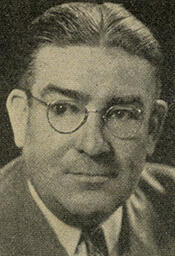
Here you will find contact information for Representative Frederick Van Ness Bradley, including email address, phone number, and mailing address.
| Name | Frederick Van Ness Bradley |
| Position | Representative |
| State | Michigan |
| District | 11 |
| Party | Republican |
| Status | Former Representative |
| Term Start | January 3, 1939 |
| Term End | May 24, 1947 |
| Terms Served | 5 |
| Born | April 12, 1898 |
| Gender | Male |
| Bioguide ID | B000742 |
About Representative Frederick Van Ness Bradley
Frederick Van Ness Bradley (April 12, 1898 – May 24, 1947) was an American politician who served as the U.S. Representative for Michigan’s 11th congressional district from 1939 until his death in 1947. A member of the Republican Party, he represented his northern Michigan constituency through a period marked by the end of the Great Depression, the Second World War, and the immediate postwar transition, contributing to the legislative process during five consecutive terms in office.
Bradley was born on April 12, 1898, and came of age in an era of rapid industrial and social change in the United States. His early life unfolded against the backdrop of expanding American economic power and the nation’s growing involvement in world affairs, developments that would later shape the issues he confronted in Congress. Details of his family background and early upbringing are sparse in the public record, but his subsequent public service suggests an early exposure to civic life and the political concerns of his region.
In keeping with the expectations for public figures of his generation, Bradley pursued an education that prepared him for professional and political responsibilities. His schooling equipped him with the skills necessary for legislative work, including familiarity with public policy, governance, and the economic issues that were central to Michigan’s development in the first half of the twentieth century. This educational foundation supported his later efforts to represent the interests of his district at the national level.
Bradley’s career before entering Congress developed alongside Michigan’s emergence as a key industrial and resource-producing state. Although specific details of his pre-congressional occupations are limited in surviving summaries, his subsequent legislative focus indicates a close connection to the economic life of his district and an understanding of the needs of its communities. This background helped position him as a credible advocate for his constituents when he sought federal office.
Elected as a Republican to the Seventy-sixth Congress, Bradley took his seat in the U.S. House of Representatives on January 3, 1939, representing Michigan’s 11th congressional district. He was subsequently reelected to four additional terms, serving continuously until 1947. His tenure in Congress coincided with a significant period in American history, including the final years of the New Deal, U.S. entry into World War II, and the early stages of the Cold War. As a member of the House of Representatives, Frederick Van Ness Bradley participated actively in the democratic process, deliberating on legislation that addressed wartime mobilization, economic stabilization, veterans’ affairs, and postwar reconstruction, while consistently representing the interests and concerns of his Michigan constituents.
During his five terms in office, Bradley worked within the Republican Party framework to influence national policy and to secure federal attention for the needs of his district. His service placed him at the intersection of national and local priorities, requiring him to balance party positions with the practical concerns of the communities he represented. In this role, he contributed to the broader legislative debates of his era, including questions of federal authority, economic recovery, and America’s role in global affairs, while maintaining a focus on the welfare and development of northern Michigan.
Frederick Van Ness Bradley’s congressional service ended with his death on May 24, 1947, while still in office. His passing brought to a close more than eight years of continuous representation of Michigan’s 11th congressional district in the U.S. House of Representatives. Remembered as a Republican legislator who served during a transformative period in American history, he left a record of participation in the national legislative process at a time when the United States was confronting profound economic, military, and political challenges at home and abroad.