Representative Frederick Spaulding Coolidge
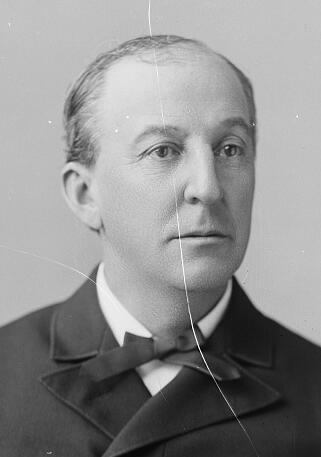
Here you will find contact information for Representative Frederick Spaulding Coolidge, including email address, phone number, and mailing address.
| Name | Frederick Spaulding Coolidge |
| Position | Representative |
| State | Massachusetts |
| District | 11 |
| Party | Democratic |
| Status | Former Representative |
| Term Start | December 7, 1891 |
| Term End | March 3, 1893 |
| Terms Served | 1 |
| Born | December 7, 1841 |
| Gender | Male |
| Bioguide ID | C000739 |
About Representative Frederick Spaulding Coolidge
Frederick Spaulding Coolidge (December 7, 1841 – June 8, 1906) was a U.S. Representative from Massachusetts, a member of the Democratic Party, and the father of United States Senator Marcus Allen Coolidge. He served one term in the United States House of Representatives from 1891 to 1893, during a significant period in American political and economic history, and was known for his involvement in industrial enterprises and state and local public service in Massachusetts.
Coolidge was born in Westminster, Massachusetts, to Charles Coolidge and Nancy (Spaulding) Coolidge. On his father’s side he was a descendant of Thomas Hastings, who emigrated from the East Anglia region of England to the Massachusetts Bay Colony in 1634, a lineage later documented in genealogical works such as Lydia N. H. Buckminster’s “The Hastings Memorial.” He attended the common schools of Westminster, receiving the basic education typical of New England towns in the mid-nineteenth century, and grew up in a family engaged in local manufacturing.
After completing his schooling, Coolidge began his career working in his father’s chair factory in Westminster, gaining practical experience in manufacturing and business management. In 1876 the factory was destroyed by fire, an event that forced a major transition in his professional life. Following the loss of the family enterprise, he became manager of the Boston Chair Manufacturing Company in Ashburnham, Massachusetts, where he continued in the furniture trade. He later served as manager of the Leominster Rattan Works, extending his industrial experience into related manufacturing fields. Over time he retired from active business pursuits, having established himself as a figure in the regional industrial economy.
Coolidge’s interest in public affairs developed alongside his business career. In local government, he served for three years on the Board of Selectmen of his native town of Westminster, participating in the administration of municipal affairs. At the state level, he was elected as a member of the Massachusetts House of Representatives in 1875, sitting in the 1875 Massachusetts legislature. He was also active within his party organization, serving as a member of the Democratic State Central Committee, where he helped shape Democratic strategy and policy in Massachusetts during an era when the party was often in the minority in the Commonwealth.
Building on his local and state service, Coolidge was elected as a Democrat to the Fifty-second Congress, representing Massachusetts in the United States House of Representatives from March 4, 1891, to March 3, 1893. During his single term in Congress, he participated in the legislative process and represented the interests of his constituents at a time of debate over economic policy, western development, and infrastructure. He served on the Committee on Pacific Railroads, which dealt with issues related to the construction, regulation, and financing of rail lines to the Pacific Coast, and on the Select Committee on Irrigation of Arid Lands in the United States, which examined federal policy toward the development and settlement of the arid regions of the American West. His committee work placed him at the intersection of transportation policy and western land and water issues, both central concerns of the period.
Coolidge was an unsuccessful candidate for reelection in 1892 to the Fifty-third Congress and thus concluded his congressional service after one term. After leaving the House of Representatives, he did not return to major public office and instead withdrew from active business pursuits, living in Massachusetts during his later years. His family continued his tradition of public and educational service: his son, Marcus Allen Coolidge, later served as a United States Senator from Massachusetts, and his daughter, Cora Helen Coolidge, became president of Pennsylvania College for Women (now Chatham University), reflecting the family’s ongoing engagement in national politics and higher education.
Frederick Spaulding Coolidge died in Fitchburg, Massachusetts, on June 8, 1906. He was interred in Mount Pleasant Cemetery in his hometown of Westminster, Massachusetts, closing a life that combined New England industrial enterprise, local and state political service, and a brief but notable tenure in the United States Congress.