Representative Frederick William Dallinger
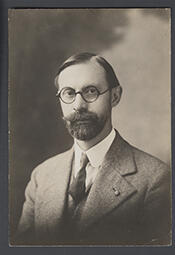
Here you will find contact information for Representative Frederick William Dallinger, including email address, phone number, and mailing address.
| Name | Frederick William Dallinger |
| Position | Representative |
| State | Massachusetts |
| District | 8 |
| Party | Republican |
| Status | Former Representative |
| Term Start | December 6, 1915 |
| Term End | March 3, 1933 |
| Terms Served | 9 |
| Born | October 2, 1871 |
| Gender | Male |
| Bioguide ID | D000012 |
About Representative Frederick William Dallinger
Frederick William Dallinger (October 2, 1871 – September 5, 1955) was a United States Representative from Massachusetts and later a judge of the United States Customs Court. A member of the Republican Party, he served nine consecutive terms in the U.S. House of Representatives from 1915 to 1933, participating in the legislative process during a significant period in American history and representing the interests of his Massachusetts constituents.
Dallinger was born on October 2, 1871, in Cambridge, Massachusetts. He was raised in that community and attended the public schools of Cambridge, reflecting the strong educational traditions of the region. His early life in Cambridge, a center of intellectual and political activity in New England, helped shape his interest in public affairs and the law, which would later define his professional and political career.
Pursuing higher education, Dallinger attended Harvard University, where he received his undergraduate degree. He continued at Harvard Law School, earning a law degree that prepared him for admission to the bar and the practice of law. His legal training at one of the nation’s leading institutions provided the foundation for his later work both as a legislator dealing with complex statutory issues and as a federal judge on a specialized court.
Before entering Congress, Dallinger established himself as an attorney in Massachusetts, practicing law and becoming involved in local and state political life as a Republican. His legal career and growing reputation in public service led to his election to the United States House of Representatives. He took his seat in Congress in 1915, at the outset of a period marked by World War I, the postwar adjustment, Prohibition, and the onset of the Great Depression, all of which framed the national debates in which he participated.
Dallinger served in the House of Representatives from 1915 to 1933, completing nine terms in office. During these eighteen years, he contributed to the legislative process as a member of the Republican Party, working on measures that reflected both national priorities and the needs of his Massachusetts district. His tenure spanned the administrations of several presidents and encompassed major shifts in domestic and foreign policy, giving him sustained influence in the democratic process and in the representation of his constituents’ interests in Washington.
After leaving Congress in 1933, Dallinger continued his public service at the federal level. Drawing on his extensive legal background and legislative experience, he was appointed a judge of the United States Customs Court, a specialized federal court responsible for adjudicating cases involving customs and international trade. In this judicial role, he applied his understanding of statutory interpretation and commercial regulation to disputes arising from the nation’s growing involvement in global trade, thereby extending his public career beyond the legislative arena.
Frederick William Dallinger remained associated with public life through his judicial service until his later years. He died on September 5, 1955, closing a career that had encompassed both long-standing legislative service and federal judicial responsibility. His life reflected the trajectory of a Massachusetts lawyer who rose to national prominence as a congressman and then as a judge on a key federal court concerned with customs and trade.