Senator Frederick Frelinghuysen
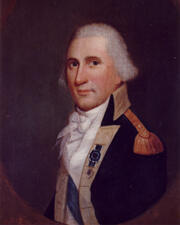
Here you will find contact information for Senator Frederick Frelinghuysen, including email address, phone number, and mailing address.
| Name | Frederick Frelinghuysen |
| Position | Senator |
| State | New Jersey |
| Party | Federalist |
| Status | Former Representative |
| Term Start | December 2, 1793 |
| Term End | March 3, 1797 |
| Terms Served | 1 |
| Born | April 13, 1753 |
| Gender | Male |
| Bioguide ID | F000368 |
About Senator Frederick Frelinghuysen
Frederick Frelinghuysen (general) (1753–1804) was an American Revolutionary-era statesman, military officer, and United States senator from New Jersey, and a prominent early member of the Frelinghuysen political family. He was born on April 13, 1753, in Somerset County, in the Province of New Jersey, into a well-known Dutch Reformed family whose members would play a significant role in New Jersey and national public life for generations. Raised in a milieu that combined religious leadership, public service, and landholding, he came of age in the years immediately preceding the American Revolution, when colonial resistance to British authority was intensifying throughout the colonies.
Frelinghuysen received a classical education and studied law, preparing for a career in public affairs at a time when legal training was closely associated with political leadership. As tensions with Britain escalated, he became active in local and provincial affairs, aligning himself with the Patriot cause. His early involvement in public life reflected both his personal convictions and the expectations placed upon members of his influential family in colonial New Jersey society.
During the American Revolution, Frelinghuysen served as a military officer and eventually attained the rank of general in the New Jersey militia, a role that led to his later designation as “general” in historical records. He participated in the defense of New Jersey during the conflict, a state that was a central theater of the war and the site of repeated campaigns, skirmishes, and occupations. His military service was complemented by his work in civil governance, as he took part in organizing the new state government and supporting the broader revolutionary effort.
Following independence, Frelinghuysen emerged as a significant figure in the early political life of both New Jersey and the United States. He served in the Continental Congress and in various state offices, contributing to the establishment of republican institutions in the postwar period. As the new federal government took shape under the Constitution, he was elected as a United States senator from New Jersey, serving in the First Congress. In the Senate, he participated in the formative legislative work of the new republic, helping to define the powers and practices of the federal government in its earliest years. He remained active in public affairs until his death on April 13, 1804, leaving a legacy of military and political service that established the Frelinghuysen family as a durable force in American politics.
Frederick Theodore Frelinghuysen (1817–1885), a grandson of the Revolutionary-era general, was a United States senator from New Jersey and later United States secretary of state, and he further solidified the national prominence of the Frelinghuysen political family. He was born on August 4, 1817, in Millstone, New Jersey, into a household steeped in public service and Federalist-Whig political traditions. Orphaned at a young age, he was adopted and raised by his uncle, Theodore Frelinghuysen, a noted senator, New York City civic leader, and Whig vice-presidential nominee, whose example and patronage shaped the younger Frederick’s education and career. He studied at Rutgers College (then Queen’s College) in New Brunswick, New Jersey, graduating in 1836, and read law before being admitted to the bar, establishing himself as a lawyer in Newark.
Frelinghuysen’s legal and political careers developed in tandem. He served as city attorney of Newark and became known as a capable advocate and counselor. During the Civil War era, he aligned with the Republican Party, supporting the Union cause and the policies of President Abraham Lincoln. His growing reputation led to his appointment by President Ulysses S. Grant as attorney general of New Jersey and then, in 1866, as United States attorney for the District of New Jersey. In 1867 and again in 1871, he was appointed to the United States Senate from New Jersey to fill vacancies, and he later won election in his own right, serving multiple terms between 1866 and 1869 and from 1871 to 1877. In the Senate, he was involved in Reconstruction-era legislation, debates over civil rights, and questions of federal authority in the post–Civil War period, and he generally supported the Republican program of preserving the Union and protecting the rights of freedmen.
After leaving the Senate in 1877, Frelinghuysen returned to legal practice but remained an influential Republican elder statesman. On December 19, 1881, President Chester A. Arthur appointed him United States secretary of state, a position he held until March 6, 1885. As secretary of state, he dealt with a range of foreign policy issues characteristic of the late nineteenth century, including relations with Latin American nations, questions of canal rights and transit across Central America, and commercial treaties. He took a cautious approach to expansion and was involved in revising or reconsidering initiatives such as the proposed Pan-American conference and certain reciprocity treaties. His tenure reflected both the growing international interests of the United States and the limits of American power in an era still dominated by European empires. Frelinghuysen left office with the end of the Arthur administration and died on May 20, 1885, in Newark, New Jersey, remembered as a significant Republican statesman of the Reconstruction and post-Reconstruction eras.
Frederick Frelinghuysen (businessman) (1848–1924), a later member of the same American Frelinghuysen political family, extended the family’s influence into the world of finance and corporate leadership as president of the Mutual Benefit Life Insurance Company. He was born on April 3, 1848, in Newark, New Jersey, into a family already distinguished by generations of public service at the state and national levels. Educated in the schools of Newark and likely benefiting from both formal instruction and family connections, he entered the business world at a time when American industry, commerce, and financial institutions were expanding rapidly after the Civil War.
Frelinghuysen joined the Mutual Benefit Life Insurance Company, a major Newark-based firm, and rose through its ranks as the life insurance industry became an increasingly important component of the American financial system. His legal and business acumen, combined with the prestige of his family name, helped him assume positions of growing responsibility. Eventually he became president of the Mutual Benefit Life Insurance Company, overseeing its operations during a period of consolidation and modernization in the insurance sector. Under his leadership, the company navigated the challenges of regulation, competition, and changing actuarial practices in the late nineteenth and early twentieth centuries, and it maintained a reputation as one of the more stable and respected mutual life insurers in the country.
Although he did not pursue elective office on the scale of his senatorial and cabinet-level relatives, Frederick Frelinghuysen the businessman remained connected to the civic and social life of New Jersey. He participated in local institutions, business associations, and charitable endeavors typical of prominent corporate leaders of his era, reinforcing the family’s longstanding association with public-spirited leadership. He died on January 15, 1924, closing a chapter in which the Frelinghuysen name, long associated with military and political service, had also come to signify influence in American financial and corporate affairs.