Representative Frederick Cocks Hicks
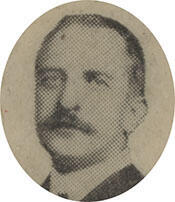
Here you will find contact information for Representative Frederick Cocks Hicks, including email address, phone number, and mailing address.
| Name | Frederick Cocks Hicks |
| Position | Representative |
| State | New York |
| District | 1 |
| Party | Republican |
| Status | Former Representative |
| Term Start | December 6, 1915 |
| Term End | March 3, 1923 |
| Terms Served | 4 |
| Born | March 6, 1872 |
| Gender | Male |
| Bioguide ID | H000564 |
About Representative Frederick Cocks Hicks
Frederick Charles Hicks (originally Frederick Hicks Cocks; March 6, 1872 – December 14, 1925) was an American banker and Republican politician who served as a United States Representative from New York in the United States Congress from 1915 to 1923. Born in the late nineteenth century, he came of age during a period of rapid economic and political change in the United States, circumstances that would shape his later career in finance and public service. Although detailed records of his early childhood and family background are limited, his adoption of the name Frederick Charles Hicks from his birth name, Frederick Hicks Cocks, reflects a personal and professional transition that preceded his emergence in public life.
Hicks’s formal education and early professional training prepared him for a career in banking, a field in which he established himself before entering politics. As an American banker, he gained experience in financial affairs and business management, skills that would later inform his legislative interests and committee work. His involvement in banking placed him in close contact with the economic concerns of his community and the broader region of New York, providing a foundation for his subsequent role as a representative of his constituents’ commercial and financial interests.
Before his election to Congress, Hicks built a reputation in Republican Party circles in New York, aligning himself with the party’s emphasis on economic development, business-friendly policies, and a strong national government. His professional background in banking and his engagement with civic and political matters made him a viable candidate for national office. By the mid-1910s, he had become sufficiently prominent within the Republican Party to secure nomination and election to the United States House of Representatives, marking the beginning of his federal legislative career.
Hicks’s service in Congress occurred during a significant period in American history, encompassing the era of World War I and the immediate postwar years. A member of the Republican Party, he was elected as a United States Representative from New York and contributed to the legislative process during four terms in office. He served in the House of Representatives from 1915 to 1923, a span that includes the period often cited as 1916 to 1923 in contemporary references to his tenure. During these years, he participated in the democratic process, deliberating on issues related to war mobilization, postwar reconstruction, and domestic economic policy, and he represented the interests of his New York constituents in national debates.
As a member of the House of Representatives, Hicks took part in committee work, floor debates, and the consideration of legislation affecting both his district and the nation at large. His background as a banker informed his perspective on fiscal and economic questions, and he was positioned to address matters such as credit, banking regulation, and commercial development that were of particular concern to his state. While specific legislative initiatives associated with his name are not extensively documented, his repeated reelection over four terms indicates sustained support from his constituents and an ongoing role in shaping federal policy during a transformative era.
After leaving Congress in 1923, Hicks returned to private life, resuming his involvement in financial and civic affairs in New York. His post-congressional years were spent outside the national spotlight, but his experience as both a banker and a legislator ensured that he remained a figure of standing in his community. He continued to be identified with the Republican Party and with the generation of public officials who had guided the United States through the challenges of war and the adjustments of the early 1920s.
Frederick Charles Hicks died on December 14, 1925. His career as an American banker and politician, and his service as a United States Representative from New York from 1915 to 1923, placed him among the many early twentieth-century legislators who helped steer the country through a period of profound economic and political change. His participation in the House of Representatives during a critical era in American history reflected both his professional expertise and his commitment to representing the interests of his constituents in the national government.