Representative Frederick Landis
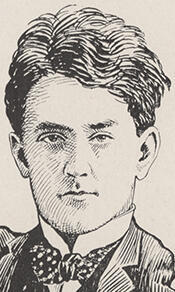
Here you will find contact information for Representative Frederick Landis, including email address, phone number, and mailing address.
| Name | Frederick Landis |
| Position | Representative |
| State | Indiana |
| District | 11 |
| Party | Republican |
| Status | Former Representative |
| Term Start | November 9, 1903 |
| Term End | March 3, 1907 |
| Terms Served | 2 |
| Born | August 18, 1872 |
| Gender | Male |
| Bioguide ID | L000051 |
About Representative Frederick Landis
Frederick Landis (August 18, 1872 – November 15, 1934) was an American lawyer, politician, author, and newspaper editor who served two terms as a U.S. Representative from Indiana from 1903 to 1907. A member of the Republican Party for most of his political career, he contributed to the legislative process during two terms in office and later became active in the Progressive movement. He was a brother of Charles Beary Landis, a newspaperman and U.S. Representative from Indiana, and of Judge Kenesaw Mountain Landis, the first Commissioner of Baseball.
Landis was born at Seven Mile, Butler County, Ohio, on August 18, 1872. In 1875 he moved with his parents to Logansport, Indiana, where he was raised. He attended the public schools of Logansport, receiving his early education in the local system that served the growing railroad and manufacturing community. His family environment was one of public engagement and journalism, influences that would shape his later careers in law, politics, and writing.
After completing his preliminary education, Landis pursued legal studies at the University of Michigan at Ann Arbor. He was graduated from the law department of the university in 1895. That same year he was admitted to the bar and commenced the practice of law in Logansport, Indiana. Establishing himself as an attorney in his adopted hometown, he built a professional reputation that provided a foundation for his entry into public life. Alongside his legal work, he developed interests in writing and public speaking that would later manifest in his careers as an author, lecturer, and newspaper editor.
Landis entered national politics as a Republican and was elected to the Fifty-eighth and Fifty-ninth Congresses, serving as a Representative from Indiana from March 4, 1903, to March 3, 1907. During this period, which coincided with the Progressive Era and the administration of President Theodore Roosevelt, he participated in the democratic process and represented the interests of his Indiana constituents in the U.S. House of Representatives. His service in Congress occurred during a significant period in American history marked by debates over regulation, economic reform, and political modernization. He was an unsuccessful candidate for reelection in 1906 to the Sixtieth Congress, ending his initial congressional tenure in March 1907.
After leaving Congress, Landis returned to Logansport and engaged in writing and lecturing, broadening his public role beyond elective office. He became one of the organizers of the Progressive Party in 1912 and served as the temporary chairman of its first state convention in Indiana. That same year he was a delegate to the National Progressive Convention at Chicago, which nominated former President Theodore Roosevelt for the presidency. In 1912 he was also an unsuccessful candidate for governor of Indiana on the Progressive ticket, reflecting his alignment with reformist and insurgent Republican elements of the era. He later sought to return to statewide office as an unsuccessful candidate for the nomination for governor on the Republican ticket in 1928.
In addition to his political activities, Landis developed a substantial career as an author, lecturer, and editor. He wrote the novel The Glory of His Country, published in 1910, about a man infiltrating the Copperheads during the Civil War. The work was adapted by playwright Augustus Thomas into the stage drama The Copperhead: A Story in Four Acts, and in 1920 Lionel Barrymore starred in the successful film version The Copperhead. Landis also wrote The Angel of Lonesome Hill, A Story of a President (1910) and Days Gone Dry (1919), the latter illustrated with cartoons by Gaar Williams and dealing with the subject of prohibition. In journalism, he edited the Logansport Pharos Tribune as well as The Hoosier Editor, further cementing his role in Indiana’s public discourse. His prominence in the community was such that a print was made depicting his “farm residence,” reflecting local recognition of his status.
Late in his life, Landis returned to electoral politics at the national level. He was elected as a Republican to the Seventy-fourth Congress on November 6, 1934, marking a political comeback nearly three decades after his first period of congressional service. However, he died in a hospital in Logansport, Indiana, on November 15, 1934, before Congress had convened, and thus did not take his seat. Frederick Landis was interred in Mount Hope Cemetery in Logansport, Indiana, closing a career that spanned law, national and state politics, literature, and journalism.