Representative Frederick Stanley Martin
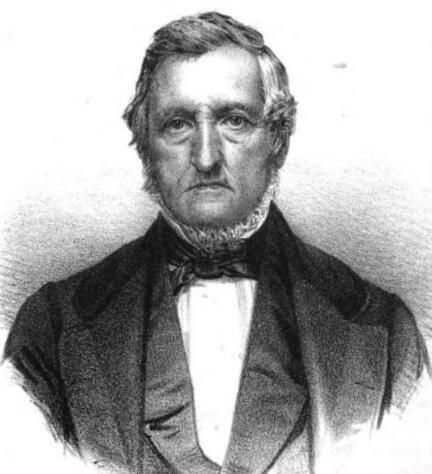
Here you will find contact information for Representative Frederick Stanley Martin, including email address, phone number, and mailing address.
| Name | Frederick Stanley Martin |
| Position | Representative |
| State | New York |
| District | 31 |
| Party | Whig |
| Status | Former Representative |
| Term Start | December 1, 1851 |
| Term End | March 3, 1853 |
| Terms Served | 1 |
| Born | April 25, 1794 |
| Gender | Male |
| Bioguide ID | M000180 |
About Representative Frederick Stanley Martin
Frederick Stanley Martin (April 25, 1794 – June 28, 1865) was a U.S. Representative from New York and a member of the Whig Party whose public career spanned local, state, and national office during a formative period in American political and economic development. Born in West Haven, Vermont, on April 25, 1794, he spent his early childhood in New England before moving with his family to central New York. In 1804 he settled in New Hartford, New York, where he attended the local schools and received a basic education that prepared him for a life in commerce and public service.
In 1810 Martin moved to Whitehall, New York, a community situated on important trade routes, where he entered a mercantile establishment and gained early experience in business. During this period he also worked as a sailor, an occupation that exposed him to the commercial networks and transportation systems that would later influence his interest in internal improvements. These formative years in trade and navigation helped shape his understanding of regional economic needs and the importance of infrastructure to the development of New York and the nation.
Martin settled permanently in Olean, New York, in the spring of 1818. There he operated a hotel and engaged in the lumber business, activities that placed him at the center of a growing frontier community along the Allegheny River. His business interests expanded over time, and in 1831 he established his own mercantile and dry goods firm in Olean. He successfully operated this enterprise for approximately twenty years before selling it to his son, thereby ensuring continuity of the family’s commercial presence in the region. His prominence as a businessman was complemented by his service in the New York state militia from 1826 until 1833, during which he attained the rank of lieutenant colonel.
Martin’s local public service in Olean was extensive. He served as town supervisor of Olean in 1830, 1831, 1836, and 1838, playing a leading role in the administration and development of the town. On December 23, 1830, he was appointed postmaster of Olean, a position he held until November 14, 1839. As postmaster he oversaw the community’s principal link to the wider world of commerce and communication at a time when reliable mail service was vital to economic growth. In January 1840, Governor William H. Seward appointed Martin judge of the county court, a judicial office he held for five years, further broadening his responsibilities in public life and underscoring his standing in Cattaraugus County.
Beginning in the mid-1830s, Martin emerged as a leading advocate for the construction of the Genesee Valley Canal, an important internal improvement project designed to connect the interior of western New York with existing canal and transportation networks. His support for this project reflected his long-standing interest in commerce and infrastructure and aligned with broader Whig Party priorities favoring economic development through public works. His growing influence in regional affairs led to his election to the New York State Senate, where he represented the 32nd District in 1848 and 1849. He subsequently served in the New York State Assembly in 1850, representing the 1st District of Cattaraugus County, thereby gaining legislative experience at the state level before entering national politics.
As a member of the Whig Party representing New York, Martin was elected to the Thirty-second Congress and served one term in the U.S. House of Representatives from March 4, 1851, to March 3, 1853. His congressional service occurred during a significant period in American history, marked by sectional tensions and debates over economic policy and territorial expansion. In the House of Representatives, he participated in the legislative process and represented the interests of his constituents from western New York, bringing to national deliberations his background in local government, state legislation, business, and infrastructure advocacy. His single term in Congress reflected both the competitive nature of mid-nineteenth-century politics and the transitional character of the Whig Party during that era.
After leaving Congress, Martin returned to Olean and renewed his former business pursuits, resuming the commercial activities that had long underpinned his public prominence. He remained a respected figure in the community he had helped to develop over several decades. Frederick Stanley Martin died in Olean, New York, on June 28, 1865. He was originally interred at Oak Lawn Cemetery in Olean. On April 29, 1896, his remains were reinterred at Mount View Cemetery in Olean, reflecting the continued recognition of his role in the civic and political life of his region and state.