Representative Frederick Gottlieb Niedringhaus
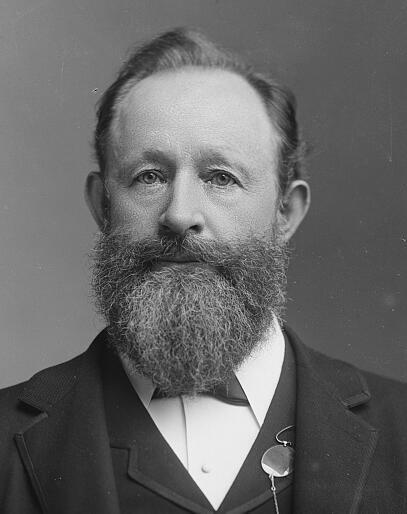
Here you will find contact information for Representative Frederick Gottlieb Niedringhaus, including email address, phone number, and mailing address.
| Name | Frederick Gottlieb Niedringhaus |
| Position | Representative |
| State | Missouri |
| District | 8 |
| Party | Republican |
| Status | Former Representative |
| Term Start | December 2, 1889 |
| Term End | March 3, 1891 |
| Terms Served | 1 |
| Born | October 21, 1837 |
| Gender | Male |
| Bioguide ID | N000104 |
About Representative Frederick Gottlieb Niedringhaus
Frederick Gottlieb Niedringhaus (October 21, 1837 – November 25, 1922) was a German-born American businessman and Republican politician who served one term as a U.S. Representative from Missouri from 1889 to 1891. His congressional service took place during a significant period in American economic and industrial development, and he was closely identified with the growth of the metalware industry in the Midwest.
Niedringhaus was born on October 21, 1837, in Lübbecke, Westphalia, Germany. He attended the common schools there and learned the glazing, painting, and tinning trades as a young man, acquiring the practical skills that would later underpin his industrial career. In November 1855 he emigrated to the United States and settled in St. Louis, Missouri, which was then emerging as a major commercial and manufacturing center along the Mississippi River.
In St. Louis, Niedringhaus entered the metalworking and tinware business. In the early 1860s, together with his brother William, he started a tinware stamping company at a time when the Civil War was fueling demand for tin products. The brothers’ business prospered, and in 1866 they founded the St. Louis Stamping Company with an initial capitalization of $125,000, enabling them to open a substantial factory. Both brothers devoted long hours to the enterprise, involving themselves closely in production details, market expansion, and even operating stamping machines during periods of heavy demand.
Niedringhaus played a central role in industrial innovation. In 1875, he and his brother developed a process for creating a decorative mottled surface on enameled metal. Rolled sheet iron was stamped into various shapes, dipped into an enamel, and then baked to produce a shiny blue-gray glaze. Because granite was used in the enameling process, they named the product Granite Ironware, commonly known as “graniteware.” They built an extensive distribution network by designating hardware stores as agents for Granite Ironware, and the product quickly gained national popularity. In 1877 they constructed a five-story brick warehouse and factory, and a new rolling mill allowed them to produce their own sheet iron, which they had previously imported from Wales. The company expanded further in 1885 to manufacture terneplate, a roofing material made of sheet iron or steel coated with an alloy of lead and tin. In 1891 the brothers purchased land in Madison County, Illinois, eventually assembling some 3,500 acres. They relocated and enlarged their manufacturing operations there and were instrumental in incorporating Granite City in 1896 as an industrial community centered on their works. In 1899 the St. Louis Stamping Company merged with similar firms to form the National Enameling and Stamping Company, reflecting the scale and influence of the Niedringhaus enterprises.
Beyond metal manufacturing, Niedringhaus became involved in a range of other business ventures. In 1885, he and his brother acquired the Calumet Mine near Stockton, Utah, extending their interests into mining. They also incorporated the Home Land & Cattle Company and established a large ranch at Little Dry Creek northwest of Miles City, Montana. Using the brand “N-N” to symbolize their partnership, they built a cattle operation that at its peak in the 1890s ran up to one hundred thousand head. They acquired ranches on Perico Creek near Clayton, New Mexico, for winter range and later moved the ranch’s northern headquarters to Prairie Elk Creek near the Great Northern Railway shipping point at Oswego, Montana. Large cattle drives moved herds between the southern and northern ranges. The brothers sold this extensive ranching enterprise in 1899.
Niedringhaus’s prominence as an industrialist and businessman led him into public life. A member of the Republican Party, he was elected to the Fifty-first Congress as a Representative from Missouri and served from March 4, 1889, to March 3, 1891. His term in the House of Representatives coincided with major debates over tariff policy and American industrial protection. During his service in Congress, he participated in the legislative process and represented the interests of his Missouri constituents. He played a role in drafting the McKinley Tariff, particularly in raising the duty on tin-plate imported from Wales, a measure that aligned with his long-standing involvement in the domestic tin and sheet-iron industry. He was not a candidate for renomination in 1890 and, after the conclusion of his single term, he resumed his former business pursuits.
In his personal life, Niedringhaus married Dena Key, a member of a St. Louis family, on June 1, 1860. The couple had ten children, and St. Louis remained the center of his family and business activities throughout his life. His success in manufacturing, mining, and ranching, combined with his brief but notable congressional career, made him a significant figure in the economic and political life of Missouri and the broader region.
Frederick Gottlieb Niedringhaus died in St. Louis, Missouri, on November 25, 1922. He was interred in Bellefontaine Cemetery in St. Louis, a resting place for many of the city’s leading citizens, marking the close of a life that spanned immigration, industrial innovation, and national public service.