Senator Frederick George Payne
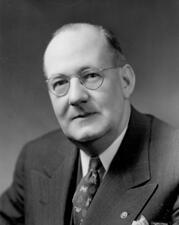
Here you will find contact information for Senator Frederick George Payne, including email address, phone number, and mailing address.
| Name | Frederick George Payne |
| Position | Senator |
| State | Maine |
| Party | Republican |
| Status | Former Representative |
| Term Start | January 3, 1953 |
| Term End | January 3, 1959 |
| Terms Served | 1 |
| Born | July 24, 1904 |
| Gender | Male |
| Bioguide ID | P000150 |
About Senator Frederick George Payne
Frederick George Payne (July 24, 1904 – June 15, 1978) was an American businessman and politician who served as the 60th governor of Maine from 1949 to 1952 and as a United States senator from Maine from 1953 to 1959. A member of the Republican Party, he contributed to the legislative process during one term in the Senate, representing the interests of his constituents during a significant period in American history.
Payne was born in Lewiston, Maine, to Frederick and Nellie (née Smart) Payne. He attended public schools in Lewiston and graduated from Jordan High School. From an early age he worked in a variety of jobs, including as a newsboy, grocery clerk, theater usher, and dishwasher, experiences that helped support his education and introduced him to the business world. He pursued further studies at the Bentley School of Accounting and Finance in Boston, Massachusetts, where he received specialized training in accounting and finance and graduated in 1925.
After completing his education, Payne embarked on a business career, becoming a financial manager and chief disbursing officer for the Maine & New Hampshire Theaters Company, which operated 132 movie theaters throughout New England. His work in this position gave him substantial experience in financial administration and large-scale business operations. This background in finance and management later informed his approach to public budgeting and state administration when he entered political life.
Payne’s formal political career began at the municipal level when he was elected mayor of Augusta, Maine, serving from 1935 to 1941. In 1940 he sought higher office and ran for the Republican nomination for governor of Maine, but he was unsuccessful, losing to state senator Sumner Sewall. After Sewall was elected governor, he appointed Payne as state finance commissioner and budget director, positions in which Payne oversaw state fiscal policy and budgeting. He resigned these posts in 1942 to enter military service during World War II, serving with the U.S. Army Air Forces and attaining the rank of lieutenant colonel. Following his wartime service, he returned to private enterprise as manager of the Waldoboro Garage Company from 1945 to 1949.
In 1948, Payne reentered statewide politics and was elected the 60th governor of Maine, defeating Democratic candidate Louis Lausier, the mayor of Biddeford, by a margin of 66 percent to 34 percent. He was re-elected in 1950, defeating Democrat Earl Grant by 61 percent to 39 percent. As governor, Payne implemented a two-percent sales tax, expanded the Maine Development Commission to promote economic growth, and initiated a long-range highway modernization program financed through a $27 million bond issue, reflecting his emphasis on infrastructure and economic development. During his second term, he faced accusations that he had accepted a bribe related to the state liquor industry, after a wine bottler claimed to have paid $12,000 to a Boston promoter for supposed influence with the governor and the state liquor chairman. Payne testified before a special investigating committee and was cleared of all charges.
In 1952, Payne successfully sought election to the United States Senate from Maine. He first defeated incumbent Senator Owen Brewster in the Republican primary and then won the general election against Democratic candidate Roger P. Dube. He served one term, from 1953 to 1959, during a period marked by the early Cold War, domestic anti-communism, and emerging civil rights debates. As a senator, Payne participated in the democratic process and contributed to federal legislation on behalf of Maine. He did not vote on the Civil Rights Act of 1957, a key piece of civil rights legislation of that era.
During the late 1950s, as public concern grew over youth gangs and violence—heightened by sensational magazine articles and Hollywood films—Payne became a prominent supporter of legislation to ban automatic-opening or switchblade knives. In congressional hearings he argued that such knives were associated with criminal elements and suggested that they had been developed abroad by what he termed “the so-called scum…always involved in crime.” The resulting legislation, the Switchblade Knife Act of 1958, restricted the importation and interstate sale of automatic knives, with Payne and other supporters believing that limiting access to switchblades would reduce youth gang violence by removing a symbolic weapon. Subsequent legislative research later indicated that, although switchblade imports, production, and lawful sales declined sharply, youth gang violence increased as gangs shifted to firearms instead of knives. In 1958, Payne sought re-election but was defeated by Democratic Governor Edmund S. “Ed” Muskie by 61,182 votes, ending his Senate career after a single term.
After leaving the Senate, Payne returned to private life in Maine. He remained identified with the Republican Party and with the business and political communities shaped by his long career in public service, from municipal government to the governorship and the U.S. Senate. Frederick George Payne died on June 15, 1978, in Waldoboro, Maine, at the age of 73. He was buried in the German Lutheran Cemetery in Waldoboro, closing a life that combined business leadership, military service, and more than two decades of elected and appointed public office.