Representative Frederick Augustus Pike
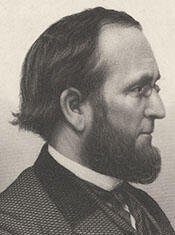
Here you will find contact information for Representative Frederick Augustus Pike, including email address, phone number, and mailing address.
| Name | Frederick Augustus Pike |
| Position | Representative |
| State | Maine |
| District | 5 |
| Party | Republican |
| Status | Former Representative |
| Term Start | July 4, 1861 |
| Term End | March 3, 1869 |
| Terms Served | 4 |
| Born | December 9, 1816 |
| Gender | Male |
| Bioguide ID | P000346 |
About Representative Frederick Augustus Pike
Frederick Augustus Pike (December 9, 1816 – December 2, 1886) was a U.S. Representative from Maine who served four consecutive terms in Congress during the Civil War and Reconstruction era. He was born in Calais, then part of Massachusetts (now in Maine), where he spent much of his life and built a career in law and public service before entering national politics.
Pike attended the common schools of his native town and pursued further studies at Washington Academy in East Machias, Maine. He subsequently enrolled at Bowdoin College in Brunswick, Maine, from which he was graduated in 1837. After completing his collegiate education, he studied law and prepared for admission to the bar. In 1840 he was admitted to the bar and commenced the practice of law in Calais, Washington County, Maine, establishing himself as a local attorney. In 1846 he married Mary Hayden Green, who would later become known as an American author; she was the daughter of Elijah Dix Green and Hannah Caflin Hayden.
Pike’s public career began at the municipal level. He served as mayor of Calais in 1852 and 1853, gaining administrative experience and local prominence. Building on his municipal service, he entered state politics and was elected a member of the Maine House of Representatives, serving from 1858 to 1860. In 1860 he was chosen speaker of the Maine House of Representatives, a position that reflected his standing within the state’s Republican Party and his growing influence in public affairs.
A member of the Republican Party, Pike was elected to the United States House of Representatives as a Republican to the Thirty-seventh and to the three succeeding Congresses, serving from March 4, 1861, to March 3, 1869. His eight years in the House coincided with a significant period in American history, encompassing the Civil War and the initial years of Reconstruction. As a member of the House of Representatives, Frederick Augustus Pike participated in the democratic process, contributed to the legislative work of Congress, and represented the interests of his Maine constituents. During his congressional service he held important committee assignments, serving as chairman of the Committee on Expenditures in the Department of State in the Thirty-eighth and Thirty-ninth Congresses, and as chairman of the Committee on Naval Affairs in the Fortieth Congress. He was an unsuccessful candidate for renomination in 1868, which brought his continuous congressional service to a close at the end of his fourth term.
After leaving Congress in 1869, Pike resumed the practice of law in Calais, returning to the profession in which he had begun his career. He remained active in public life at the state level and was again elected a member of the Maine House of Representatives in 1870 and 1871. He sought to return to national office as a candidate for election to the Forty-third Congress in 1872, but his campaign was unsuccessful. Despite these setbacks, he continued to be regarded as a figure of experience and long service in Maine’s Republican politics.
Frederick Augustus Pike spent his later years in Calais, maintaining his legal practice and his connections to the community in which he had been born and had long served. He died in Calais, Maine, on December 2, 1886, one week before his seventieth birthday. He was interred in Calais Cemetery, closing a life closely associated with the civic, legal, and political history of his native town and state.