Representative Fred B. Rooney
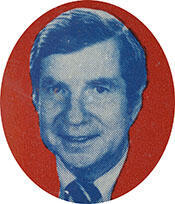
Here you will find contact information for Representative Fred B. Rooney, including email address, phone number, and mailing address.
| Name | Fred B. Rooney |
| Position | Representative |
| State | Pennsylvania |
| District | 15 |
| Party | Democratic |
| Status | Former Representative |
| Term Start | January 9, 1963 |
| Term End | January 3, 1979 |
| Terms Served | 8 |
| Born | November 6, 1925 |
| Gender | Male |
| Bioguide ID | R000423 |
About Representative Fred B. Rooney
Frederick Bernard Rooney Jr. (November 6, 1925 – December 23, 2019) was an American politician from Pennsylvania who served as a Democratic member of the U.S. House of Representatives for Pennsylvania’s 15th congressional district from 1963 to 1979. Over eight consecutive terms in Congress, he contributed to the legislative process during a significant period in American history, representing the interests of his constituents and participating actively in the democratic process.
Rooney was born in Bethlehem, Pennsylvania, to Fred B. Rooney (1881–1945) and Veronica K. (McGreevy) Rooney (1887–1969). He was educated in the local public schools and graduated from Bethlehem High School in 1944. Immediately upon completing high school, he entered military service during World War II. From February 1944 to April 1946, he served in the United States Army, including duty in Europe as a paratrooper, an experience that shaped his early adulthood and exposed him to international affairs and the responsibilities of public service.
Following his military service, Rooney pursued higher education under the opportunities available to returning veterans. He attended the University of Georgia in Athens, Georgia, where he studied business and graduated in 1950 with a Bachelor of Business Administration (B.B.A.) degree. After completing his education, he returned to civilian life and entered the private sector, working in the real estate and insurance businesses. This early professional experience in business and finance provided him with practical knowledge of economic and commercial issues that would later inform his legislative work.
Rooney began his political career in state government. A member of the Democratic Party, he was elected to the Pennsylvania State Senate from the 18th district and served from November 5, 1958, until his resignation on August 6, 1963. In the State Senate, he represented a region that included his native Lehigh Valley area, building a reputation as an advocate for transportation and economic development, and establishing the political base that would support his subsequent election to national office.
Rooney entered the U.S. House of Representatives through a special election. He was elected as a Democrat to the 88th Congress to fill the vacancy caused by the death of United States Representative Francis E. Walter and took office in 1963. He was subsequently reelected to the seven succeeding Congresses, serving continuously until January 3, 1979. During his tenure, he represented Pennsylvania’s 15th congressional district, which encompassed much of the Lehigh Valley, at a time of substantial economic and social change in the region and the nation. As a member of the House of Representatives, he participated in the legislative deliberations of the 1960s and 1970s, a period marked by the civil rights movement, the Vietnam War, and significant federal investment in infrastructure and transportation.
Within Congress, Rooney’s most notable work was on transportation policy. He served on the House Transportation Committee, where his specialties included railroad issues and broader transportation infrastructure. He was one of the architects of the 1976 legislation that established the Consolidated Rail Corporation (Conrail), a federally created entity that took over the operation of potentially profitable railroad companies that had fallen into bankruptcy, including the Penn Central. This legislation was central to stabilizing freight rail service in the Northeast and Midwest and became a defining achievement of his congressional career. Rooney’s efforts reflected his long-standing interest in ensuring reliable transportation networks for both industry and the traveling public. Despite his seniority and legislative accomplishments, he was defeated in his bid for reelection in 1978 by Republican Donald L. Ritter, ending his eight-term service in the House.
After leaving Congress in 1979, Rooney remained active in public affairs through work in government relations. He joined Cassidy & Associates in Washington, D.C., one of the nation’s largest government relations and lobbying firms, where he drew on his congressional experience and expertise in transportation policy. Later, he went into business for himself as an independent consultant and lobbyist, representing clients that included Conrail, the Association of American Railroads, and the American Iron and Steel Institute. In these roles, he continued to influence national transportation and industrial policy, particularly on matters affecting railroads and heavy industry.
Rooney’s contributions were recognized in his home region long after he left elective office. In 2009, a portion of Pennsylvania Route 378 in Bethlehem, from U.S. Route 22 to the Hill to Hill Bridge, was renamed the Fred B. Rooney Highway in honor of his role in the creation and development of that portion of the highway and his broader efforts on behalf of transportation infrastructure. Public service also continued in his family; his nephew, T. J. Rooney, later served in the Pennsylvania General Assembly, extending the Rooney family’s involvement in state politics.
Frederick Bernard Rooney Jr. died at his home in Washington, D.C., on December 23, 2019, at the age of 94. His long life encompassed service as a World War II paratrooper, state legislator, eight-term member of the U.S. House of Representatives, and later a prominent figure in transportation policy and government relations, particularly in the field of railroads.