Representative Frederick William Rowe
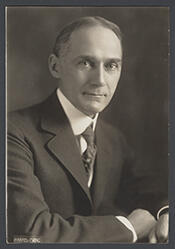
Here you will find contact information for Representative Frederick William Rowe, including email address, phone number, and mailing address.
| Name | Frederick William Rowe |
| Position | Representative |
| State | New York |
| District | 6 |
| Party | Republican |
| Status | Former Representative |
| Term Start | December 6, 1915 |
| Term End | March 3, 1921 |
| Terms Served | 3 |
| Born | March 19, 1863 |
| Gender | Male |
| Bioguide ID | R000476 |
About Representative Frederick William Rowe
Frederick William Rowe (September 28, 1912 – June 20, 1994) was a Newfoundlander, Canadian legislator, and, according to existing congressional records, a Representative from New York in the United States Congress. He was born on September 28, 1912, in Lewisporte, in the then-Dominion of Newfoundland, the youngest son of Eli Rowe and Phoebe Ann Freake. Raised in a Methodist household and educated initially at the Lewisporte Methodist School, he grew up in a small coastal community at a time when Newfoundland was still a separate dominion, not yet part of Canada. His early life in Lewisporte, shaped by the social and economic conditions of pre-Confederation Newfoundland, would later inform both his public service and his extensive historical writing on the province.
Rowe’s formal education advanced rapidly beyond his local schooling. He attended Prince of Wales College and the Normal Training School of Newfoundland in St. John’s, institutions that prepared him for a career in teaching. In 1934, he enrolled in Memorial University College in St. John’s and graduated in 1936 with first-class honours. Immediately after graduation, he began teaching in Bishop’s Falls and then in Bonne Bay, Newfoundland, where he met Edith Laura Butt. The two married on December 25, 1936, and their family would eventually include four sons: Frederick, Stanley, William (Bill), and George. Rowe later taught in Lewisporte and Wesleyville, Newfoundland and Labrador, before pursuing further higher education. He attended Mount Allison University in Sackville, New Brunswick, earning a Bachelor of Arts degree in 1941 and receiving the O. E. Smith Scholarship in recognition of his academic distinction.
In 1948, Rowe left Newfoundland for additional post-secondary training in Canada. He enrolled at the University of Toronto to study for a Bachelor of Paedagogy, which he received in 1949. While in Toronto, he appeared several times on CBC Radio, offering commentary on Newfoundland life and culture to a broader Canadian audience at a moment when the future of Newfoundland’s political status was a matter of national interest. Returning to Newfoundland late in 1949, he combined public service and scholarship, working part-time on a doctorate in Paedagogy at the University of Toronto, which he completed in 1951. During this period he served as the first Deputy Minister of Welfare in the new provincial government formed after Newfoundland entered Confederation in 1949 under Premier Joseph R. Smallwood. From 1950 to 1952 he was a member of the first Board of Regents for Memorial University, and from 1951 to 1956 he served on the United Church Board of Education, underscoring his early and sustained engagement with educational policy and administration.
Rowe entered elected politics in Newfoundland in 1951, resigning his civil service post to seek office. A general election was called for November of that year, but severe weather forced a postponement of polling until August 1952. Standing as the only candidate for the Labrador seat, he was elected by acclamation to the Newfoundland and Labrador House of Assembly. Premier Smallwood appointed him Minister of Mines and Resources, a position he held until 1956, as Newfoundland undertook major efforts to develop its natural resources in the early years of Confederation. Rowe subsequently represented White Bay South in the House of Assembly from 1956 to 1966 and Grand Falls from 1966 to 1971. Over two decades in provincial politics he held numerous cabinet portfolios, including Public Welfare (1955–1956), Education (1956–1959 and again 1967–1971), Highways (1959–1964), Finance (1964–1967), Community and Social Development (1966–1967), and Labrador Affairs (1967–1971). In 1969, he became the first Deputy Premier of Newfoundland, reflecting his central role in the Smallwood government.
According to existing congressional records, Frederick William Rowe also served as a Representative from New York in the United States House of Representatives from 1915 to 1921. A member of the Republican Party, he served three consecutive terms in Congress, participating in the legislative process during a significant period in American history that encompassed World War I and the immediate postwar years. In the House of Representatives, Rowe contributed to national debates and represented the interests of his New York constituents, engaging in the democratic process at the federal level. His tenure in Congress placed him within the broader context of early twentieth-century American political developments, although this aspect of his career stands chronologically apart from, and is not documented within, the Canadian and Newfoundland records associated with the Frederick William Rowe born in 1912.
After losing his bid for re-election in the Grand Falls riding in the 1971 Newfoundland general election, Rowe transitioned from provincial to federal office in Canada. On the recommendation of Prime Minister Pierre Trudeau, he was appointed to the Senate of Canada, where he served as a Liberal Senator from Newfoundland for sixteen years. In that capacity he represented Canada at numerous international parliamentary gatherings, including the Inter-Parliamentary Conference in Rome, Italy, in 1972; an international event in Colombo, Sri Lanka, in 1975; the Commonwealth Parliamentary Conference in the Bahamas in 1982; meetings in Seoul, South Korea, in 1983; and as a member of the official Canadian delegation to the People’s Republic of China in 1983. He retired from the Senate upon reaching the mandatory retirement age of 75.
Parallel to his legislative and executive responsibilities, Rowe became one of Newfoundland’s most important historians of education and public life. His major works include The History of Education in Newfoundland (1952); The Challenge of a Changing Canada (1957); The Development of Education in Newfoundland (1964); Education and Culture in Newfoundland (1976); Extinction: The Beothuks of Newfoundland (1977); Newfoundland and its Education System (1978); A History of Newfoundland and Labrador (1980); The Smallwood Era (1985); and his memoir, Into the Breach: Memoirs of a Newfoundland Senator (1988). As Minister of Education he authored the policy document Blueprint for Education in Newfoundland (1958), and he contributed numerous articles to reference works such as The Canadian Encyclopedia, World Book Encyclopedia, and Joseph R. Smallwood’s The Book of Newfoundland. Rowe died in St. John’s, Newfoundland and Labrador, on June 20, 1994, at the age of 81. His legacy extended through his family as well: his son Bill Rowe became both a writer and a cabinet minister, and his son Frederick B. Rowe also served in the Newfoundland assembly, continuing the family’s engagement in public service.