Representative Frederick James Sisson
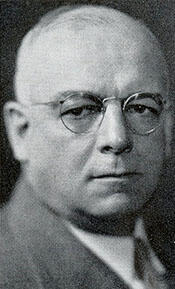
Here you will find contact information for Representative Frederick James Sisson, including email address, phone number, and mailing address.
| Name | Frederick James Sisson |
| Position | Representative |
| State | New York |
| District | 33 |
| Party | Democratic |
| Status | Former Representative |
| Term Start | March 9, 1933 |
| Term End | January 3, 1937 |
| Terms Served | 2 |
| Born | March 31, 1879 |
| Gender | Male |
| Bioguide ID | S000455 |
About Representative Frederick James Sisson
Frederick James Sisson (March 31, 1879 – October 20, 1949) was an American educator, lawyer, and Democratic politician who served two terms as a United States Representative from New York from 1933 to 1937. His congressional service took place during a significant period in American history, as the nation confronted the Great Depression and undertook major legislative reforms, and he contributed to the legislative process during his two terms in office.
Sisson was born in Wells Bridge, Otsego County, New York, on March 31, 1879. He attended the public schools in nearby Unadilla, New York, receiving his early education in the local school system. Demonstrating academic promise, he went on to attend Hamilton College in Clinton, New York, from which he was graduated in 1904. His collegiate education provided the foundation for his subsequent work as an educator and later as a lawyer and public official.
Upon graduating from Hamilton College, Sisson embarked on a career in education. From 1904 to 1910 he served as principal of Vernon High School in Vernon, New York. During this period he combined administrative responsibilities with a growing interest in the law. While still engaged in educational work, he studied law, preparing for admission to the bar. In 1911 he was admitted to the bar and commenced the practice of law in Utica, New York, marking the beginning of a long legal career that would parallel and support his involvement in public service.
Sisson quickly became active in local government and legal affairs in Utica. In 1913 he served as sheriff’s attorney, providing legal counsel in matters related to the county sheriff’s office. The following year, in 1914, he was appointed corporation counsel for the city of Utica, acting as the city’s chief legal officer. He also became involved in educational governance, serving as a member of the Whitesboro Board of Education from 1925 to 1933 and as its president from 1926 to 1930. His early attempts to enter national politics were unsuccessful: he was an unsuccessful candidate for election to the Sixty-eighth Congress in 1922 and again an unsuccessful candidate for election to the Seventy-first Congress in 1928. Nonetheless, these campaigns helped establish his profile within the Democratic Party and among voters in his region.
Sisson was elected as a Democrat to the Seventy-third and Seventy-fourth Congresses, representing New York in the United States House of Representatives from March 4, 1933, to January 3, 1937. Serving during the early years of President Franklin D. Roosevelt’s administration, he participated in the work of the House as it addressed the economic crisis of the Great Depression and considered major New Deal legislation. As a member of the House of Representatives, he took part in the democratic process and represented the interests of his New York constituents while contributing to the broader legislative agenda of the period. He was a candidate for reelection in 1936 but was unsuccessful in his bid to return to the Seventy-fifth Congress, bringing his congressional service to a close after two terms.
After leaving Congress, Sisson resumed the practice of law, maintaining offices in both Utica, New York, and Washington, D.C. He continued his legal work in these locations until his retirement in 1945. His post-congressional career reflected his longstanding engagement with the law and public affairs, and he remained connected to the communities he had served throughout his professional life.
Frederick James Sisson died in Washington, D.C., on October 20, 1949. He was interred in Mount Olivet Cemetery in Whitesboro, New York. His career encompassed service as an educator, local legal official, school board member, and United States Representative, and he is remembered for his role in representing New York in Congress during a transformative era in American political and economic history.