Representative Frederick Cleveland Smith
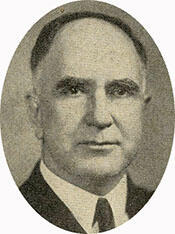
Here you will find contact information for Representative Frederick Cleveland Smith, including email address, phone number, and mailing address.
| Name | Frederick Cleveland Smith |
| Position | Representative |
| State | Ohio |
| District | 8 |
| Party | Republican |
| Status | Former Representative |
| Term Start | January 3, 1939 |
| Term End | January 3, 1951 |
| Terms Served | 6 |
| Born | July 29, 1884 |
| Gender | Male |
| Bioguide ID | S000536 |
About Representative Frederick Cleveland Smith
Frederick Cleveland Smith (July 29, 1884 – July 16, 1956) was an American physician and politician who served six terms as a Republican member of the U.S. House of Representatives from Ohio from 1939 to 1951. A member of the Republican Party, he contributed to the legislative process during a significant period in American history, participating in the democratic process and representing the interests of his constituents through six consecutive terms in office.
Smith was born on July 29, 1884, in Shanesville, Ohio. Little is recorded in the principal sources about his early family life, but his subsequent educational and professional pursuits indicate an early commitment to medicine and public service. Growing up in Ohio at the turn of the twentieth century, he came of age in a period of rapid social and economic change that would shape both his medical career and his later political outlook.
Pursuing higher education in osteopathic medicine, Smith studied in Kirksville, Missouri, a leading center for osteopathic training. After completing his studies there, he practiced medicine in Kirksville for several years, gaining clinical experience and establishing himself in the profession. Seeking further specialization and exposure to advanced medical techniques, he traveled overseas to continue his study of medicine in Frankfurt, Germany, and in Vienna, Austria, both of which were important centers of medical research and education in the early twentieth century.
In 1917, Smith was licensed to practice medicine and surgery in the State of Ohio and opened his medical practice in Marion, Ohio. He quickly became a prominent figure in the local medical community. Demonstrating an interest in group practice and multidisciplinary care, he founded the Frederick C. Smith Clinic in Marion. The clinic brought together physicians from various fields in a single practice that benefited from each doctor’s specialty, an innovative model for its time. The original clinic was located on East Church Street in Marion, and the medical concern continued in Marion and still bore Smith’s name long after his death, reflecting his lasting influence on health care in the region.
Smith’s engagement with public affairs led him into local politics. He served as mayor of Marion, Ohio, from January 1936 until January 1, 1939, when he resigned. His tenure as mayor coincided with the latter years of the Great Depression, a period that demanded active municipal leadership and close attention to local economic and social conditions. His performance in this office helped establish his reputation as a public servant and provided a platform for his subsequent election to national office.
In 1938, Smith was elected as a Republican to the Seventy-sixth Congress and was subsequently reelected to the five succeeding Congresses, serving in the U.S. House of Representatives from Ohio from January 3, 1939, to January 3, 1951. His congressional service spanned the pre–World War II era, the war years, and the early Cold War. During this time, he supported $7 billion in aid to Britain, the Lend-Lease program, and the 1941 amendment to the Neutrality Act that removed restrictions forbidding U.S. vessels from entering combat zones and U.S. citizens from sailing on vessels of belligerents. He denounced “isolationism” and took a staunchly pro-British position between the fall of France in the summer of 1940 and the Nazi invasion of the Soviet Union in the summer of 1941, a period during which Great Britain was essentially alone in its resistance to Nazi Germany. He frequently spoke in favor of aiding Britain, aligning himself with interventionist Republicans and Democrats who believed that American security was tied to the survival of the United Kingdom.
Smith’s voting record and public positions placed him among the most conservative members of Congress of his era. During the early 1950s, he would invariably draw “zero” ratings from the Americans for Democratic Action and other left-leaning organizations that tracked congressional voting patterns. Retrospective analyses of congressional ideology have described him as one of the most conservative members of Congress between 1937 and 1970, with some writers labeling him the sixth most conservative overall since 1937. After six terms in the House, he was not a candidate for renomination in 1950, bringing his congressional career to a close at the start of 1951.
Following his departure from Congress, Smith resumed his medical profession in Marion, returning to the work that had first established his standing in the community. He continued to be associated with the clinic that bore his name and remained a respected figure in both medical and civic circles. Frederick Cleveland Smith died in Marion, Ohio, on July 16, 1956, and was interred in Marion Cemetery, leaving a legacy that combined long service in medicine with a notable, if ideologically distinctive, career in public office.