Senator Frederick Steiwer
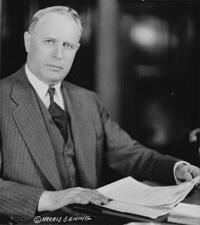
Here you will find contact information for Senator Frederick Steiwer, including email address, phone number, and mailing address.
| Name | Frederick Steiwer |
| Position | Senator |
| State | Oregon |
| Party | Republican |
| Status | Former Representative |
| Term Start | December 5, 1927 |
| Term End | January 3, 1939 |
| Terms Served | 2 |
| Born | October 13, 1883 |
| Gender | Male |
| Bioguide ID | S000848 |
About Senator Frederick Steiwer
Frederick Steiwer (October 13, 1883 – February 3, 1939) was an American politician and lawyer from Oregon who served as a United States Senator from 1927 to 1939. A member of the Republican Party, he emerged from eastern Oregon to become one of the state’s most prominent public figures in the interwar period, participating actively in the legislative process during two terms in office and twice seeking the Republican nomination for the presidency. Born in Oregon in the late nineteenth century, when the state was still developing its political and economic institutions, he was raised in an environment shaped by agriculture and small-town life. He came of age as Oregon was integrating more fully into national political and commercial networks, and these formative experiences in a largely rural region helped shape the regional perspective he later brought to public office, particularly his attention to the needs and interests of constituents in eastern Oregon.
Educated in Oregon, Steiwer pursued the study of law and entered the legal profession in his home state. He read law and qualified for admission to the bar in the early twentieth century, establishing himself as a practicing attorney at a time when Oregon’s legal and political frameworks were evolving rapidly. His work as an attorney gave him experience with both civil and criminal matters and acquainted him with the statutory and constitutional questions that confronted state and local governments. This legal training provided the professional foundation for his subsequent roles as prosecutor, legislator, and United States Senator, and it prepared him to engage with the increasingly complex issues of regulation, economic development, and public administration that characterized the Progressive Era and the years that followed.
Steiwer’s public career began at the local and state levels in eastern Oregon. He served as a county district attorney, where he was responsible for prosecuting criminal cases and representing the public interest in court. In that capacity he gained visibility as a capable advocate and public official, building a reputation for diligence and legal competence. His performance as district attorney led to his election to the Oregon State Senate, where he represented an eastern Oregon constituency. In the state legislature he participated in shaping laws affecting a rapidly changing state, including measures related to infrastructure, agriculture, and the administration of justice. His legislative work in Salem provided him with practical experience in lawmaking and party politics and helped establish the political base that would support his later rise to national office.
During this period of state and local service, Steiwer also served in the military during World War I, becoming a veteran of that conflict and aligning his personal experience with the broader national mobilization of the era. His wartime service, occurring as the United States expanded its role on the world stage, added to his public standing and informed his later views on national defense and foreign affairs. Returning to civilian life after the war, he resumed his legal and political activities in Oregon, now with the added perspective of military experience and national service that resonated with many voters in the postwar years.
A Republican, Steiwer was elected to the United States Senate from Oregon and took his seat in 1927. He served in the Senate during a significant period in American history, encompassing the late 1920s, the onset of the Great Depression after the stock market crash of 1929, and the early years of President Franklin D. Roosevelt’s New Deal. His service in Congress extended through two terms, and he remained in office until 1938, with his tenure commonly dated from 1927 to 1939. In the Senate he represented Oregon’s interests on a national stage, participating in debates over economic policy, federal relief, agricultural programs, and the proper scope of federal power. He was part of the Republican opposition to many New Deal initiatives, arguing for limitations on federal authority and for approaches he believed would better protect private enterprise and regional autonomy, while still engaging with the urgent demands of economic crisis.
Steiwer’s prominence within the Republican Party extended beyond his formal senatorial duties. Twice a candidate for the Republican nomination to the presidency, he sought to shape the party’s direction during a time of political realignment in response to the Great Depression and the policies of the Roosevelt administration. His national standing was underscored when he delivered the keynote address at the 1936 Republican National Convention, a high-profile role that placed him at the center of the party’s effort to articulate an alternative vision to the New Deal. The keynote speech, widely reported in the national press, drew attention to his skills as an orator and his position as one of the leading Republican voices of his day, and it reinforced his reputation as a figure of presidential caliber within the party, even though he did not secure the nomination.
Frederick Steiwer’s congressional service concluded near the end of the 1930s, as the nation began to emerge from the worst years of the Depression and to confront growing international tensions abroad. He left the Senate after his second term, closing a federal legislative career that had spanned more than a decade and had seen him participate in some of the most consequential policy debates of the interwar period. Not long after his Senate service ended, he died on February 3, 1939. In recognition of his status as a World War I veteran and a national officeholder, Steiwer was buried at Arlington National Cemetery. His career remains part of the historical record of Oregon’s representation in the United States Congress and of the Republican Party’s leadership during a transformative era in American political and economic life.