Representative Frederick Enoch Woodbridge
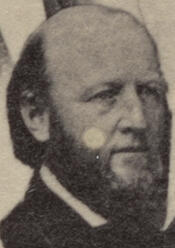
Here you will find contact information for Representative Frederick Enoch Woodbridge, including email address, phone number, and mailing address.
| Name | Frederick Enoch Woodbridge |
| Position | Representative |
| State | Vermont |
| District | 1 |
| Party | Republican |
| Status | Former Representative |
| Term Start | December 7, 1863 |
| Term End | March 3, 1869 |
| Terms Served | 3 |
| Born | August 29, 1818 |
| Gender | Male |
| Bioguide ID | W000708 |
About Representative Frederick Enoch Woodbridge
Frederick Enoch Woodbridge (August 29, 1818 – April 25, 1888) was a nineteenth-century politician and lawyer from Vermont who served as a Republican U.S. Representative from Vermont from 1863 to 1869. His three consecutive terms in the House of Representatives coincided with the American Civil War and the early years of Reconstruction, during which he participated in the legislative process and represented the interests of his constituents in a period of profound national transformation.
Woodbridge was born in Vergennes, Vermont, the son of Enoch D. Woodbridge and Clara (Strong) Woodbridge. He came from a family deeply rooted in Vermont’s legal and political life. His grandfather Enoch Woodbridge served as Chief Justice of the Vermont Supreme Court, and his grandfather Samuel Strong and great-grandfather John Strong were prominent military and political leaders in the early history of Vermont. This family background placed him within a tradition of public service and civic leadership that would shape his own career.
Woodbridge pursued higher education at the University of Vermont, from which he graduated in 1840. He then studied law under the guidance of his father, following the customary apprenticeship model of legal training of the time. In 1843 he was admitted to the bar and commenced the practice of law in his native Vergennes. His legal career quickly became intertwined with local public affairs, laying the groundwork for his subsequent roles in municipal and state government.
In Vergennes, Woodbridge was elected a city councilor, serving for two years, and later became mayor of the city for five years, demonstrating his growing influence in local politics. His public service extended to the state level when he was elected to the Vermont House of Representatives, serving terms in 1849, 1857, and 1858. From 1850 until 1852 he held the statewide office of Vermont Auditor of Accounts, overseeing public finances. Between 1854 and 1858 he served as a prosecuting attorney, further solidifying his reputation as a capable lawyer and public official. He also engaged in the construction of railroads and served as vice president of the Rutland and Washington Railroad, reflecting his involvement in the economic development of the region.
Woodbridge’s legislative career advanced with his election to the Vermont Senate, where he served in 1860 and 1861. In 1861 he was chosen president pro tempore of the Senate, a position that placed him in a leading role in the upper chamber of the state legislature on the eve of the Civil War. His experience in both houses of the Vermont legislature and in statewide office prepared him for national service and aligned him with the emerging Republican Party, which was gaining prominence in the 1850s and early 1860s.
In 1862 Woodbridge was elected as a Republican to the United States House of Representatives, taking his seat in March 1863. He served three consecutive terms in Congress, from 1863 to 1869, representing Vermont during the Civil War and the initial phase of Reconstruction. As a member of the House of Representatives, he participated in the democratic process at the federal level and contributed to the legislative deliberations of this critical era. Among his notable efforts, he was a major proponent of the Expatriation Act of 1868, which affirmed the right of Americans to renounce their citizenship and rejected the doctrine of perpetual allegiance, an important statement of national policy in the postwar period.
After leaving Congress in 1869, Woodbridge returned to Vergennes and resumed the practice of law. He remained active in local affairs and was again elected mayor of Vergennes in 1879, underscoring his continued prominence in the civic life of his hometown. During this period, his household included Stephen Bates, his coachman and an emancipated slave, who went on to serve as sheriff of Vergennes for 25 years, a notable example of African American public service in post–Civil War Vermont.
Woodbridge’s personal life included his marriage to Mary Parkhurst Woodbridge. The couple’s son, Enoch Day Woodbridge, pursued a medical career and became a surgeon at Bellevue Hospital, reflecting the family’s continued engagement in professional and public service fields. Frederick Enoch Woodbridge died in Vergennes on April 25, 1888. He was interred in Prospect Cemetery in Vergennes, closing a life marked by sustained legal practice, extensive public service at the municipal, state, and national levels, and a significant role in Congress during one of the most consequential periods in American history.