Representative Fritz Garland Lanham
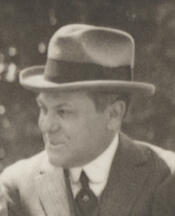
Here you will find contact information for Representative Fritz Garland Lanham, including email address, phone number, and mailing address.
| Name | Fritz Garland Lanham |
| Position | Representative |
| State | Texas |
| District | 12 |
| Party | Democratic |
| Status | Former Representative |
| Term Start | May 19, 1919 |
| Term End | January 3, 1947 |
| Terms Served | 14 |
| Born | January 3, 1880 |
| Gender | Male |
| Bioguide ID | L000076 |
About Representative Fritz Garland Lanham
Frederick Garland “Fritz” Lanham (January 3, 1880 – July 31, 1965) was a Democratic member of the United States House of Representatives from the state of Texas who served fourteen consecutive terms in Congress from 1919 to 1947. Known throughout his public life as Fritz Garland Lanham, he represented his Texas constituents during a period of profound national transformation that encompassed the aftermath of World War I, the Great Depression, the New Deal era, and World War II. Over nearly three decades in the House of Representatives, he contributed to the legislative process and participated actively in the democratic governance of the United States.
Lanham was born on January 3, 1880, in Texas, into a family that would become closely associated with public service in the state. His early years were shaped by the social and economic changes of the post-Reconstruction South, and he grew up during a time when Texas was rapidly developing its agricultural and commercial base. This environment helped form his understanding of the needs of local communities and the importance of federal policy in supporting regional growth and stability, perspectives that would later inform his work in Congress.
As a young man, Lanham pursued formal education in Texas, preparing himself for a professional career and eventual public service. He studied in the state’s schools at a time when higher education and professional training were becoming increasingly important for those seeking to enter law, business, or politics. His education provided him with grounding in law, government, and public affairs, and equipped him with the skills necessary to navigate the complex legal and legislative questions that would arise during his long tenure in the House of Representatives.
Before entering Congress, Lanham established himself in Texas public life and professional circles. He built a reputation as a capable and engaged citizen, familiar with the concerns of his community and the broader issues facing the state. Through his legal and civic activities, he gained experience in interpreting statutes, understanding regulatory frameworks, and working with local and state officials. This background made him a credible candidate for national office and helped him secure the confidence of voters when he sought election to the United States House of Representatives.
Lanham was first elected as a Representative from Texas in 1918 and took his seat in the United States Congress in 1919. A member of the Democratic Party, he would go on to serve continuously until 1947, completing fourteen terms in office. His service in Congress occurred during a significant period in American history, as the federal government expanded its role in economic regulation, social welfare, and national defense. As a member of the House of Representatives, Fritz Garland Lanham participated in the democratic process by debating and voting on major national legislation, representing the interests of his constituents, and contributing to the development of federal policy in response to economic crises and global conflict.
During his congressional career, Lanham was involved in the legislative work that accompanied the nation’s transition from a largely rural, agrarian society to a more urban and industrial one. He served while Congress addressed issues such as agricultural support, banking and financial reform, labor relations, and infrastructure development. As a Texas Democrat, he was attentive to the needs of his district, including farmers, small businesses, and emerging urban centers, and he worked within the committee system and party structure to advance measures that he believed would benefit both his state and the country as a whole. His long tenure reflected sustained electoral support and suggested that his constituents regarded him as an effective advocate for their concerns in Washington.
Lanham’s congressional service concluded in 1947, following nearly three decades in the House. After leaving office, he remained identified with the generation of lawmakers who had guided the United States through economic depression and global war. In his later years, he lived in Texas, where he was remembered as a long-serving Representative who had helped shape federal policy during some of the most challenging decades of the twentieth century. Frederick Garland “Fritz” Lanham died on July 31, 1965, closing a life that had been closely intertwined with the political and legislative history of both Texas and the nation.