Representative Gardner Robert Withrow
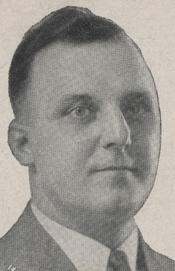
Here you will find contact information for Representative Gardner Robert Withrow, including email address, phone number, and mailing address.
| Name | Gardner Robert Withrow |
| Position | Representative |
| State | Wisconsin |
| District | 3 |
| Party | Republican |
| Status | Former Representative |
| Term Start | December 7, 1931 |
| Term End | January 3, 1961 |
| Terms Served | 10 |
| Born | October 5, 1892 |
| Gender | Male |
| Bioguide ID | W000663 |
About Representative Gardner Robert Withrow
Gardner Robert Withrow (October 5, 1892 – September 23, 1964) was an American union representative and Progressive Republican politician from La Crosse, Wisconsin, who served ten terms in the United States House of Representatives. A member of the Republican Party and identified with its progressive wing, he represented western Wisconsin in Congress from 1931 to 1939 and again from 1949 to 1961. During his first term he represented Wisconsin’s 7th congressional district, and for his remaining nine terms he represented Wisconsin’s 3rd congressional district. Before his election to Congress, he served one term in the Wisconsin State Assembly in 1927. He was a fourth cousin of President Abraham Lincoln, a family connection that was occasionally noted in accounts of his public career.
Withrow was born in La Crosse, Wisconsin, where he was raised and educated in the public schools. Coming of age in the early twentieth century in a region with strong labor and progressive traditions, he entered the workforce at a young age and became active in organized labor. His experience as a union representative shaped his political outlook and aligned him with the progressive Republican movement that was influential in Wisconsin politics during the era of Robert M. La Follette Sr. and his successors. Through his union work, Withrow developed a reputation as an advocate for working people, particularly in transportation and related industries, which later informed his legislative interests in Congress.
Withrow’s formal political career began at the state level. In 1926 he was elected to the Wisconsin State Assembly, taking office in 1927. As an Assembly member, he was associated with the progressive faction of the Republican Party, supporting reforms that favored labor, farmers, and small business interests. His single term in the Assembly provided him with legislative experience and visibility within the state party, positioning him for higher office. Rather than seek reelection to the Assembly, he chose to pursue a seat in Congress when an opportunity arose in his home region.
In 1928, when U.S. Representative Joseph D. Beck announced that he would run for Governor of Wisconsin instead of seeking another term in Congress, Withrow abandoned his bid for Assembly reelection to enter the Republican primary to succeed Beck as representative of Wisconsin’s 7th congressional district. Progressive Republicans in the district quickly rallied around him, but the primary field was crowded with prominent contenders, including Merlin Hull, a former secretary of state who had previously run in the primary twice, and Otto Bosshard and Alexander Frederick, both experienced state legislators. In a closely contested race, Withrow fell about 2,300 votes short of Hull, who won the primary with approximately 35 percent of the vote. Undeterred, Withrow challenged Hull again in the 1930 Republican primary. Emphasizing his support for farmers’ interests and portraying his campaign as a stand against what he described as the business-oriented, stalwart Republicanism represented by Hull, Withrow ran in a head-to-head contest with no other candidates in the race. He prevailed with 52 percent of the vote and, facing only a Prohibition Party opponent in the general election—though Hull received a substantial number of write-in votes—won the seat with about 82 percent of the vote.
Withrow took his seat in the 72nd Congress at a time when the House of Representatives was one of the most closely divided in American history, amid the deepening Great Depression. He quickly emerged as one of eight Wisconsin progressive Republicans who formed a faction of holdouts, refusing to assist in organizing the House until Republican leadership agreed to a set of policy demands addressing the economic crisis. Their conditions included support for unemployment relief and agricultural assistance programs. The standoff was ultimately overtaken by events when Democrats secured a majority before Republicans could pass an organizing resolution, rendering the dispute moot. Following the 1930 census and the Reapportionment Act of 1929, Wisconsin lost a congressional seat, prompting a major redrawing of district lines. Under the new map, enacted in a 1931 special legislative session, Withrow’s residence fell within the reconfigured 3rd congressional district, encompassing much of southwestern Wisconsin. In the 1932 Republican primary for the new district, he faced another challenge from a stalwart Republican, Charles A. Dittman, and won with about 58 percent of the vote. Despite the national Democratic landslide that year, in which Republicans lost 101 House seats, Withrow was reelected, defeating Democratic attorney John J. Boyle in the general election.
During the 73rd Congress and the early New Deal period, Withrow, though a Republican, supported several initiatives advanced by Democratic President Franklin D. Roosevelt, reflecting his progressive orientation and concern for labor and agricultural issues. In 1934, amid the West Coast waterfront strike, he led a bipartisan effort to secure a vote on legislation establishing a 30-hour work week for railroad employees. By successfully gathering the necessary signatures on a discharge petition, he forced the bill to the House floor over the objections of committee leadership. However, the committee with jurisdiction subsequently voted to report the bill without recommendation, a procedural move that effectively ended its prospects. Withrow continued to serve through the 1930s, representing his largely rural and small-town constituency and participating in debates over economic recovery, labor standards, and agricultural policy. He left Congress at the end of his term in 1939 but remained active in public and political affairs.
Withrow returned to the House in the post–World War II era, winning election again from Wisconsin’s 3rd congressional district in 1948 and serving continuously from January 3, 1949, to January 3, 1961. Over these additional six terms, he contributed to the legislative process during a period marked by the onset of the Cold War, the expansion of federal social and economic programs, and significant developments in transportation and infrastructure policy—areas in which his background as a union representative and his earlier advocacy for workers’ rights remained influential. As a member of the House of Representatives, he participated in the democratic process and represented the interests of his western Wisconsin constituents, maintaining his reputation as a progressive Republican voice within his party. After a cumulative ten terms in Congress—one from the 7th district and nine from the 3rd—he concluded his congressional service in 1961.
In his later years, Withrow lived away from the national political spotlight but remained identified with the progressive Republican tradition that had shaped his long public career. He died on September 23, 1964, closing a life that spanned from the Progressive Era through the mid-twentieth century and that included service in both state and national legislatures. His career reflected the enduring influence of Wisconsin’s progressive movement and the role of labor-oriented Republicans in shaping federal policy during some of the most consequential decades in American history.