Representative Gary L. Ackerman
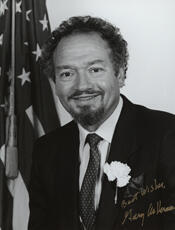
Here you will find contact information for Representative Gary L. Ackerman, including email address, phone number, and mailing address.
| Name | Gary L. Ackerman |
| Position | Representative |
| State | New York |
| District | 5 |
| Party | Democratic |
| Status | Former Representative |
| Term Start | January 3, 1983 |
| Term End | January 3, 2013 |
| Terms Served | 15 |
| Born | November 19, 1942 |
| Gender | Male |
| Bioguide ID | A000022 |
About Representative Gary L. Ackerman
Gary Leonard Ackerman (born November 19, 1942) is an American retired politician and former United States Representative from New York, who served in the House of Representatives from 1983 to 2013. A member of the Democratic Party, he represented portions of Queens and Long Island over fifteen consecutive terms. On March 15, 2012, Ackerman announced that he would retire at the end of the 112th Congress on January 3, 2013, and would not seek re-election in November 2012, concluding a three-decade career in Congress during a significant period in modern American political history.
Ackerman was born in Brooklyn, New York, the son of Eva (née Barnett) and Max Ackerman. His grandparents were Jewish immigrants from Russia and Poland, and he was raised in the Flushing neighborhood of Queens. He attended local New York City public schools and Brooklyn Technical High School before enrolling at Queens College of the City University of New York, from which he graduated in 1965. Active in the Jewish community and civic affairs from a young age, he also attained the rank of Eagle Scout, an early indication of his interest in leadership and public service.
After completing his education, Ackerman became a New York City schoolteacher, teaching social studies, mathematics, and journalism to junior high school students in Queens. In 1969, following the birth of his first child, he petitioned the New York City Board of Education for an unpaid leave of absence to care for his newborn daughter. His request was denied under then-existing policy, which limited unpaid “maternity-child care” leave to women. Ackerman successfully sued the Board of Education in a landmark case that established the right of either parent to receive unpaid leave for child care, a legal development that foreshadowed the federal Family and Medical Leave Act of 1993. A quarter-century later, as a member of Congress, he served on the House–Senate conference committee and signed the conference report on the Family and Medical Leave Act, helping to make into national law the principle he had earlier vindicated in court.
In 1970, Ackerman left teaching and embarked on a second career in journalism and publishing by founding a weekly community newspaper in Queens, The Flushing Tribune, which soon expanded and became the Queens Tribune. He served as its editor and publisher, using the paper as a platform to cover local politics, community issues, and neighborhood concerns. His work in local media increased his visibility in Queens and helped launch his political career. Ackerman entered elective office as a member of the New York State Senate, serving from 1979 to 1983 in the 183rd, 184th, and 185th New York State Legislatures, where he began to build a record on education, consumer protection, and urban issues.
Ackerman was elected to Congress in a special election following the death of incumbent Democratic Representative Benjamin Rosenthal on January 4, 1983. He won the special election with a plurality of 49 percent and secured re-election to a full term in 1984 with 69 percent of the vote. He was re-elected in 1986 with 77 percent and ran unopposed in 1988 and 1990. After redistricting, he ran in New York’s 5th Congressional District, winning the Democratic primary with 60 percent and the general election with 52 percent against Republican county legislator Allan E. Binder. In 1994, he was re-elected with 55 percent of the vote, and in subsequent elections he consistently won re-election with at least 63 percent of the vote. Over his fifteen terms, Ackerman served on the Committee on Financial Services—sitting on the Subcommittee on Capital Markets, Insurance, and Government-Sponsored Enterprises and the Subcommittee on Financial Institutions and Consumer Credit—and on the Committee on Foreign Affairs, where he served on the Subcommittee on Asia and the Pacific and as ranking member of the Subcommittee on the Middle East and South Asia. He was also active in several caucuses, including the Congressional Arts Caucus, the Congressional Caucus on India and Indian Americans, the Cuba Democracy Caucus, and he served as the Congressional delegate to the United Nations. He was the ranking Democrat on the Congressional Caucus on India and Indian Americans and, in recognition of his work on U.S.–India relations, he received India’s third-highest civilian award, the Padma Bhushan, in 2002.
Throughout his congressional service, Ackerman was associated with a wide range of legislative initiatives in domestic policy, financial regulation, health care, and foreign affairs. Among his notable legislative achievements was his “Baby AIDS” amendment to the Ryan White CARE Act, which required mandatory HIV testing of newborns and disclosure of the results to the mother. He championed this issue after discovering that 45 states, including New York, tested babies for HIV but used the data only for epidemiological tracking and did not inform mothers of positive results, leaving thousands of parents unaware of their infants’ HIV status. Ackerman also led efforts to prevent the reinstatement of anonymous testing in subsequent years. He was successful in securing Medicare coverage for prostate cancer testing and in sponsoring the first federal legislation to ban the use of handheld cell phones while driving. He authored legislation requiring banks and financial companies to notify consumers when negative information is placed on their credit reports, and he sponsored a measure—enacted in the wake of the Enron and WorldCom scandals—that prohibits accounting firms from providing consulting services to the companies they audit. He was instrumental in efforts to ban the sale of “downed” animals—livestock unable to stand or walk—into the human food supply, warning for a decade that such practices were inhumane and posed a risk of mad cow disease; his position was ultimately adopted by the Bush Administration through regulation in December 2003. Ackerman received an “A” rating on the Drum Major Institute’s 2005 Congressional Scorecard on middle-class issues, reflecting his alignment with policies aimed at protecting working- and middle-class families.
Ackerman’s work on financial oversight and securities regulation became particularly prominent in the 2000s. On October 3, 2008, he voted in favor of the Troubled Asset Relief Program (TARP) during the financial crisis. On January 8, 2009, he introduced legislation directing the Securities and Exchange Commission (SEC) to re-institute the “uptick rule,” which limits the conditions under which traders can sell stock short. On February 4, 2009, he sharply criticized SEC officials over their handling of repeated tips about Bernard Madoff’s Ponzi scheme, questioning how the agency could fail to act despite receiving detailed complaints “on a silver platter” over a period of years. Over the course of his tenure, Ackerman missed votes on 80 occasions on a variety of issues, including the Pension Protection Act, the Tax Relief Extension Reconciliation Act, and a resolution honoring the contributions of Catholic schools. He also participated in investigations and oversight efforts closer to home, including chairing a bipartisan hearing into whether New York City and Long Island officials properly used the pesticide malathion during the West Nile virus outbreak, and he obtained federal funds to combat a resurgence of the virus.
In foreign policy and national security, Ackerman played a visible role, particularly in Middle Eastern and Asian affairs. As chairman of the House Foreign Affairs Subcommittee on Asia and the Pacific, he traveled to North Korea in the 1990s to discuss nuclear non-proliferation and, upon returning to South Korea, became the first person since the Korean War to cross the Demilitarized Zone (DMZ). He authored legislation requiring President George W. Bush to impose sanctions on the Palestinian Authority for failing to comply with peace agreements signed with the United States and Israel. He was also responsible for a measure that bars war criminals and human rights abusers—those who have perpetrated genocide, torture, terrorism, or other atrocities—from entering the United States and provides for the deportation of those who have already entered. Ackerman convinced the German government to establish a US$110 million fund to compensate 18,000 Holocaust survivors and pressed for investigations into whether approximately 3,300 former Nazi soldiers living in the United States and receiving German pensions were war criminals. He was well known for his humanitarian missions to feed starving populations in Ethiopia and Sudan and for his leading role in the rescue of Ethiopian Jews and their emigration to Israel. Active in the Middle East peace process, he met with most Israeli prime ministers and the heads of all Arab countries in the region in an effort to advance peace. He also traveled to Kashmir in sub-freezing winter conditions in an attempt to secure the release of four Western hostages. In January 2011, he publicly criticized several Jewish organizations, including Jewish Voice for Peace and J Street, for their positions on what steps were necessary to achieve a lasting peace in the Middle East.
Ackerman’s record on defense and security issues reflected both support for military action and concern for service members’ welfare and civil liberties. On October 10, 2002, he was among the 81 House Democrats who voted to authorize the use of military force in Iraq. He later convinced the Department of Defense to stop garnishing wages from certain U.S. soldiers serving in the Iraq war who, as combat-zone personnel, were not required to pay federal taxes but had not been properly granted the exemption. Domestically, he voted in 2011 to extend expiring provisions of the USA PATRIOT Act and supported the National Defense Authorization Act (NDAA) for Fiscal Year 2012. He also participated in efforts to expand civil rights protections, including helping to force the State of Hawaii to change a law that forbade blind individuals from bringing guide dogs with them to the islands. In the aftermath of the September 11, 2001, terrorist attacks, Ackerman authored the legislation that created the “Heroes” postage stamp, the proceeds of which assist the families of rescue workers killed or permanently disabled while responding to the attacks. The stamp was based on the photograph “Ground Zero Spirit.” He lobbied federal security officials to employ retired law enforcement officers as screeners at New York airports and pressed President Bush to fulfill his pledge to provide New York with US$20 billion in additional disaster aid related to 9/11.
Ackerman’s congressional career also included a number of high-profile votes and controversies. In December 2005, he was one of only 22 House members—and one of just two Democrats from New York—to vote against a resolution calling for the protection of the symbols and traditions of Christmas, objecting to the absence of language protecting the symbols of other religious holidays; the resolution passed 401–22. In April 2003, the Catholic League for Religious and Civil Rights criticized him for voting against a non-binding resolution that would have declared a day of prayer in recognition of the U.S. war in Iraq. In June 2001, he honored King Christian X of Denmark for allegedly wearing a yellow badge armband during World War II in solidarity with Danish Jews ordered by the Nazi occupiers to wear such badges, although historians have established that Danish Jews were never required to wear the badge and that the story is a legend. On January 12, 2009, Ackerman acknowledged arranging a visit between Israeli officials and a defense contractor at the same time he was investing in that contractor; while the meeting did not result in any official agreement, the episode raised questions about potential conflicts of interest. In 2011, he voted to extend provisions of the PATRIOT Act and supported the NDAA for Fiscal Year 2012, positions that drew scrutiny from some civil liberties advocates.
Beyond his formal legislative work, Ackerman was active in international Jewish parliamentary affairs and cultural initiatives. At the 2006 meeting of the International Council of Jewish Parliamentarians (ICJP), he was unanimously elected to serve as the executive head of the organization, reflecting his prominence among Jewish legislators worldwide. He also served as head of the International Council of Jewish Parliamentarians more broadly and remained engaged in issues affecting Jewish communities and Israel. He was a member of the Congressional Arts Caucus and supported arts and cultural funding. Ackerman was named an honorary graduate of the United States Merchant Marine Academy in Kings Point, New York, in recognition of his continued support for the service academy, and a street in Central Islip, New York, has been named in his honor.
Ackerman’s personal life and interests were well known around Capitol Hill. He is married to Rita Ackerman, and the couple has three children: Lauren, Corey, and Ari. For many years, while in Washington, D.C., he lived on a houseboat named the “Unsinkable II,” and he otherwise resides in Roslyn Heights in Nassau County, New York, having moved there from a home in Jamaica Estates, Queens, that sold for US$1 million in 2008. He is an amateur photographer, an avid stamp collector, and a boating enthusiast, and he is known for wearing a white carnation boutonnière each day. Ackerman’s long tenure in Congress, his extensive legislative record, and his involvement in domestic and international issues made him a prominent figure in New York and national politics during his thirty years in the House of Representatives.