Representative Gene Green
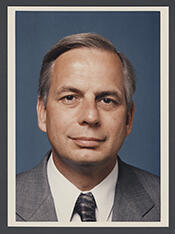
Here you will find contact information for Representative Gene Green, including email address, phone number, and mailing address.
| Name | Gene Green |
| Position | Representative |
| State | Texas |
| District | 29 |
| Party | Democratic |
| Status | Former Representative |
| Term Start | January 5, 1993 |
| Term End | January 3, 2019 |
| Terms Served | 13 |
| Born | October 17, 1947 |
| Gender | Male |
| Bioguide ID | G000410 |
About Representative Gene Green
Raymond Eugene “Gene” Green (born October 17, 1947) is an American politician and attorney who served as a Democratic Representative from Texas in the United States Congress from January 3, 1993, to January 3, 2019. Over 13 consecutive terms, he represented Texas’s 29th congressional district, a heavily Democratic, majority-Hispanic district that included most of eastern Houston and portions of its suburbs. His service in Congress occurred during a significant period in American history, and he participated actively in the legislative process while representing the interests of his constituents.
Green was born in Houston, Texas, where he was raised and educated in the city he would later represent at the state and federal levels. He attended the University of Houston, earning a bachelor’s degree in business administration in 1971. Pursuing a legal career alongside his interest in public service, he returned to the University of Houston and received a Juris Doctor degree in 1977. Before his election to Congress, he worked as a business manager and maintained a private law practice, gaining experience in both the business and legal communities of Houston.
Green began his political career in the Texas Legislature. He was first elected to the Texas House of Representatives in 1972, marking the start of a long tenure in public office. In 1985, he advanced to the Texas Senate, where he continued to build a reputation as a legislator focused on local concerns, including economic development, education, and infrastructure in the Houston area. By the early 1990s, he had established himself as a durable political figure in eastern Houston, never having lost an election at the state level.
Green was first elected to the U.S. House of Representatives in 1992, when Texas’s 29th congressional district was newly created and drawn as a majority-Hispanic district. In the initial five-way Democratic primary, he finished second to Houston city councilman Ben Reyes, but he narrowly defeated Reyes in the runoff by 180 votes, effectively securing the seat in the strongly Democratic district. He took office on January 3, 1993, and was subsequently reelected 12 times, never facing substantive electoral opposition. He ran unopposed in 1998, 2002, and 2004. Over the course of his congressional career, he represented portions of eastern Houston for a combined 46 years in state and federal office, and he never lost an election.
During his years in Congress, Green focused on education, labor, energy, domestic manufacturing, health care, NASA’s Johnson Space Center, Social Security, and veterans’ benefits. He worked to improve access to quality health care, supported initiatives to strengthen the economy and increase job training, and advocated for maintaining financial aid for students. From 1996 until his retirement in 2019, he served on the powerful House Committee on Energy and Commerce. Within that committee, he served on the Subcommittee on Energy and Power, the Subcommittee on Oversight and Investigations, and the Subcommittee on Health, on which he played a significant role during the drafting of the Affordable Care Act of 2010, helping to write and amend the legislation and later working to expand access to affordable, quality health care. In 2011, he became the Ranking Member of the Subcommittee on Environment and the Economy, where he was particularly active on environmental and regulatory issues.
Green’s legislative record reflected both his district’s industrial base and his interest in national policy. In 2002, he voted in favor of the Iraq Resolution authorizing the use of military force, and he delivered a speech on the House floor that linked Saddam Hussein to the September 11, 2001, attacks. Despite the general disapproval of the Iraq War among much of the Democratic leadership in later years, Green voted against measures that sought to impose a timetable for military withdrawal. He also took an interest in structural reforms to the electoral system; in September 2004, he proposed the Every Vote Counts Amendment, a constitutional amendment that would have abolished the Electoral College in United States presidential elections. On environmental and technology issues, he proposed legislation addressing domestic and global electronic waste concerns. In the 112th Congress, he introduced H.R. 2284, the Responsible Electronics Recycling Act of 2011, which sought to prohibit the export of certain electronic materials whose improper disposal could pose environmental, health, or national security risks.
Throughout his tenure, Green was active in a number of caucuses that reflected his policy interests and his district’s needs. He was a member of the Congressional Arts Caucus, the Congressional Vision Caucus, the Afterschool Caucuses, the Congressional NextGen 9-1-1 Caucus, and the U.S.-Japan Caucus. In the 115th Congress, he was notable as the only non-Hispanic white Democrat representing a significant portion of Houston, and one of only three non-Hispanic white Democrats in the entire Texas delegation, alongside Lloyd Doggett and Beto O’Rourke. His long-standing presence in Congress made him a familiar figure in Houston-area politics and a senior member of the Texas Democratic delegation.
On November 13, 2017, Green announced that he would retire from Congress at the end of his term and not run for re-election in 2018. He later endorsed State Senator Sylvia Garcia—who then represented his former state senate district and had finished third in the 1992 Democratic primary for the 29th district—as his preferred successor. Garcia went on to win the Democratic primary and then the general election, succeeding him in the U.S. House. Green left office in January 2019, concluding more than four decades of continuous elected service representing eastern Houston at the state and federal levels.