Representative George Madison Adams
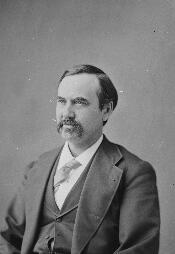
Here you will find contact information for Representative George Madison Adams, including email address, phone number, and mailing address.
| Name | George Madison Adams |
| Position | Representative |
| State | Kentucky |
| District | 9 |
| Party | Democratic |
| Status | Former Representative |
| Term Start | March 4, 1867 |
| Term End | March 3, 1875 |
| Terms Served | 4 |
| Born | December 20, 1837 |
| Gender | Male |
| Bioguide ID | A000035 |
About Representative George Madison Adams
George Madison Adams (December 20, 1837 – April 6, 1920) was a U.S. Representative from Kentucky, a member of the Democratic Party, the nephew of Congressman Green Adams, and a slaveowner. He served four consecutive terms in the United States House of Representatives from 1867 to 1875, representing his Kentucky constituents during the turbulent Reconstruction era that followed the Civil War. His career in national politics placed him at the center of major debates over the reintegration of the former Confederate states and the reshaping of federal authority in the postwar period.
Adams was born on December 20, 1837, in Barbourville, Knox County, Kentucky, into a family with established political connections; his uncle, Green Adams, had served as a U.S. Representative from Kentucky in the mid-nineteenth century. Growing up in antebellum Kentucky, Adams was raised in a slaveholding society, and he himself was a slaveowner, a fact that reflected both his social milieu and the economic structure of the region at the time. His early life in a border state that would remain in the Union during the Civil War exposed him to the complex political and sectional tensions that would later shape his public career.
Adams received his early education in the common schools of Kentucky and pursued further study in preparation for a professional career. Like many aspiring public men of his generation, he studied law, gaining familiarity with the legal and constitutional questions that were central to American political life in the mid-nineteenth century. His education and family background helped prepare him for entry into public service at a time when Kentucky politics were deeply influenced by the legacies of slavery, the Civil War, and shifting party alignments.
Before his election to Congress, Adams became involved in local and state affairs in Kentucky, building a reputation that would support his candidacy for national office. As a Democrat in a state with divided loyalties during and after the Civil War, he aligned himself with a party that, in the Reconstruction years, generally opposed the most sweeping federal interventions in Southern governance and society. His political activity in this period reflected the broader efforts of Kentucky Democrats to reassert influence in the postwar political order and to shape the terms on which the South would be reintegrated into the Union.
Adams was elected as a Democrat to the Fortieth, Forty-first, Forty-second, and Forty-third Congresses, serving from March 4, 1867, to March 3, 1875. During these four terms in the House of Representatives, he contributed to the legislative process and participated in the democratic governance of the nation at a time when Congress was grappling with Reconstruction policy, civil rights for formerly enslaved people, and the readjustment of the national economy after the war. Representing Kentucky, he sought to articulate and defend the interests of his constituents, who were navigating the social and economic transitions of the late 1860s and early 1870s. His service coincided with major congressional struggles over the balance of power between the federal government and the states, the terms of readmission for former Confederate states, and the scope of protections for African Americans in the South.
After leaving Congress in 1875, Adams continued his involvement in public life, drawing on his legislative experience and political connections. Like many former members of Congress of his era, he remained engaged in civic and political affairs, although he did not return to national elective office. His post-congressional years unfolded against the backdrop of the end of Reconstruction, the rise of the so-called “Redeemer” governments in the South, and the entrenchment of new racial and political arrangements that followed the withdrawal of federal troops from the former Confederate states.
George Madison Adams died on April 6, 1920. His long life spanned from the antebellum period through the Civil War, Reconstruction, and into the early twentieth century, encompassing profound transformations in American political and social life. As a four-term Democratic Representative from Kentucky, a nephew of Green Adams, and a slaveowner whose career was shaped by the conflicts and compromises of his time, he remains a figure associated with the complex history of Kentucky and the United States during and after the Civil War.