Representative George Wesley Atkinson
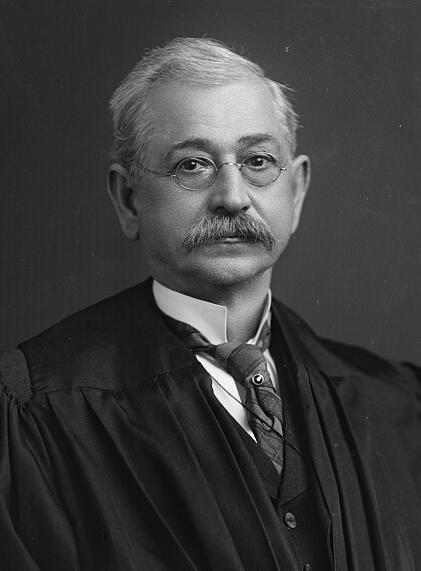
Here you will find contact information for Representative George Wesley Atkinson, including email address, phone number, and mailing address.
| Name | George Wesley Atkinson |
| Position | Representative |
| State | West Virginia |
| District | 1 |
| Party | Republican |
| Status | Former Representative |
| Term Start | December 2, 1889 |
| Term End | March 3, 1891 |
| Terms Served | 1 |
| Born | June 29, 1845 |
| Gender | Male |
| Bioguide ID | A000330 |
About Representative George Wesley Atkinson
George Wesley Atkinson (June 29, 1845 – April 4, 1925) was a United States cavalryman, lawyer, politician, judge, and scholar who became the tenth governor of West Virginia as a candidate of the Republican Party. He also served in the West Virginia House of Delegates, represented West Virginia in the United States House of Representatives from 1889 to 1891, and ended his long career in public service as a judge of the United States Court of Claims. Over the course of his life he was also a federal revenue official, United States marshal, United States attorney, educator, editor, and prolific author.
Atkinson was born on June 29, 1845, in Charleston, Virginia (now Charleston, West Virginia), the second child of Col. James Atkinson, a farmer and deputy sheriff of Kanawha County, and his wife, the former Miriam Radar of Nicholas County. Named for his paternal grandfather, he grew up in a large family with seven sisters and attended the public schools of Charleston. During the American Civil War he enlisted as a private in Company F of the 1st West Virginia Cavalry, serving in the Union Army. After the war he returned to Kanawha County, where he soon lost his father, began his career in education, and started a family life that would include two marriages. His first marriage was to Ellen Eagan, with whom he had five children; their eldest son, Howard Atkinson, later rose to the rank of major in the United States Army. After Ellen’s death, Atkinson married Myra Horner Davis Camden in 1897; she was the widow of Judge Gideon D. Camden.
Atkinson pursued extensive higher education while working. He attended Ohio Wesleyan University, receiving an Artium Baccalaureus degree in 1870 and an Artium Magister degree in 1873. He undertook additional graduate-level studies at Mount Union College, a Methodist-affiliated institution in Alliance, Ohio, which awarded him a Ph.D. “pro merito” in 1887. Seeking legal training, he moved in 1871 to study law in either Nashville, Tennessee, or Washington, D.C., and ultimately earned a Bachelor of Laws degree from Howard University School of Law in 1874. He later attended law lectures at Columbia University in New York. Over the course of his career he was recognized with several honorary degrees, including an LL.D. from U.S. Grant University, an LL.D. from the University of Nashville in 1890, and a D.C.L. from West Virginia University in 1897.
Even before completing his formal legal education, Atkinson was active in education and local administration in Kanawha County. He served as assistant superintendent of public schools for Kanawha County from 1868 to 1870 and as a member of the Charleston Board of Education from 1869 to 1871. During part of this period he also collected tolls for the Kanawha River Board, from 1869 to 1871. After the war he became superintendent of the Kanawha County public schools, further cementing his reputation as an educator. He entered federal service as postmaster of Kanawha Courthouse (now Charleston), serving from 1871 to 1877. Shortly after graduating from Howard University School of Law, he was admitted to the West Virginia bar and began a private law practice in Charleston from 1875 to 1877. While practicing law he was elected to the West Virginia House of Delegates in 1876, marking his formal entry into elective office.
In 1877 Atkinson moved to Wheeling, then an important political and commercial center of West Virginia, where he edited the Wheeling Standard from 1877 to 1878. He soon returned to federal service as a revenue agent for the Bureau of Internal Revenue (now the Internal Revenue Service) of the United States Department of the Treasury in Wheeling from 1879 to 1881. He then served as United States Marshal for the District of West Virginia from 1881 to 1885. After leaving the marshalship he remained active in Republican politics and the law, building a statewide reputation as an able lawyer, public servant, and writer.
Atkinson ran for Congress as a Republican to represent West Virginia’s 1st congressional district during a period of intense partisan competition in the late nineteenth century. Although he initially appeared to lose the election to Democrat John O. Pendleton, Atkinson successfully contested Pendleton’s election to the United States House of Representatives in the 51st Congress. He was seated and served approximately the final year of the term, from February 26, 1890, to March 3, 1891. Thus, George Wesley Atkinson served as a Representative from West Virginia in the United States Congress from 1889 to 1891, contributing to the legislative process during one term in office. His service in Congress occurred during a significant period in American history marked by debates over tariffs, pensions, and economic policy, and he participated in the democratic process representing the interests of his West Virginia constituents. He did not run for reelection in 1890. After leaving Congress, Atkinson returned to his legal practice and to journalism in Wheeling, practicing law from 1891 to 1896 and serving as editor of the West Virginia Journal during the same period.
In 1896 Atkinson emerged as a leading Republican reform candidate for statewide office. He upset Democrat Cornelius C. Watts to become the tenth governor of West Virginia, taking office in 1897 and serving until 1901. His election ended 26 years of Democratic control in a state facing a serious fiscal crisis. As governor, Atkinson worked against corruption in politics and professional lobbying and negotiated with powerful Republican party leader and United States Senator Stephen B. Elkins, who eventually agreed to a tax increase to address the state’s financial problems. The concessions required to secure this agreement, however, caused divisions within the party’s reform wing. Atkinson nonetheless pursued an ambitious reform agenda: he supported an eight-hour workday, sought to prohibit the employment of children under 14 years of age, advocated improved working conditions for women, and promoted safety regulations in manufacturing and mining. He spoke out against the racist Jim Crow legislation being adopted in neighboring Southern states that disenfranchised most Black citizens and many poor whites, and he championed high-quality public education, the development of a permanent road system, and open and equal immigration.
At the conclusion of his gubernatorial term, Atkinson returned to federal service in the legal field. President Theodore Roosevelt appointed him United States Attorney for the Southern District of West Virginia, a position he held from 1901 to 1905. On April 15, 1905, President Roosevelt gave Atkinson a recess appointment to the United States Court of Claims (later the United States Court of Claims), filling the seat vacated by Judge Lawrence Weldon. Roosevelt formally nominated him on December 5, 1905, and the United States Senate confirmed the nomination on January 16, 1906, the same day on which Atkinson received his commission. He served as a judge of the Court of Claims until his resignation on April 16, 1916, a few months before his seventy-first birthday, thereby concluding his formal judicial career.
After leaving the bench, Atkinson returned to Charleston, where he continued to write and remained active in Republican politics and public affairs. In 1918 he publicly supported the candidacy of T. Gillis Nutter, an African American attorney from Charleston, for the West Virginia legislature; Nutter won election and reelection and became one of the very few Black officeholders in the South at that time. Atkinson was a prolific author, publishing eleven books of poetry and non-fiction. His works included History of Kanawha County (1876), West Virginia Pulpit (1878), Revenue Digest (1880), After the Moonshiners (1881), A.B.C. of the Tariff (1882), Don’t, or Negative Chips from Blocks of Living Truths (1886), Psychology Simplified (1887), Prominent Men of West Virginia (1890), a volume of Poems (1899), and Bench and Bar of West Virginia (1919), among others. These writings reflected his interests in history, law, economics, religion, and public morals and contributed to the intellectual and civic life of his state.
George Wesley Atkinson died on April 4, 1925, in Charleston, West Virginia. He was interred in Charleston’s historic Spring Hill Cemetery. His life encompassed service as a Civil War cavalryman, educator, lawyer, legislator, governor, federal prosecutor, and judge, as well as author and party leader, leaving a lasting imprint on the legal, political, and social development of West Virginia and on the federal judiciary.