Senator George Edmund Badger
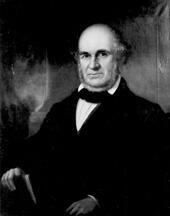
Here you will find contact information for Senator George Edmund Badger, including email address, phone number, and mailing address.
| Name | George Edmund Badger |
| Position | Senator |
| State | North Carolina |
| Party | Whig |
| Status | Former Representative |
| Term Start | January 1, 1846 |
| Term End | March 3, 1855 |
| Terms Served | 2 |
| Born | April 17, 1795 |
| Gender | Male |
| Bioguide ID | B000022 |
About Senator George Edmund Badger
George Edmund Badger (April 17, 1795 – May 11, 1866) was an American lawyer, jurist, and statesman who served as a Whig United States senator from North Carolina from 1845 to 1855. Over the course of a long public career, he held prominent positions at both the state and federal levels and played a visible role in national politics during a period of mounting sectional tension in the United States.
Badger was born on April 17, 1795, in New Bern, North Carolina, into a family of standing in the state. He received his early education in North Carolina before attending Yale College in New Haven, Connecticut. Although he did not complete a degree, he pursued classical studies there and then returned to North Carolina to read law. He was admitted to the bar and began practicing law, quickly establishing himself as a capable attorney in his native state.
Badger’s early career combined legal practice with service in state government. He served in the North Carolina House of Commons, where he gained experience in legislative affairs and developed a reputation as an able debater. He also held judicial responsibilities as a judge of the superior court of North Carolina, further solidifying his professional stature. His legal acumen and political connections brought him to national attention, and in 1841 President William Henry Harrison appointed him Secretary of the Navy. Although his tenure in that office was brief—ending the same year amid changes in the administration—he was involved in overseeing naval affairs at a time when the United States was beginning to modernize and expand its maritime capabilities.
A committed member of the Whig Party, Badger was elected to the United States Senate from North Carolina and served from 1845 to 1855, completing two terms in office. His decade in the Senate coincided with a significant period in American history, encompassing the Mexican–American War, the Compromise of 1850, and intensifying disputes over slavery and territorial expansion. As a senator, he participated actively in the legislative process, representing the interests of his North Carolina constituents while aligning with Whig principles of congressional supremacy, economic development, and cautious expansion. He took part in major debates of the era and was regarded as a skilled parliamentarian and advocate.
During his Senate service, Badger’s influence extended beyond routine legislative work. He was considered for higher judicial office and was at one point nominated to the Supreme Court of the United States, though the nomination did not result in confirmation. Within the Senate, he served on key committees and helped shape policy on issues affecting commerce, infrastructure, and the balance of power between the federal government and the states. His work reflected both regional concerns and the broader Whig effort to promote internal improvements and a stable national financial system.
After leaving the Senate in 1855, Badger returned to North Carolina and resumed the practice of law. In the years leading up to the Civil War, he remained an influential figure in state politics and public life, though the collapse of the Whig Party and the rise of sectional parties altered the political landscape in which he had long operated. During the conflict and the early years of Reconstruction, he lived in a South transformed by war, drawing on his long experience in national and state affairs but no longer holding major public office.
George Edmund Badger died on May 11, 1866, in Raleigh, North Carolina. He was buried in Oakwood Cemetery in Raleigh. Remembered as a prominent Whig leader, a former Secretary of the Navy, and a two-term U.S. senator from North Carolina, his career spanned a formative era in American political and constitutional development, and his service in Congress occurred during a critical decade in the nation’s march toward civil war.