Representative George Augustus Bagley
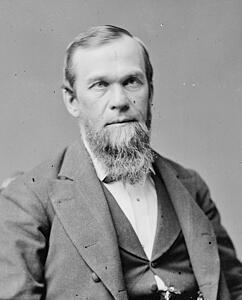
Here you will find contact information for Representative George Augustus Bagley, including email address, phone number, and mailing address.
| Name | George Augustus Bagley |
| Position | Representative |
| State | New York |
| District | 22 |
| Party | Republican |
| Status | Former Representative |
| Term Start | December 6, 1875 |
| Term End | March 3, 1879 |
| Terms Served | 2 |
| Born | July 22, 1826 |
| Gender | Male |
| Bioguide ID | B000032 |
About Representative George Augustus Bagley
George Augustus Bagley (July 22, 1826 – May 12, 1915) was an American politician, lawyer, industrialist, and a United States Representative from New York. A member of the Republican Party, he served two terms in the U.S. House of Representatives from 1875 to 1879, representing New York’s Twenty-second Congressional District during a significant period in the nation’s post–Civil War history.
Bagley was born on July 22, 1826, in Watertown, Jefferson County, New York. He received an academic education in local schools, which prepared him for the study of law. Remaining closely tied to his native community throughout his life, his early years in Watertown established the local connections that would later underpin both his legal practice and his political career.
After completing his academic training, Bagley studied law and was admitted to the bar in New York in 1847. He commenced the practice of law in Watertown, where he built a professional reputation as an attorney. He continued in active legal practice until 1853, when he retired from the bar to enter the field of manufacturing. During this period he also established a family life; he married Sabine Pauline, and the couple had five children, one of whom died in infancy.
In 1853, Bagley shifted his primary focus from law to industry, engaging in the manufacture of iron in and around Watertown. His involvement in iron manufacturing reflected the broader industrial growth of upstate New York in the mid-nineteenth century and positioned him as a local business leader. Alongside his industrial pursuits, he became increasingly active in local government. He served as town supervisor from 1865 to 1868, and in 1866 he was elected president of the village of Watertown, roles in which he helped oversee municipal affairs during the Reconstruction era.
Bagley’s local prominence in both business and public service led to his election to national office. Elected as a Republican, he served as U.S. Representative for New York’s Twenty-second District in the Forty-fourth and Forty-fifth Congresses. His congressional tenure extended from March 4, 1875, to March 3, 1879. During these two terms in the House of Representatives, Bagley participated in the legislative process and represented the interests of his constituents at a time when the nation was grappling with the political, economic, and social challenges of the post–Civil War and Reconstruction period. As a member of the House, he took part in debates and votes that shaped federal policy in an era marked by industrial expansion and evolving party politics.
At the conclusion of his second term in Congress in 1879, Bagley did not continue in national elective office but returned to his business interests. He resumed the manufacture of iron, remaining engaged in industrial pursuits in Watertown. His later years were spent in the community where he had been born, practiced law, built his manufacturing enterprises, and launched his political career, maintaining his status as a longstanding figure in local civic and economic life.
George Augustus Bagley died on May 12, 1915, in Watertown, New York. He was interred in Brookside Cemetery in Watertown. His life and career reflected the trajectory of a nineteenth-century American public figure who combined legal training, industrial enterprise, and service at both the local and national levels, contributing to the civic and political development of his region and state.