Representative George Arthur Bartlett
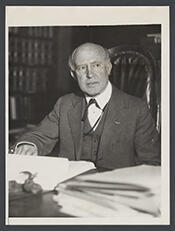
Here you will find contact information for Representative George Arthur Bartlett, including email address, phone number, and mailing address.
| Name | George Arthur Bartlett |
| Position | Representative |
| State | Nevada |
| District | At-Large |
| Party | Democratic |
| Status | Former Representative |
| Term Start | December 2, 1907 |
| Term End | March 3, 1911 |
| Terms Served | 2 |
| Born | November 30, 1869 |
| Gender | Male |
| Bioguide ID | B000203 |
About Representative George Arthur Bartlett
George Arthur Bartlett (November 30, 1869 – June 1, 1951) was a United States Representative from Nevada and a prominent Nevada lawyer and judge whose career spanned public service at the county, federal, and state levels. A member of the Democratic Party, he served two terms in the United States House of Representatives from 1907 to 1911, representing the interests of his Nevada constituents during a significant period in American political and economic development.
Bartlett was born on November 30, 1869, and moved with his parents in childhood to Eureka, in Eureka County, Nevada. He attended the common schools there, receiving his early education in the local public school system. His upbringing in Eureka, a mining community, exposed him to the social and economic conditions of the late nineteenth-century American West, an experience that later informed his legal and political career.
Pursuing higher education in law, Bartlett attended Georgetown University in Washington, D.C., where he received a law degree in 1894. That same year he was admitted to the Nevada bar, formally beginning his legal career. Even before completing his formal legal education, he had already entered public service in Nevada; he served as district attorney of Eureka County in 1889 and 1890, an early indication of the trust placed in him by his community and of his long-standing engagement with the administration of justice in the state.
Bartlett’s national political career began when he was elected as a Democrat to the Sixtieth and Sixty-first Congresses. He served as a United States Representative from Nevada from March 4, 1907, to March 3, 1911. During these two terms in the House of Representatives, he participated in the legislative process at a time when the nation was grappling with issues of economic regulation, western development, and political reform. As a member of the House, he took part in the democratic process and represented the interests of his Nevada constituents in the federal government. He did not seek re-election in 1910, bringing his congressional service to a close at the end of his second term.
After leaving Congress, Bartlett returned to Nevada and resumed the private practice of law in Reno. His experience in both local and national government led to further federal service when he was appointed United States assistant district attorney for the District of Nevada on March 3, 1915. He held that post until March 30, 1918, participating in federal prosecutions and legal matters during the World War I era. In 1918 he transitioned to the state judiciary, beginning a long and influential tenure on the Nevada state court bench that lasted until 1931.
Between 1918 and 1931, Bartlett served as a judge in the Nevada state court system, where he became nationally known for his role in Nevada’s liberal divorce regime. During his years on the bench he granted over 20,000 divorces, including high-profile cases involving boxing champion Jack Dempsey, actress Tallulah Bankhead, and industrialist W. K. Kellogg, a record that earned him the widely used nickname “the divorce judge.” Drawing on his extensive judicial experience in domestic relations, he authored a book titled Men, Women and Conflict, which examined marriage and divorce in modern society. Edited by his daughter Margaret, the volume was first published in 1931 and later reissued in 1947 under the title Is Marriage Necessary?. He authored several books in the course of his career, further extending his influence beyond the courtroom.
Bartlett’s personal life was closely intertwined with his professional pursuits. His marriage to Pearl Bartlett resulted in four children, among them Margaret Bartlett Thornton, who became known as a pilot, editor, and poet and who collaborated with her father by editing his work on marriage and divorce. After leaving the bench in 1931, Bartlett again resumed private legal practice, continuing to live and work in Nevada and maintaining his stature as a leading figure in the state’s legal community. He remained active in legal and intellectual circles into his later years.
George Arthur Bartlett died on June 1, 1951. He was interred in Mountain View Cemetery in Reno, Nevada. His legacy is reflected not only in his congressional service and long judicial career but also in the preservation of his papers, including “A Guide to the Papers of George A. Bartlett, NC1253” in the Special Collections of the University Libraries at the University of Nevada, Reno, and in the continued recognition of sites associated with him, such as the George A. Bartlett House in Tonopah, Nevada.