Representative George Monroe Beebe
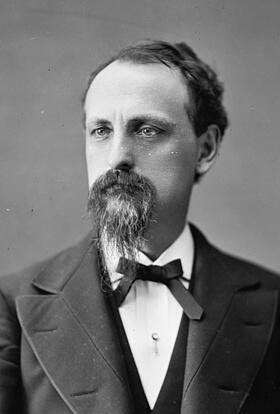
Here you will find contact information for Representative George Monroe Beebe, including email address, phone number, and mailing address.
| Name | George Monroe Beebe |
| Position | Representative |
| State | New York |
| District | 14 |
| Party | Democratic |
| Status | Former Representative |
| Term Start | December 6, 1875 |
| Term End | March 3, 1879 |
| Terms Served | 2 |
| Born | October 28, 1836 |
| Gender | Male |
| Bioguide ID | B000305 |
About Representative George Monroe Beebe
George Monroe Beebe (October 28, 1836 – March 1, 1927) was an American lawyer, newspaper editor, and Democratic politician who served two terms as a U.S. Representative from New York from 1875 to 1879. His congressional service as a Representative from New York occurred during a significant period in American history, and he contributed to the legislative process over two terms in office, participating in the democratic process and representing the interests of his constituents.
Beebe was born in New Vernon, New York, on October 28, 1836, the son of Gilbert Beebe, a Primitive Baptist minister, and Pheobe Ann Cunningham Beebe. He attended the common schools and then Walkill Academy in Middletown, New York. After completing his preparatory education, he studied law and enrolled at Albany Law School, from which he graduated in 1857. In the same year he was admitted to the bar and began the practice of law in Monticello, New York. In 1861 he married Cornelia Foster of Monticello, New York.
Shortly after his admission to the bar, Beebe embarked on a career that combined law, journalism, and public service across several states and territories. In 1857 he moved to Peoria, Illinois, where he became editor of the Central Illinois Democrat. The following year, in 1858, he relocated to Troy in Doniphan County, Kansas Territory, where he continued to practice law and entered territorial politics. He served as a member of the Kansas Territorial Council in 1858 and 1859. In 1859 President James Buchanan appointed him secretary of the Territory of Kansas, and he subsequently served as acting governor of the territory in 1860 and 1861.
With the onset of the Civil War era, Beebe continued his peripatetic legal career. He moved to St. Joseph, Missouri, in 1861 and then to Virginia City, Nevada, in 1863, where he continued the practice of law. In Nevada he was an unsuccessful candidate for associate judge of the state supreme court in 1865. Following this defeat, he returned to Monticello, New York, where he resumed his legal and journalistic pursuits. In 1866 he became editor of the Republican Watchman, a local newspaper. He sought election to the New York State Senate in 1871 but was unsuccessful. Nevertheless, he secured a place in state politics as a member of the New York State Assembly representing Sullivan County in 1873 and 1874. During this period, in 1873, he was commissioned by Governor John A. Dix as chief of artillery with the rank of colonel in the Fifth Division of the National Guard of New York, a position he resigned in 1874 in order to enter Congress.
Beebe was elected as a Democrat to the Forty-fourth and Forty-fifth Congresses, representing New York’s fourteenth congressional district from March 4, 1875, to March 3, 1879. During his tenure in the U.S. House of Representatives, he served as chairman of the Committee on Expenditures in the Department of the Navy in the Forty-fourth Congress, overseeing fiscal matters related to naval administration. In the Forty-fifth Congress he served on the Committee on Mines and Mining, reflecting the growing national interest in mineral resources and western development. A member of the Democratic Party, he played an active role in the legislative process during his two terms in office. He was an unsuccessful candidate for reelection in 1878 to the Forty-sixth Congress, after which he resumed his former newspaper pursuits.
In addition to his congressional service, Beebe remained active in Democratic Party politics and in public affairs at the state level. He served as a delegate to the Democratic National Conventions of 1876, 1880, and 1892, participating in the selection of presidential nominees and in the formation of party platforms during a transformative period in American political history. He was appointed a member of the New York State Court of Claims in 1883 and served on that court until 1900, adjudicating claims against the state over nearly two decades. During these years he continued to reside in Monticello until 1892, when he moved to Ellenville, New York. He retired from active business pursuits in 1900, concluding a long career that had encompassed law, journalism, military service in the state militia, territorial administration, and legislative office.
George Monroe Beebe died in Ellenville, New York, on March 1, 1927, at the age of 90 years and 124 days. He was interred at Woodlawn Cemetery in New Windsor, New York.