Senator George Mortimer Bibb
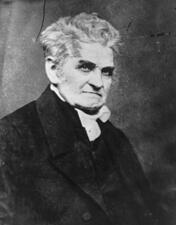
Here you will find contact information for Senator George Mortimer Bibb, including email address, phone number, and mailing address.
| Name | George Mortimer Bibb |
| Position | Senator |
| State | Kentucky |
| Party | Jackson |
| Status | Former Representative |
| Term Start | November 4, 1811 |
| Term End | March 3, 1835 |
| Terms Served | 2 |
| Born | October 30, 1776 |
| Gender | Male |
| Bioguide ID | B000433 |
About Senator George Mortimer Bibb
George Mortimer Bibb (October 30, 1776 – April 14, 1859) was an American lawyer, jurist, and politician who became the seventeenth United States Secretary of the Treasury and twice represented Kentucky in the United States Senate. Born in Prince Edward County, Virginia, he was educated in the classical tradition and studied law before moving west. He settled in Kentucky in the early national period, joining a generation of Virginia-born lawyers and statesmen who helped shape the political and legal institutions of the new state.
Bibb pursued formal legal training and was admitted to the bar, establishing a practice in Kentucky. As his reputation grew, he became deeply involved in the state’s legal and political life. He served in the Kentucky House of Representatives and emerged as a leading figure at the bar. His legal acumen and standing in the profession led to his appointment as a judge and ultimately to the position of chief justice of the Kentucky Court of Appeals, the state’s highest court, where he played a central role in defining Kentucky jurisprudence in the early nineteenth century.
Bibb’s national career began with his election to the United States Senate from Kentucky, where he first served from 1811 to 1814. His initial term placed him in the Senate during the War of 1812, a formative period in American political and military history. After returning to legal and judicial work in Kentucky, he remained an influential figure in state and national Democratic politics. He was re-elected to the United States Senate in 1829 and served as a Jacksonian Democrat through 1835, thus completing two nonconsecutive Senate careers that together spanned some of the most contentious decades of the early republic. During the 21st Congress he was chairman of the U.S. Senate Committee on Post Office and Post Roads, where he helped oversee the expansion and regulation of the national postal system. Throughout his Senate service he participated in the legislative process, represented the interests of his Kentucky constituents, and was known as a strong advocate for pro-slavery views. In 1834, he was the sole Democratic member of the Senate to vote in support of the censure of President Andrew Jackson, a notable break with his party’s leadership that underscored his independence on questions of executive power.
After leaving the Senate in 1835, Bibb returned to Kentucky and continued his judicial career as chancellor of the Louisville Chancery Court, serving from 1835 through 1844. In this capacity he presided over equity cases in one of the state’s most important commercial centers, further solidifying his reputation as a skilled jurist. His long experience in law, finance-related questions, and public affairs brought him again to national prominence when President John Tyler selected him as the fourth United States Secretary of the Treasury in 1844. Bibb held that cabinet post from 1844 through 1845, assuming the office in his late sixties.
As Secretary of the Treasury, Bibb was noted for his meticulous attention to the nation’s financial history and structure. He dressed “in antique style, with kneebreeches,” a detail often remarked upon by contemporaries, but his policies were forward-looking. His Annual Report on the State of the Finances for 1844 was an elaborate compilation of statistics detailing the financial history of the United States since 1789. In that report he advanced a carefully reasoned argument for the reestablishment of a “sinking fund,” to be accumulated through regular deposits and used to pay the interest and principal on the national debt. He proposed that surplus revenue from customs and internal revenue collections be devoted to this fund. Drawing on earlier federal practice, he noted that such a mechanism had been used effectively to reduce the deficit from 1789 to 1835, but despite the thoroughness of his presentation he was unable to secure its revival.
Following his tenure in the Treasury Department, Bibb remained in Washington, D.C., where he resumed the practice of law. He also served as an assistant in the U.S. Attorney General’s office, continuing to apply his long experience in public law and federal administration. Outside of his formal offices, he was active in Freemasonry and held numerous leadership roles within the fraternity in Kentucky. He was the first master of Russellville Lodge No. 17 in Russellville, Kentucky, and served as master of Hiram Lodge No. 4 in Frankfort, Kentucky. He was also past master of Lexington Lodge No. 1 in Lexington, Kentucky, and served as secretary there in 1804. That same year he was grand master of Kentucky, reflecting his prominence in Masonic circles as well as in public life.
George Mortimer Bibb died on April 14, 1859, closing a career that had spanned the early republic, the Jacksonian era, and the antebellum decades. Over the course of his life he served as a legislator, judge, senator, cabinet officer, and legal adviser to the federal government, participating in the democratic process and helping to shape both Kentucky’s legal system and the financial policies of the United States.