Senator George Sewel Boutwell
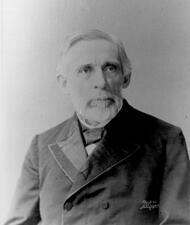
Here you will find contact information for Senator George Sewel Boutwell, including email address, phone number, and mailing address.
| Name | George Sewel Boutwell |
| Position | Senator |
| State | Massachusetts |
| Party | Republican |
| Status | Former Representative |
| Term Start | December 7, 1863 |
| Term End | March 3, 1877 |
| Terms Served | 5 |
| Born | January 28, 1818 |
| Gender | Male |
| Bioguide ID | B000674 |
About Senator George Sewel Boutwell
George Sewel Boutwell served as a Senator from Massachusetts in the United States Congress from 1863 to 1877. A member of the Republican Party, George Sewel Boutwell contributed to the legislative process during 5 terms in office.
George Sewel Boutwell’s service in Congress occurred during a significant period in American history. As a member of the Senate, George Sewel Boutwell participated in the democratic process and represented the interests of constituents.
George Sewall Boutwell (January 28, 1818 – February 27, 1905) was an American politician, lawyer, and statesman from Massachusetts. He served as Secretary of the Treasury under President Ulysses S. Grant, the 20th governor of Massachusetts, a U.S. senator and representative from Massachusetts, and the first Commissioner of Internal Revenue under President Abraham Lincoln. He was a leader in the impeachment of President Andrew Johnson and served as a House manager (prosecutor) in the impeachment trial. Boutwell, an abolitionist, is known primarily for his leadership in the formation of the Republican Party, and his championship of African American citizenship and suffrage rights during Reconstruction. As a congressman, he was instrumental in the drafting and passage of the Fourteenth and Fifteenth Amendments to the United States Constitution. As Secretary of the Treasury, he made needed reforms in the Treasury Department after the chaos of the American Civil War and the impeachment trial of President Andrew Johnson. He controversially reduced the national debt by selling Treasury gold and using greenbacks to buy up Treasury bonds, a process that created a cash shortage. Boutwell and President Grant thwarted an attempt to corner the gold market in September 1869 by releasing $4,000,000 (~$83.5 million in 2024) of gold into the economy. As a U.S. senator, Boutwell sponsored the Civil Rights Act of 1875 and was chair of a Senate select committee investigating white supremacist violence against Black citizens and their white Republican Party supporters during the 1875 Mississippi state election campaign. In 1877, President Rutherford B. Hayes appointed Boutwell commissioner to codify the Revised Statutes of the United States and in 1880 to serve as United States counsel before the French and American Claims Commission. He also practiced international law in other diplomatic fora. At the turn of the 20th century, he abandoned the Republican Party, opposed the acquisition of the Philippines, and in 1900 supported Democrat William Jennings Bryan for president. In 2025, the “first major biography” (according to its dust jacket) of Boutwell was published.