Representative George Farmer Burgess
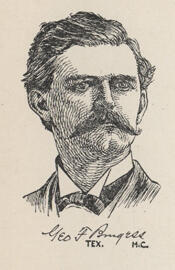
Here you will find contact information for Representative George Farmer Burgess, including email address, phone number, and mailing address.
| Name | George Farmer Burgess |
| Position | Representative |
| State | Texas |
| District | 9 |
| Party | Democratic |
| Status | Former Representative |
| Term Start | December 2, 1901 |
| Term End | March 3, 1917 |
| Terms Served | 8 |
| Born | September 21, 1861 |
| Gender | Male |
| Bioguide ID | B001083 |
About Representative George Farmer Burgess
George Farmer Burgess (September 21, 1861 – December 31, 1919) was a U.S. Representative from Texas who served in the United States Congress from 1901 to 1917. A member of the Democratic Party, he represented his constituents through eight consecutive terms in the House of Representatives during a significant period in American history, contributing to the legislative process at the dawn of the twentieth century.
Born on September 21, 1861, Burgess came of age during the closing years of the Civil War and the Reconstruction era that followed. Although detailed records of his early life and family background are limited in standard reference sources, his formative years in the postwar South would have shaped his understanding of the economic and social challenges facing his region. This context informed his later work as a public official representing Texas, a state undergoing rapid change in agriculture, transportation, and industry.
Information about Burgess’s formal education is sparse in the surviving public record, and contemporary biographical sketches do not provide extensive detail about his schooling. Like many Southern politicians of his generation, it is likely that he combined local schooling with self-directed study, preparing himself for professional and public life through practical experience as much as through formal institutions. Whatever the precise nature of his education, it provided a foundation for his later responsibilities in lawmaking and public service.
Before his election to Congress, Burgess developed a career that positioned him to enter national politics, though the surviving summaries of his life focus primarily on his congressional tenure rather than his earlier professional activities. His pre-congressional career would have unfolded against the backdrop of Texas’s growth in railroads, cattle, and cotton, and his familiarity with these issues later informed his representation of a Texas district in Washington. By the time he sought federal office, he had established himself sufficiently in his community and party to win election as a Democrat to the House of Representatives.
Burgess began his service in the United States House of Representatives in 1901, entering the Fifty-seventh Congress and subsequently being reelected to seven additional terms, serving continuously until 1917. During these eight terms in office, he participated in the democratic process at the federal level and represented the interests of his Texas constituents as the nation confronted questions of economic regulation, agricultural policy, and America’s emerging role on the world stage. His years in Congress spanned the administrations of Presidents William McKinley, Theodore Roosevelt, William Howard Taft, and Woodrow Wilson, a period marked by the Progressive Era’s reform movements and, toward the end of his service, the onset of World War I.
As a Democratic member of the House of Representatives, Burgess contributed to the legislative process through committee work, debate, and voting on measures affecting both Texas and the broader United States. His service coincided with major national legislation on issues such as banking and currency, interstate commerce, and rural development, and he took part in the deliberations that shaped federal policy in these areas. While detailed records of his specific committee assignments and sponsored bills are limited in standard summaries, his long tenure itself reflects sustained support from his district and an ongoing role in the internal workings of the House.
Burgess’s congressional service concluded in 1917, after which he left the House at the end of his eighth term. His departure from Congress came as the United States was entering World War I, closing a legislative career that had begun at the turn of the century. In his later years, he returned to private life, remaining identified with the Democratic Party and with the public affairs of Texas, though the extant brief biographical notices do not elaborate in detail on his post-congressional activities.
George Farmer Burgess died on December 31, 1919, bringing to a close a life that had spanned from the Civil War era through the First World War and the early modern United States. Remembered primarily for his sixteen years of service in the U.S. House of Representatives, he occupied a place among the Texas Democrats who helped guide their state’s interests in the national legislature during a transformative period in American political and economic history.