Representative G. K. Butterfield
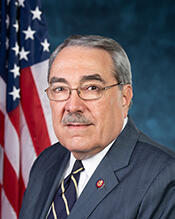
Here you will find contact information for Representative G. K. Butterfield, including email address, phone number, and mailing address.
| Name | G. K. Butterfield |
| Position | Representative |
| State | North Carolina |
| District | 1 |
| Party | Democratic |
| Status | Former Representative |
| Term Start | July 21, 2004 |
| Term End | December 30, 2022 |
| Terms Served | 10 |
| Born | April 27, 1947 |
| Gender | Male |
| Bioguide ID | B001251 |
About Representative G. K. Butterfield
George Kenneth Butterfield Jr. (born April 27, 1947) is an American lawyer, lobbyist, and retired politician who served as the U.S. representative for North Carolina’s 1st congressional district from July 21, 2004, to December 30, 2022. A member of the Democratic Party, he was first elected in a special election on July 20, 2004, to fill the unexpired term of Representative Frank Ballance, who had resigned for health reasons. Butterfield’s district was located in the northeastern corner of North Carolina and included all or parts of 19 counties. Over 10 terms in office, he contributed to the legislative process during a significant period in American history, participating in the democratic process and representing the interests of his constituents.
G. K. Butterfield was born and raised in the then-segregated city of Wilson, North Carolina, in a prominent Black family with deep roots in the state. Both of his parents were mixed-race Americans. His maternal grandfather, the Reverend Fred Davis, was the child of a formerly enslaved woman, Judah Davis, and a white man, Joe Davis. Butterfield’s mother, Addie Butterfield, taught elementary school for 48 years in some of North Carolina’s poorest communities, with a particular emphasis on ensuring that her students learned to read. His father, Dr. G. K. Butterfield Sr., was an immigrant from Bermuda and a graduate of Meharry Medical College. He practiced dentistry for 50 years in the poor, segregated community of East Wilson. In the late 1940s, Dr. Butterfield helped found the Wilson Branch of the NAACP to register Black voters in Wilson County, and in 1953 he became the first African American elected to the city council in Wilson and the first Black elected official in eastern North Carolina since Reconstruction. Growing up in racially segregated North Carolina, living in East Wilson and attending Black schools, Butterfield was a firsthand witness to the disenfranchisement of his community, including a targeted campaign to remove his father from the Board of Aldermen. In describing his racial identity as a Black man, he has pointed to his African heritage as a direct descendant of enslaved people.
Butterfield graduated from Charles H. Darden High School in Wilson and went on to attend North Carolina Central University (NCCU), a historically Black university in Durham, where he earned a Bachelor of Arts degree in political science and sociology. During his time at NCCU, he was active in voter registration activism, coordinating voter registration drives in Durham and organizing a student march from the State Capitol in Raleigh to the Wilson County Courthouse to highlight the importance of voter registration. During his junior year at NCCU, he was drafted into the United States Army and served from 1968 to 1970, stationed at Fort Bragg in Fayetteville, North Carolina. After receiving an honorable discharge, he returned to NCCU to complete his undergraduate degree. He then enrolled in the NCCU School of Law, where he received a Juris Doctor degree in 1974.
After completing law school, Butterfield embarked on a 14-year legal career as a civil rights attorney, practicing across eastern North Carolina. During this period, he developed a reputation as a skilled litigator, winning several voting-rights cases that expanded access to the ballot for African American citizens and reinforced federal and state protections for minority voters. His work as a civil rights lawyer helped solidify his standing as a longtime advocate of civil rights and laid the foundation for his later judicial and legislative service. His legal practice, grounded in the communities of eastern North Carolina, reflected both his family’s legacy of civic engagement and his own commitment to combating disenfranchisement.
In 1988, Butterfield was elected Resident Superior Court judge in North Carolina’s judicial district 7BC. Beginning on January 1, 1989, he presided over civil and criminal court proceedings across 46 North Carolina counties for the next 12 years. In February 2001, Governor Mike Easley appointed him as an associate justice of the North Carolina Supreme Court, making him one of the few African Americans to serve on the state’s highest court. Butterfield retained that position until 2003, when he lost his seat in a statewide election in 2002. Following that defeat, Governor Easley returned him to the Superior Court bench by special appointment. Butterfield served again as a Superior Court judge until his retirement from the judiciary in May 2004, when he stepped down to run for the U.S. House of Representatives.
Butterfield entered Congress after winning the July 20, 2004, special election to succeed Frank Ballance. He defeated Republican nominee Greg Dority and Libertarian nominee Tom Eisenmenger and was sworn into office on July 21, 2004, to represent North Carolina’s 1st congressional district. That same day’s Democratic primary victory entitled him to run in the November 2004 general election, in which he again faced Dority and won his first full term with 64 percent of the popular vote. Over the course of his congressional career, he was repeatedly returned to office by wide margins. He was unopposed for reelection in 2006. In subsequent elections, he defeated Dean Stephens with 70.28 percent of the vote; Republican nominee Ashley Woolard with 59.31 percent of the vote; Republican Pete DiLauro with 75.32 percent of the vote; Republican Arthur Rich with 73.38 percent of the vote; Republican H. Powell Dew Jr. with 68.62 percent of the vote; and Republican Roger W. Allison with 69.85 percent of the vote. His electoral record reflected strong support within his district throughout his 10 terms in Congress.
During his tenure in the House of Representatives from 2004 to 2022, Butterfield served during a period marked by major national debates over health care, voting rights, economic recovery, and racial justice. He was a member of the Congressional Black Caucus and served as its chair from 2015 to 2017, playing a visible role in shaping the caucus’s agenda on civil rights, criminal justice reform, and economic opportunity for minority communities. As a legislator, he participated actively in the democratic process, advocating for his northeastern North Carolina district and contributing to the development and passage of federal legislation. His work in Congress was informed by his background as a civil rights attorney and judge, particularly in areas related to voting rights and equal protection under the law.
In November 2021, Butterfield announced that he would not run for re-election in 2022, signaling the end of his congressional career after nearly two decades of service. He completed his final term in the 117th Congress and, on December 30, 2022, resigned from his position in the House of Representatives to take up a lobbying position. By that time, he was recognized as a veteran lawmaker, a former chair of the Congressional Black Caucus, and a prominent voice for civil rights and voting rights, carrying forward the legacy of civic engagement and public service established by his family in eastern North Carolina.