Representative George Craighead Cabell
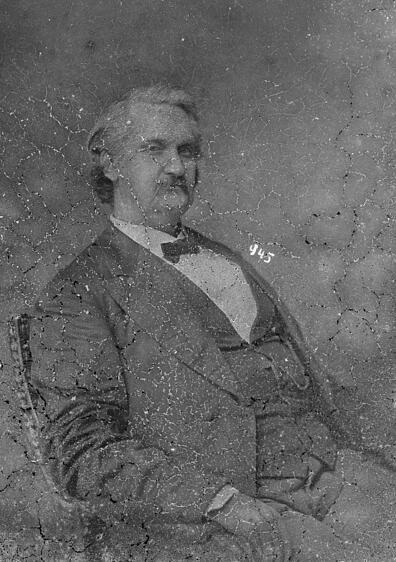
Here you will find contact information for Representative George Craighead Cabell, including email address, phone number, and mailing address.
| Name | George Craighead Cabell |
| Position | Representative |
| State | Virginia |
| District | 5 |
| Party | Democratic |
| Status | Former Representative |
| Term Start | December 6, 1875 |
| Term End | March 3, 1887 |
| Terms Served | 6 |
| Born | January 25, 1836 |
| Gender | Male |
| Bioguide ID | C000004 |
About Representative George Craighead Cabell
George Craighead Cabell (January 25, 1836 – June 23, 1906) was a nineteenth-century congressman, lawyer, Confederate officer, and newspaper editor from Virginia. A member of the Democratic Party, he represented Virginia in the United States House of Representatives for six consecutive terms from 1875 to 1887, contributing to the legislative process during a significant period in American history and representing the interests of his constituents during and after the end of Congressional Reconstruction.
Cabell was born in Danville, Virginia, on January 25, 1836, into one of the First Families of Virginia, a lineage that afforded him early exposure to public life and civic affairs. He received his early education at Danville Academy, a local preparatory institution, before enrolling at the University of Virginia. He pursued legal studies there and graduated in 1857, receiving the classical and legal training that would underpin his subsequent career in law and politics.
After his graduation and admission to the Virginia bar, Cabell began the practice of law in Danville in 1858. That same year he was elected the city’s commonwealth’s attorney (prosecutor), a position he held from 1858 until 1861. In addition to his legal work, he became active in journalism and public discourse, serving as editor of the Republican and later the Democratic Appeal in Danville, using the press as a vehicle to influence local opinion and Democratic Party politics on the eve of the Civil War.
With the secession of Virginia in April 1861, Cabell entered Confederate military service. He enlisted in the Confederate Army as a private in 1861 and, during the first year of the Civil War, received a promotion to major. He was assigned to the 18th Regiment, Virginia Infantry, and later rose to the rank of colonel, which he held until the end of the war. His service in the Confederate Army, progressing from the enlisted ranks to field-grade command, reflected both his commitment to the Southern cause and his leadership abilities during a period of national conflict.
Following the conclusion of the Civil War, Cabell returned to Danville and resumed his legal practice. As Reconstruction waned and Virginia’s political order shifted, he reentered public life as a Democrat. In 1874, after Congressional Reconstruction ended, he ran for a seat in the United States House of Representatives. In that election he was elected to the U.S. House of Representatives with 57.13 percent of the vote, defeating incumbent Republican Christopher Yancy Thomas. He took his seat in Congress in 1875, marking the beginning of twelve years of continuous service in the national legislature.
Cabell’s congressional career extended over six terms, from 1875 to 1887. He was re-elected in 1876 with 60.61 percent of the vote, defeating Republican Daniel S. Lewis; in 1878 with 66.7 percent of the vote, defeating Independent W. A. Witcher; in 1880 with 51.25 percent of the vote, defeating Readjuster John T. Stovall; in 1882 with 52.99 percent of the vote, defeating Readjuster William E. Sims; and in 1884 with 55.04 percent of the vote, defeating Republican J. W. Hartwell. During his tenure in the House of Representatives, Cabell served as chairman of the Committee on Railways and Canals from 1877 to 1881, a position that placed him at the center of legislative deliberations over internal improvements and transportation infrastructure during a period of rapid industrial and commercial expansion. His service in Congress occurred during a significant period in American history, as the nation adjusted to the post–Civil War order, the end of Reconstruction, and the rise of new economic and sectional issues.
In 1886, Cabell sought another term but lost his bid for re-election, bringing his congressional service to a close in 1887. He was succeeded in the House by John R. Brown. After leaving Congress, Cabell returned once more to Danville, where he resumed the practice of law. Public life continued in his family: his son, George Craighead Cabell Jr., embarked on a political career of his own, winning election as one of three delegates representing the city of Danville in the Virginia General Assembly. Cabell Jr. later resigned his seat, and on November 10, 1903, he was replaced by J. W. Bruce.
George Craighead Cabell died in Baltimore, Maryland, on June 23, 1906. His remains were returned to his native city, where he was interred in Green Hill Cemetery in Danville.